This makes it more difficult for the heart to pump blood throughout the body.
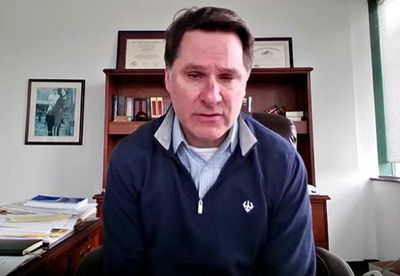
While there are various medications for high blood pressure, they usually have to be taken for an extended period of time. Taking to Instagram on January 4, Dr Jack Wolfson, a cardiologist from Arizona in the US with more than 16 years of experience, explained the phenomenon by stating that blood pressure drugs "do not work."
Why blood pressure drugs fail to solve the problem
According to Dr Wolfson, blood pressure drugs "do not address the root cause of why you have high blood pressure." As a result, pharmaceuticals may lower the level of blood pressure, but fail to lower the risk of heart attack, stroke, and mortality.
"It's like if I took a hammer and was hammering your toe, you wouldn't ask for pain pills, and you wouldn't ask for narcotics, and you wouldn't ask for anything else to stop the pain. You would say 'Stop hammering my toe,'" the cardiologist further explained. It is in our best interest to stop what is causing the high blood pressure in the first place.
In the caption of his post, Dr Wolfson noted that high blood pressure is not the problem, but rather a warning sign. It is the body's way to communicate that "something is off." It may be stress, inflammation, blood vessel dysfunction, nutrient depletion, toxins, or poor signalling. "Chasing numbers with drugs ignores why your blood pressure is high in the first place."
What are blood pressure numbers?
Blood pressure is measured in millimetres of mercury (mm Hg) and reveals two readings. First is the systolic blood pressure, which is the pressure on the arterial wall when the heart contracts. Next is the diastolic blood pressure, which is the pressure between beats as the heart relaxes.
According to the Mayo Clinic, a reading lower than 120/80 mm Hg is considered normal blood pressure. If the upper number ranges between 120 and 129, and the bottom number is below 80, the condition is known as elevated blood pressure.
When the top number is between 130 and 139 mm Hg, or the bottom is between 80 and 89 mm Hg, it is considered Stage 1 hypertension. Stage 2 hypertension is when the top number is 140 mm Hg or higher, or the bottom number is 90 mm Hg or higher.
A reading greater than 180/120 mm Hg is regarded as a hypertensive emergency and requires immediate medical attention.