Sensex and Nifty: Due to significant losses in heavyweight firms like Reliance Industries and Trent, Indian market benchmark indexes fell for the second straight session on Tuesday.
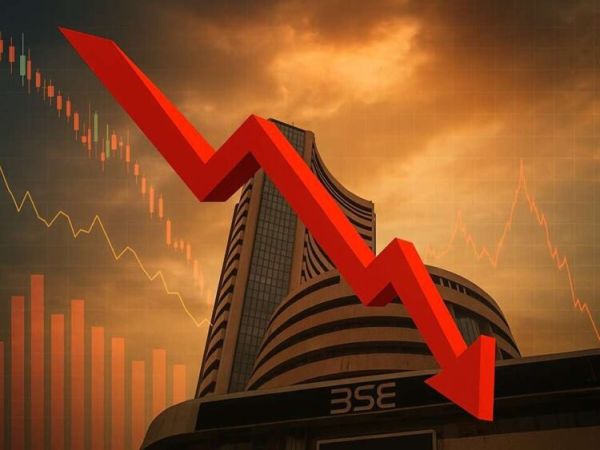
Throughout the day, pressure on the general mood of the market was maintained by weakness in these significant equities. The Nifty finished trading at 26,178.70, down 71.6 points, or 0.27 percent.
“Despite geopolitical and tariff-related uncertainties, the index is still in a short-term consolidation phase and is holding above the critical 26,100–26,000 support zone, which also happens to be the 20-day EMA and a significant psychological level,” an analyst said.
“If global risk sentiment continues to deteriorate, a clear breakdown below 26,000 could increase downside risk toward the 25,900–25,800 region,” the analyst said.
Additionally, the Sensex ended the day at 85,063.34, down 376.28 points, or 0.44 percent.
Reliance Industries’ shares fell more than 4% intraday, the sharpest decline in over eight months.
Following rumors that brokerage giant CLSA had taken Reliance off of its India model portfolio, the stock faced pressure to be sold.
After the company’s third-quarter business report disappointed investors, Trent shares fell even more precipitously, falling almost 9%.
Stocks like Kotak Mahindra Bank, ITC, and HDFC Bank were among the biggest losses on the Sensex in addition to Reliance and Trent.
However, by closing the day higher, ICICI Bank, Sun Pharmaceutical Industries, Hindustan Unilever, State Bank of India, and Tata Consultancy Services helped to boost the index.
Beyond frontline equities, the wider market also displayed weakness, with the Nifty Midcap 100 down 0.19 percent and the Nifty Smallcap 100 closing 0.22 percent lower.
The Nifty Oil and Gas index had the poorest sectoral performance, dropping 1.75 percent.
Stocks of chemicals and media continued to be under pressure. On the other hand, due to selective purchasing interest, healthcare and pharmaceutical companies beat the market and were the top sectoral gainers.
In the meanwhile, foreign bank dollar supply and a modest restoration of foreign capital inflows drove the Indian rupee’s appreciation after a four-day decline.
As long as the spot stays above 89.90, the trend for the spot USDINR is neutral to positive, according to an expert.