New Delhi: The second phase of the special intensive revision (SIR) of the electoral roll has resulted in the removal of 6.5 crore names, according to the latest data from the Election Commission of India (ECI). Uttar Pradesh accounts for 43% of these deletions.
Tuesday marked a key milestone, as the 12 states and Union Territories where the revision took place completed the enumeration phase and released draft electoral rolls.
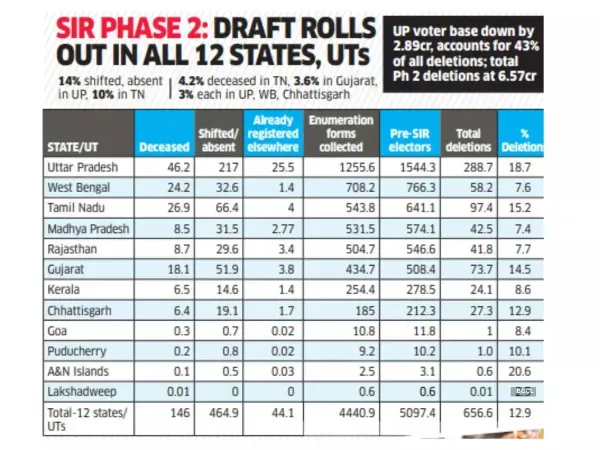
UP, which was the last state to complete the exercise, recorded the highest number of deletions at 2.9 cr, according to ECI data. Of these, about 2.17 crore were due to individuals being absent or having moved to a different residence, while more than 46 lakh deletions were the result of death, and 25.4 lakh were caused by multiple entries in the records.
Assembly polls in Uttar Pradesh are due in 2027.
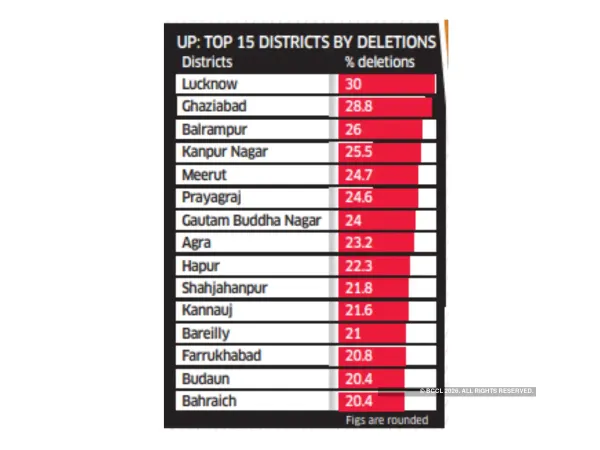
At 18.7%, this is the sharpest cut in the number of voters in the states that have undergone SIR so far. Capital Lucknow has recorded the highest number of deletions at 30%, followed by urban segments like Ghaziabad (28.8%) and Kanpur Nagar and Balrampur at more than 25% each.
Tamil Nadu and Gujarat recorded the second and third highest deletions at 97.2 lakh and 73.76 lakh, respectively.
While most other states have seen a 7-8% decrease in the number of electors after the SIR, TN and Gujarat have recorded a drop of 15% and 14%, respectively.

West Bengal, where polls are due in the early part of this year, recorded 58 lakh deletions in the draft roll published earlier this week. Kerala, which too is headed for elections, has 22 lakh names less in the electoral roll.
In all, the number of cases of electors shifting or absent stands at 4.6 cr across the 12 states and UTs. For the rest of the deletions, death accounts for 1.46 cr names removed and multiple entries account for 44L, as per ECI data.
With this, the focus now shifts to the claims and objections period and the publication of the final rolls, which will wrap up with UP on March 6.
Tuesday marked a key milestone, as the 12 states and Union Territories where the revision took place completed the enumeration phase and released draft electoral rolls.
UP, which was the last state to complete the exercise, recorded the highest number of deletions at 2.9 cr, according to ECI data. Of these, about 2.17 crore were due to individuals being absent or having moved to a different residence, while more than 46 lakh deletions were the result of death, and 25.4 lakh were caused by multiple entries in the records.
Figures are in lakhs
Assembly polls in Uttar Pradesh are due in 2027.
At 18.7%, this is the sharpest cut in the number of voters in the states that have undergone SIR so far. Capital Lucknow has recorded the highest number of deletions at 30%, followed by urban segments like Ghaziabad (28.8%) and Kanpur Nagar and Balrampur at more than 25% each.
Tamil Nadu and Gujarat recorded the second and third highest deletions at 97.2 lakh and 73.76 lakh, respectively.
While most other states have seen a 7-8% decrease in the number of electors after the SIR, TN and Gujarat have recorded a drop of 15% and 14%, respectively.
West Bengal, where polls are due in the early part of this year, recorded 58 lakh deletions in the draft roll published earlier this week. Kerala, which too is headed for elections, has 22 lakh names less in the electoral roll.
In all, the number of cases of electors shifting or absent stands at 4.6 cr across the 12 states and UTs. For the rest of the deletions, death accounts for 1.46 cr names removed and multiple entries account for 44L, as per ECI data.
With this, the focus now shifts to the claims and objections period and the publication of the final rolls, which will wrap up with UP on March 6.