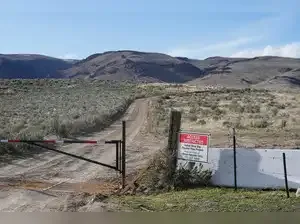
A long-forgotten gas field in eastern Germany has suddenly become a focal point in Europe’s clean-energy race.
Beneath the plains of Saxony-Anhalt, scientists have confirmed a massive lithium resource hidden deep underground. The discovery could reshape Europe’s battery supply chain at a critical moment. It also signals a striking shift from fossil fuels to strategic minerals.
ALSO READ: US launches high-stakes operation to seize Venezuela-linked oil tanker after Atlantic pursuit-here's what this means for Russia and global oil
The plains of northern Saxony-Anhalt have long been associated with gas drilling, not battery metals. That perception shifted in late 2025 when Neptune Energy released new data from its Altmark basin operations. What was once brine pumped up during gas production revealed a far more valuable resource, as per a report by Daily Galaxy.
Independent evaluator Sproule ERCE assessed the site under the CIM/NI 43-101 standard and confirmed an estimated 43 million tonnes of lithium carbonate equivalent. If validated through future development, Altmark would stand among the world’s largest known lithium deposits concentrated in a single location.
The licenses tied to the discovery include one production license, Jeetze-L, and three exploration licenses known as Milde A-L, B-L, and C-L. All are located in areas previously used for natural gas extraction, allowing existing infrastructure to play a role in future mineral development, as per a report by Daily Galaxy.
What makes this extraction method different?
Unlike traditional lithium mining, the Altmark project relies on direct lithium extraction, or DLE. Instead of open pits or evaporation ponds, lithium is separated from deep underground brine using enclosed systems.
Neptune Energy completed a second pilot project in August, producing battery-grade lithium carbonate using an ion exchange technique. A third pilot, launched in September 2025, is testing an adsorption-based process. In both cases, brine is drawn from underground, lithium is removed, and the remaining fluid is reinjected into the reservoir, as per a report by Daily Galaxy.
This approach uses less land and water than conventional methods and avoids long evaporation times. It also aligns with Germany’s environmental standards and supports the reuse of legacy gas infrastructure.
Geoscientific research presented at the 2025 EAGE Annual Conference shed light on the region’s geology. The lithium-rich brines sit between 3,200 and 4,000 metres deep within Rotliegend sandstone and volcanic rock layers.
Average lithium concentrations measure about 375 milligrams per litre. Researchers attribute the enrichment to the slow breakdown of mica minerals in volcanic rock, releasing lithium into groundwater under high temperatures over millions of years.
Only a small share of the lithium comes from ancient seawater evaporation. Most of it originates from mineral leaching driven by heat. With geothermal gradients exceeding 120°C, the site may also support heat co-production, improving overall efficiency, as per a report by Daily Galaxy.
Globally, lithium supply is dominated by South America’s Lithium Triangle and by Chinese processing capacity. Europe has largely depended on imports, leaving its electric vehicle and battery sectors exposed.
The Altmark discovery arrives as the European Union pushes to secure critical raw materials locally. Under the European Critical Raw Materials Act, the EU aims to source at least 10 percent of strategic minerals like lithium within its borders by 2030.
Because Altmark sits in an existing industrial zone, new development could have a smaller footprint. Neptune Energy has framed the shift from gas to lithium as part of its “Boost – New Energy” strategy, as per a report by Daily Galaxy.
Direct lithium extraction remains an emerging technology. While pilot results in Germany and elsewhere are promising, success will depend on scalability and consistent performance.
If those hurdles are cleared, Altmark could become a blueprint for how Europe transforms former fossil-fuel regions into pillars of the clean-energy economy.
It lies beneath the Altmark basin in Saxony-Anhalt, a former natural gas region.
How large is the confirmed lithium resource?
Independent estimates place it at 43 million tonnes of lithium carbonate equivalent.
Beneath the plains of Saxony-Anhalt, scientists have confirmed a massive lithium resource hidden deep underground. The discovery could reshape Europe’s battery supply chain at a critical moment. It also signals a striking shift from fossil fuels to strategic minerals.
ALSO READ: US launches high-stakes operation to seize Venezuela-linked oil tanker after Atlantic pursuit-here's what this means for Russia and global oil
How was Lithium discovered in Altmark?
The plains of northern Saxony-Anhalt have long been associated with gas drilling, not battery metals. That perception shifted in late 2025 when Neptune Energy released new data from its Altmark basin operations. What was once brine pumped up during gas production revealed a far more valuable resource, as per a report by Daily Galaxy.
Independent evaluator Sproule ERCE assessed the site under the CIM/NI 43-101 standard and confirmed an estimated 43 million tonnes of lithium carbonate equivalent. If validated through future development, Altmark would stand among the world’s largest known lithium deposits concentrated in a single location.
The licenses tied to the discovery include one production license, Jeetze-L, and three exploration licenses known as Milde A-L, B-L, and C-L. All are located in areas previously used for natural gas extraction, allowing existing infrastructure to play a role in future mineral development, as per a report by Daily Galaxy.
What makes this extraction method different?
Unlike traditional lithium mining, the Altmark project relies on direct lithium extraction, or DLE. Instead of open pits or evaporation ponds, lithium is separated from deep underground brine using enclosed systems.
Neptune Energy completed a second pilot project in August, producing battery-grade lithium carbonate using an ion exchange technique. A third pilot, launched in September 2025, is testing an adsorption-based process. In both cases, brine is drawn from underground, lithium is removed, and the remaining fluid is reinjected into the reservoir, as per a report by Daily Galaxy.
This approach uses less land and water than conventional methods and avoids long evaporation times. It also aligns with Germany’s environmental standards and supports the reuse of legacy gas infrastructure.
What lies beneath the surface?
Geoscientific research presented at the 2025 EAGE Annual Conference shed light on the region’s geology. The lithium-rich brines sit between 3,200 and 4,000 metres deep within Rotliegend sandstone and volcanic rock layers.
Average lithium concentrations measure about 375 milligrams per litre. Researchers attribute the enrichment to the slow breakdown of mica minerals in volcanic rock, releasing lithium into groundwater under high temperatures over millions of years.
Only a small share of the lithium comes from ancient seawater evaporation. Most of it originates from mineral leaching driven by heat. With geothermal gradients exceeding 120°C, the site may also support heat co-production, improving overall efficiency, as per a report by Daily Galaxy.
Why does the find matter for Europe?
Globally, lithium supply is dominated by South America’s Lithium Triangle and by Chinese processing capacity. Europe has largely depended on imports, leaving its electric vehicle and battery sectors exposed.
The Altmark discovery arrives as the European Union pushes to secure critical raw materials locally. Under the European Critical Raw Materials Act, the EU aims to source at least 10 percent of strategic minerals like lithium within its borders by 2030.
Because Altmark sits in an existing industrial zone, new development could have a smaller footprint. Neptune Energy has framed the shift from gas to lithium as part of its “Boost – New Energy” strategy, as per a report by Daily Galaxy.
What happens next?
Commercial production has not yet begun. The next step involves building a demonstration plant, which will require regulatory approvals and environmental reviews. German authorities are expected to scrutinize groundwater protection, waste handling, and long-term sustainability.Direct lithium extraction remains an emerging technology. While pilot results in Germany and elsewhere are promising, success will depend on scalability and consistent performance.
If those hurdles are cleared, Altmark could become a blueprint for how Europe transforms former fossil-fuel regions into pillars of the clean-energy economy.
FAQs
Where is the lithium deposit located?It lies beneath the Altmark basin in Saxony-Anhalt, a former natural gas region.
How large is the confirmed lithium resource?
Independent estimates place it at 43 million tonnes of lithium carbonate equivalent.