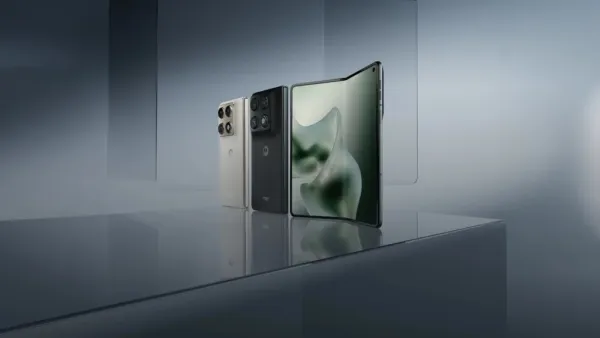
At the Consumer Electronics Show (CES) 2026 in Las Vegas, Motorola has taken a significant step in its smartphone strategy by introducing the Motorola Razr Foldits first book-style foldable phone. This move expands the company’s foldable lineup beyond the popular clamshell Razr flip models and positions Motorola as a more formidable competitor in the large-format premium foldable segment traditionally dominated by Samsung and Google.
The Razr Fold marries the iconic Razr design heritage with a modern tablet-like experience. When folded, the device presents a compact profile anchored by a 6.6-inch external display that functions much like a traditional smartphone screen.
Unfolded, a large 8.1-inch 2K LTPO internal display, which is among the largest in the book-style foldable category, transforms the device into a productivity and media center.
Motorola’s official description emphasizes design continuity with the Razr lineage while scaling up to meet modern expectations for premium foldables. The Razr Fold’s exterior features curved edges, a pronounced hinge, and select finishes, such as PANTONE Blackened Blue and PANTONE Lily White, adding a layer of visual refinement and tactility.
Motorola has not only grown the display size but also retained a sense of everyday usability. The folded form factor is designed to feel familiar and manageable, maintaining the portability that Razr fans have come to expect, while delivering a significantly enhanced screen real estate when opened.

A notable highlight of the Razr Fold is its emphasis on photography and imaging flexibility. The rear camera array comprises three 50-megapixel sensors, including a Sony LYTIA main camera, a 50MP ultra-wide unit, and a 50MP periscope telephoto module with 3x optical zoom. This setup is designed to appeal to both still photographers and video creators, with reported support for Dolby Vision video capture.
For selfies and communication, Motorola includes a 32MP front camera on the external display and a 20MP sensor on the internal panel, providing flexibility whether the device is folded or open.
In addition to its expansive internal display, the Razr Fold introduces stylus compatibility through the Moto Pen Ultra, marking Motorola’s first stylus-supported device in its foldable line. This emphasis on pen input underscores a productivity angle that aims to attract users who treat their smartphone as a tool for creativity and work.

Motorola has also signalled a commitment to on-device intelligence and software sophistication. While complete software details remain pending, earlier teases suggested enhancements powered by Moto AI and potential integration with the company’s broader AI initiatives, including Motorola Qira.
Motorola has yet to confirm the full technical specifications, pricing, or exact launch date, but industry reporting and teaser materials indicate that the Razr Fold is positioned as a premium flagship device, likely launching in summer 2026. Early estimates project it will compete directly with the Samsung Galaxy Z Fold series and Google’s foldable offerings, seeking to carve out a space for a brand historically known for innovation and design flair.
In terms of hardware leadership, Motorola appears to be targeting performance with anticipated high-end components such as an advanced Snapdragon platform, up to 16GB of RAM, and up to 1TB of storage, though these remain subject to confirmation at the official launch.

Motorola’s Razr Fold arrival aligns with a broader industry trend toward redefining the smartphone form factor. CES 2026 has already spotlighted significant foldable innovations from multiple manufacturers, underscoring that flexible display technology is no longer niche but a central battleground for premium mobile experiences.
By blending the practical design ethos of the Razr lineage with cutting-edge foldable technology, Motorola’s latest entry aims to deliver a device that balances portability, productivity, and premium imaging, which signals that the next era of mobile smartphones may well hinge on how well brands can innovate beyond the flat slab.