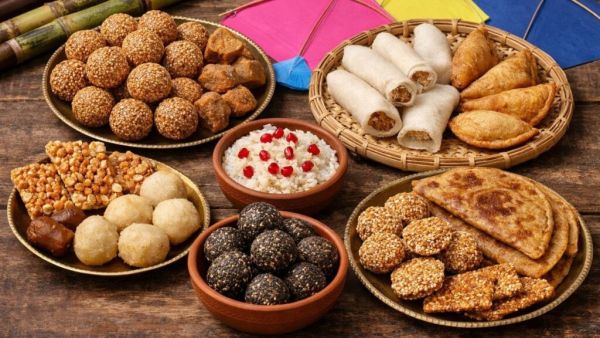
2026 Makar Sankranti Special Foods: Makar Sankranti is a major festival of India, which celebrates the harvest. This day marks the entry of the Sun into Capricorn, causing the days to become longer and the cold to subside. On this occasion, delicious dishes made from seasonal ingredients are prepared in different regions across the country.
In the West, sweets made of sesame and jaggery give warmth, while in the South and East, dishes made from rice and pulses give the message of prosperity and happiness. These dishes are not only delicious, but also symbolize unity in family and society, gratitude and the beginning of the new year. Come, let us know about these special Sankranti dishes from different parts of India.
The most beloved dish of Sankranti in Maharashtra is Til-Jaggery. In this, small laddus or chikkis are made from roasted sesame seeds and melted jaggery. People give each other sesame seeds and jaggery and say – ‘Tilgul ghya, god god bola’ i.e. take sesame seeds and jaggery and talk sweetly. This sweet symbolizes sweetness in relationships and warmth to the body in winter.
Sankranti is called Pongal in Tamil Nadu. Sweet Pongal is made from rice, moong dal, jaggery, ghee, cashew nuts, raisins and cardamom. It is offered to the Sun God and symbolizes happiness, prosperity and gratitude for the new harvest. This dish is very sweet and aromatic, which doubles the joy of the festival.
Ven Pongal is the salty brother of sweet Pongal. It is made by adding rice, moong dal, black pepper, cumin, curry leaves and plenty of ghee. It is light, nutritious and comfortable. People of South India eat it for breakfast or main meal, which is a beautiful example of simplicity and balance.
Pitha is very popular in eastern India. These are cakes or dumplings made from rice flour, into which jaggery, coconut, sesame or other fillings are added. Different types of pitha are made like sesame pitha, coconut pitha etc. These are part of an age-old tradition and are prepared and eaten with the family during harvest festivals.
Khichdi has special significance on Sankranti in North India. This khichdi made of rice, moong dal, seasonal vegetables, spices and ghee is very nutritious. It is often made collectively and distributed among the poor. This dish reflects the importance of equality, nutrition and charity. In many places it is also eaten with curd and chiuda.
In Gujarat, Sankranti is called Uttarayan. Undhiyu is a special mixed vegetable dish, in which winter vegetables like sweet potatoes, beans, brinjal, potatoes and fenugreek pakodas are cooked on low flame. It is served with puri and sweets. It symbolizes the bountiful harvest and prosperity of the festival.
Ariselu (or Athirasam) is made in this part of South India. Made from rice flour and jaggery, this fried sweet is crispy from outside and soft from inside. It is especially made on Sankranti and shows celebration, hospitality and the richness of South Indian cuisine.
Chakkara Pongal is prepared in Karnataka, which is similar to the sweet Pongal of Tamil Nadu. Rice, jaggery, ghee along with dry ginger and coconut are added to it. It has a good balance of sweetness and spice, reflecting regional flavors and honoring the harvest and the changing seasons of the sun.
Sesame laddus are very much liked in North and Central India. Made from roasted sesame seeds, jaggery and ghee, these laddus are full of warmth and energy. Eating these in winter gives strength to the body and also increases the importance of the festival.
These dishes show that Sankranti is not just a festival but a beautiful celebration of India’s cultural diversity and unity.