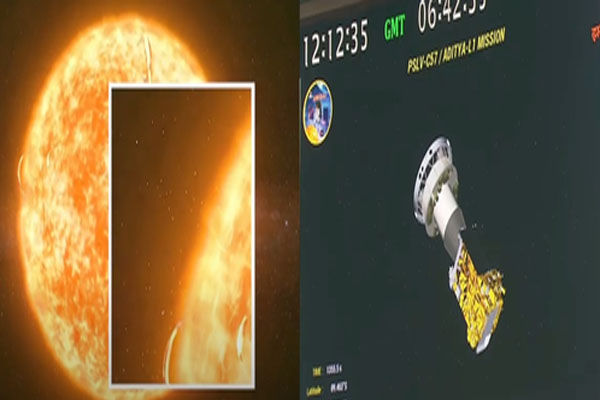
New DelhiThe Indian Space Research Organization (ISRO) on Saturday said its Aditya-L1 solar mission has provided new information on how a powerful solar storm can affect the Earth’s magnetic field, “The most severe impact occurred during the impact of the solar storm’s disturbed area,” ISRO said in a statement, In an important study published in the ‘Astrophysical Journal’ in December 2025, ISRO scientists and research students conducted a detailed analysis of a major space event that could impact the Earth in October 2024,
Effect of solar storm on earth
The study used data from Aditya-L1, India’s first solar observatory, as well as data from other international space missions to understand the impact on Earth of a massive burst of solar plasma from the Sun. The statement said, ‘Space weather refers to those conditions arising in space, which are caused by temporary activities occurring on the Sun, such as solar plasma explosions. These events can affect satellites, communications and navigation services and electrical grid infrastructure on Earth.
The atmosphere gets heated due to solar storm
According to ISRO, the turbulent field of the solar storm compressed the Earth’s magnetic field excessively, causing it to come unusually close to the Earth and for some time some satellites located in geostationary orbit came in contact with them. The space agency said such an event occurs only during extremely severe space weather events. The study also revealed that electric currents in the auroral region (higher latitudes) became extremely intense during the disturbed phase. This process can warm the upper atmosphere and cause increased atmospheric escape of atmospheric gases.
ISRO said that these findings further strengthen the need for continuous monitoring of solar activities. According to the agency, this study highlights the importance of understanding and assessing space weather events in real-time to ensure the safety of critical space assets.