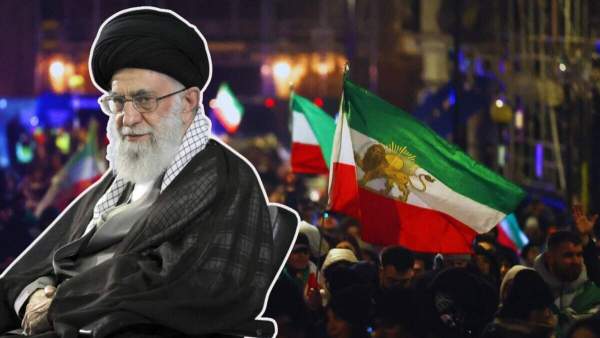
London: Iran’s leadership is under incredible pressure as the largest protests in years against the Islamic theocracy shake the country.
Government hard-liners have threatened to attack the US military and archrival Israel over support for the demonstrators, though for now, President Donald Trump says Iran has signalled it wants to negotiate with Washington.
There is no sign that a Venezuela-style US military intervention is coming.

Here’s a look at the fragility at the top as the protest death toll rises into the hundreds in the crackdown and as connections to the outside world remain cut.
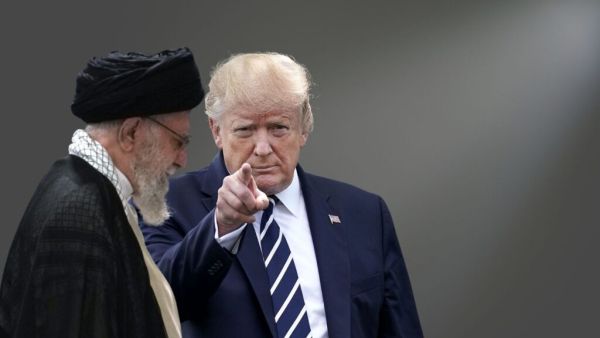
Iran’s leadership and military were badly weakened in the 12-day war with Israel in June and by US airstrikes against the country’s nuclear facilities during the conflict. Several military leaders were killed, air defences were nearly wiped out, and the missile stockpile shrank.
The 86-year-old Supreme Leader Ayatollah Ali Khamenei, who has ruled since 1989 and holds ultimate power, was out of sight for days during and after the war. He has no successor, a source of further uncertainty for the theocracy and Iran’s people.
Experts say Iran’s establishment has always had pragmatists who might be willing to concede certain things to Washington. “But they’re really marginalised,” said Siavush Randjbar-Daemi, senior lecturer at the University of St Andrews in Scotland. “The problem again remains that finding a Delcy Rodríguez -like figure within the Iranian establishment is very hard,” referring to the Venezuelan vice president-turned-interim leader following the US removal of Nicolás Maduro.
Meanwhile, Iran’s reformist President Masoud Pezeshkian has little power to make the sweeping kind of economic or other changes that protesters want.
The US now has the chance to apply pressure on Iran’s leadership at the weakest point in the Islamic Republic’s 47-year history, said Kamran Matin, an associate professor of International Relations at the University of Sussex.
The war last year also highlighted Iran’s diminished regional clout, especially after Israel took aim at Tehran’s armed proxies during the war in Gaza: Hezbollah in Lebanon, Hamas in Gaza, Houthi rebels in Yemen and other armed groups in Syria and Iraq.
Globally, Iran remains isolated. One ally, Russia, is distracted by its war in Ukraine. China, a buyer of Iranian oil, on Monday expressed hope the Iranian government and people are “able to overcome the current difficulties and maintain national stability.”
International concerns remain high over Iran’s battered nuclear program, which Tehran has long insisted is for peaceful purposes even as Western powers worry about the highly enriched uranium that’s necessary for creating a nuclear weapon.
After Iran’s negotiations with the US deadlocked, the United Nations in September reimposed sanctions that freeze Iranian assets abroad, halt arms deals, and penalise any development of Iran’s ballistic missile program, among other measures.
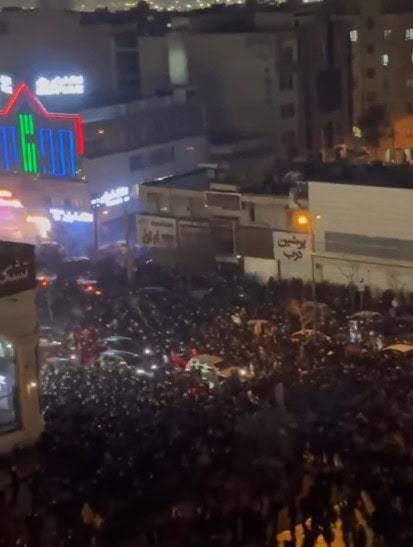
The sanctions were another blow to Iran’s economy. In late December, Iranians, already trying to stay afloat, saw the currency, the rial, plunge to a record low of 1.42 million to the US dollar. Prices of food and other necessities shot up, pushing traders and shopkeepers in major markets in Tehran to take to the streets.
That anger swiftly turned into a broader challenge to the theocracy, and leaderless protests ignited in other cities.
While decades of state repression have limited any organised opposition groups inside Iran, its people repeatedly over the years have turned to the streets and risked bloody crackdowns when they feel something they have long put up with — the harsh enforcement of wearing headscarves, or crushing inflation — has gone too far.
Many Iranians watched the US military’s capture of Maduro earlier this month, and wondered if their leader might be next.
But on Sunday, US lawmakers sought to cool such expectations, even after Trump repeatedly pledged to strike Iran if protesters were killed. US Senator Mark Warner, vice chairman of the Senate Intelligence Committee, noted to CNN that popular discontent with the US role in the 1953 coup in Iran helped lead to the 1979 Islamic revolution that brought the current theocracy to power.
“Trump’s primary aim is to change the behaviour of the Iranian regime, not necessarily the regime itself” with his threats against Iran in recent days, with the aim of extracting concessions on issues such as nuclear enrichment or the range of its missiles, said Matin, the analyst.
Meanwhile, there have been no public signs of significant fractures emerging in the government even as the stress on it grows. There are no major political challengers waiting. In the diaspora, opposition is divided among various organisations.
While signs of support have been spotted among Iranians at home and abroad in recent days for exiled Crown Prince Reza Pahlavi, son of the shah forced from power in 1979, it is not clear how strong or widespread it may be.
“Iran’s leaders face a perilous moment, but they are no strangers to chaos. The regime has survived wars, sanctions and political upheaval through ruthless force, pragmatism and leadership unity. However, the off-ramps have now significantly narrowed,” said Ellie Geranmayeh, deputy programme director with the European Council on Foreign Relations.
Like others, she noted that change would best come from Iranians themselves.