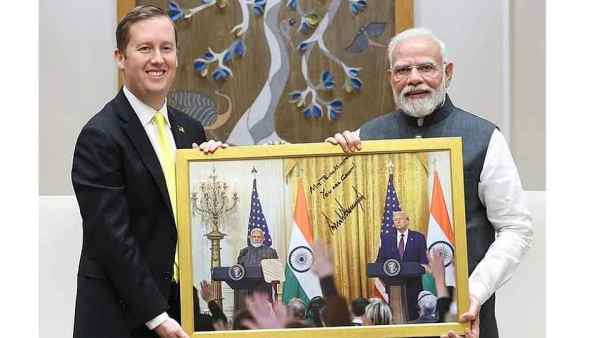
Gor: Sergio Washington’s incoming ambassador to incoming Delhi, said on Monday that the two countries would discuss the unresolved trade concerns during a conversation on Tuesday, indicating an early attempt to stabilize India-US relations that have been strained by tariff tensions and market fears.
In a similar strategic step, Gor said that India would get an invitation to join the US-led Pax Silica program, which aims to protect crucial tech supply chains including silicon, next month.
Gor tried to convey in his remarks on his first day of work that the present conflicts might be resolved in a mature relationship. He said, “True friends can disagree, but they always work things out in the end.”
Gor emphasized that negotiations are still ongoing, saying, “The next call on trade will occur tomorrow.” “India is the world’s largest nation, so it’s not an easy task to get this across the finish line, but we are determined to get there,” he said, without going into detail about the level at which the talks will take place.
Gor also connected trade to a more comprehensive reassessment of US diplomacy. He declared 2026 to be “a year of reciprocity,” characterized by “fair trade, mutual respect, and shared security,” citing Secretary of State Marco Rubio. He emphasized that while trade is a fundamental component of the partnership, collaboration will also continue in the areas of energy, technology, health, education, security, and counterterrorism.
Why is India joining now, and what is Pax Silica?
Protecting vital technological supply chains, such as those for artificial intelligence, semiconductors, minerals, etc., is the goal of the US-led economic security collaboration Pax Silica. Australia, Japan, Israel, and the United Kingdom are among its members. India will now join after a month of being excluded, which is often seen as a diplomatic warm-up.