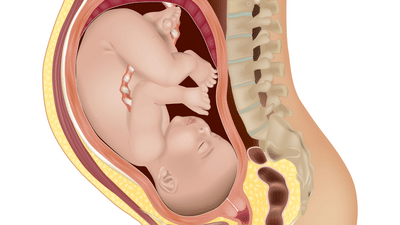
The position your baby takes before birth can shape your entire labour experience, and the cephalic position is one of the most reassuring signs your body is getting ready for an easy delivery. When your baby is head-down, it sets the stage for labour to move more smoothly, often reducing complications and the need for interventions. For many expecting parents, hearing that the baby is in a cephalic position brings a natural sense of relief.
As you get closer to delivery, it becomes even more helpful to know the different types of cephalic positions and how each one may affect your labour journey.
What Does Cephalic Position During Labour Mean?
Cephalic position simply means your baby is lying with their head pointing downwards towards your birth canal. The head is the lowest part, closest to the exit, while the bottom and feet are up near your ribs. This head-first position is the natural and safest way for almost all babies to be born vaginally.
Why Is the Cephalic Position the Best One for Labour?
When your baby is head-down, the hardest and widest part of their body (the head) comes out first. This helps open up the birth canal gradually and makes everything progress more smoothly.
Up to 96 per cent of babies settle into this position by the time labour starts, and it greatly lowers the chances of needing a caesarean section or facing complications during a vaginal birth.
When Does a Baby Usually Turn into the Cephalic Position?
Babies start having enough space to flip and turn freely until around 32 to 34 weeks. After that, the womb gets tighter, so most babies naturally settle head-down between 34 and 37 weeks. By 37 weeks, they are in cephalic position and stay there until delivery.
What are the Types of Cephalic Position
These are the common cephalic presentations seen during labour:
1. Vertex Presentation (Most Common)
This is the position everyone hopes for. Your baby is head-down with the back of the head (occiput) coming first. It’s ideal because the smallest, most flexible part of the head enters the birth canal, making it easier for the baby to rotate and move down smoothly during labour.
2. Sinciput Presentation
Here, your baby is still head-down, but instead of the back of the head, the sinciput (the area near the forehead) is leading. Labour can feel a bit longer or more challenging with this position because the head doesn’t mould as easily, but many babies naturally rotate into a better position once labour progresses.
3. Brow Presentation
In this rare position, your baby’s head is extended so the brow or forehead comes first. Because this is the widest part of the head, it usually doesn’t fit well through the pelvis, which can make vaginal birth difficult or cause labour to slow down.
4. Face Presentation
Here, your baby is head-down, but their chin and face are leading the way because the head is fully extended (chin pointing up). Vaginal delivery is possible in some cases, but it depends on the exact position of the chin.
What Are the Signs That a Baby Is in the Cephalic Position?
You might notice clues yourself that your baby is in a cephalic position:
- Strong kicks high up near your ribs (that’s the feet).
- A firm, round shape low down in your pelvis (the head).
- Your belly often looks more rounded, and your navel may pop out.
What Happens If Your Baby Is Not Cephalic Yet at 36 to 37 Weeks?
Don’t worry too much if your baby hasn’t turned yet. Believe it or not, a lot of babies still manage to turn head-down on their own, even right up until labour.
But if your little one is still in a breech position (bottom-first) or transverse (sideways), your doctor may suggest an external cephalic version (ECV) around 37 weeks. This is when they gently press and guide your bump from the outside to roll the baby head-down.
How to Encourage a Baby to Turn to the Cephalic Position
There are a few simple things you can try at home to encourage your baby to turn:
- Spend time on all fours or do gentle pelvic tilts.
- Sit on a birth ball and rock your hips in circles.
- Go for walks. Just moving around and letting gravity do its job can make a difference.
- Swimming or prenatal yoga can loosen tight muscles and give the baby more room to turn.
When Might a Caesarean Be Recommended Even if the Baby Is in the Cephalic Position?Your doctor may recommend a caesarean section even if your baby is in the cephalic position for a few reasons:
- The baby is at an unusual angle, such as a persistent brow presentation or face presentation.
- There are other concerns that could affect the safety of labour, like placenta position issues or umbilical cord problems.
- You’ve had previous caesarean deliveries or other uterine surgeries that make a vaginal birth riskier.
Hearing that your baby is in a cephalic position is something to celebrate. It means nature is doing exactly what it’s meant to do, placing your baby in the optimal position for a safer labour.
FAQs on Cephalic Position During Labour: What It Means for Your Delivery
Do multiples (twins or triplets) affect cephalic positioning?
Yes, it’s common for one baby to be cephalic while the other may be breech or transverse due to limited room in the uterus.
What is the difference between a cephalic anterior and a cephalic posterior position?
In an anterior position, your baby’s head is down, and their back faces your belly. In a posterior position, the baby is still head-down but facing your abdomen.