
“Cowards die many times before their deaths” is a short line with a strong message. The quote shows how fear can rob us of our enjoyment of life long before it actually ends. When we worry, hesitate, or picture the worst, we end up suffering over and over, even though nothing has really happened. This idea still matters today, just as it did centuries ago, which makes the quote timeless and relatable.
What the Quote Really Means
This quote means that fear leads to repeated emotional and mental pain. Here, a “coward” is not just someone weak, but someone who lets fear guide their decisions. Each time we avoid a challenge, think about adverse outcomes, or step back from what matters, we go through a small “death.” These moments rob us of our confidence, happiness, and drive.
The quote also offers hope. A brave person might feel pain or loss, but only once, when it actually happens. They do not keep reliving it in their mind. Courage keeps suffering to what is real, while fear makes it worse. The quote encourages us to face discomfort rather than let worry and avoidance cause more pain.
Julius Caesar and the Power of Decisive Action
Julius Caesar was a significant figure in Roman history. Born in 100 BCE, he worked his way up in the military and politics and played a key role in changing the Roman Republic. He was known for his ambition, confidence, and strong leadership, which often clashed with people who were more cautious or fearful.
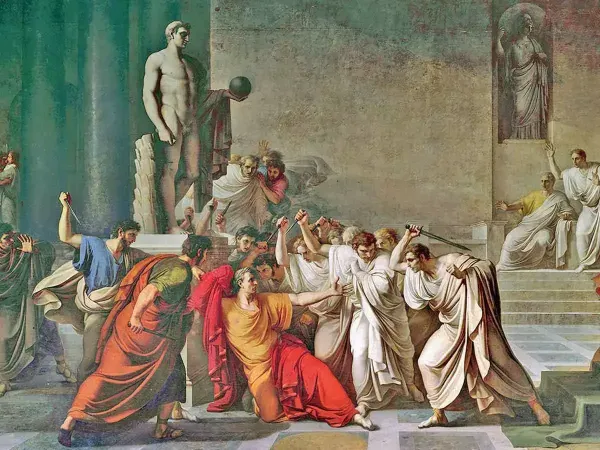 The line is well known from Shakespeare’s play Julius Caesar, but its message aligns with Caesar’s actual beliefs. He valued action over hesitation and risk-taking over backing down. Even though his life ended in violence, his legacy supports the quote’s idea: death will come to everyone, but living in fear is a choice. Caesar’s life shows that being bold can have risks, but living in fear has a daily cost.
Fear, Imagination, and the Modern Mind
Today, fear usually does not look dramatic. It often appears as putting things off, doubting ourselves, or hesitating. People worry about failing, being rejected, or making mistakes, and by doing this, they feel the pain of these things before anything even happens. This is what the quote warns us about.
Psychology agrees with this idea. Most anxiety comes from what we imagine might happen, not from what is happening now. When fear takes over our thoughts, we keep suffering and do not move forward. The quote reminds us that imagined pain can hurt more than real problems. Taking action with courage, even if it is not perfect, helps us feel more in control and less afraid.
Choosing to Live Fully, Not Fearfully
This quote stays powerful because it challenges us to live more honestly. It makes us ask if we are really living or just avoiding what is hard. Courage does not mean we have no fear; it means we do not let fear control every choice. When we speak up, try again, or take a risk, we break the cycle of repeated emotional pain.
When we choose courage, we save energy and regain our focus. Life changes from constantly trying to protect ourselves to really taking part in it. Instead of “dying” many times from worry and hesitation, we live once, with purpose. This change does not just affect what happens; it changes how life feels.
What the Quote Really Means
This quote means that fear leads to repeated emotional and mental pain. Here, a “coward” is not just someone weak, but someone who lets fear guide their decisions. Each time we avoid a challenge, think about adverse outcomes, or step back from what matters, we go through a small “death.” These moments rob us of our confidence, happiness, and drive.
The quote also offers hope. A brave person might feel pain or loss, but only once, when it actually happens. They do not keep reliving it in their mind. Courage keeps suffering to what is real, while fear makes it worse. The quote encourages us to face discomfort rather than let worry and avoidance cause more pain.
Julius Caesar and the Power of Decisive Action
Julius Caesar was a significant figure in Roman history. Born in 100 BCE, he worked his way up in the military and politics and played a key role in changing the Roman Republic. He was known for his ambition, confidence, and strong leadership, which often clashed with people who were more cautious or fearful.
For Caesar, courage meant living once—rather than “dying” repeatedly through fear.
Fear, Imagination, and the Modern Mind
Today, fear usually does not look dramatic. It often appears as putting things off, doubting ourselves, or hesitating. People worry about failing, being rejected, or making mistakes, and by doing this, they feel the pain of these things before anything even happens. This is what the quote warns us about.
Psychology agrees with this idea. Most anxiety comes from what we imagine might happen, not from what is happening now. When fear takes over our thoughts, we keep suffering and do not move forward. The quote reminds us that imagined pain can hurt more than real problems. Taking action with courage, even if it is not perfect, helps us feel more in control and less afraid.
Choosing to Live Fully, Not Fearfully
This quote stays powerful because it challenges us to live more honestly. It makes us ask if we are really living or just avoiding what is hard. Courage does not mean we have no fear; it means we do not let fear control every choice. When we speak up, try again, or take a risk, we break the cycle of repeated emotional pain.
When we choose courage, we save energy and regain our focus. Life changes from constantly trying to protect ourselves to really taking part in it. Instead of “dying” many times from worry and hesitation, we live once, with purpose. This change does not just affect what happens; it changes how life feels.