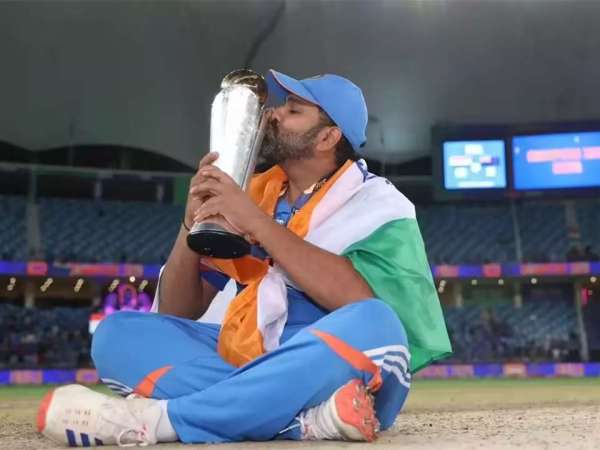
Rohit Sharma: Former New Zealand fast bowler Simon Doull recently raised an important question about Rohit Sharma’s long-term motivation in international cricket, particularly with the 2027 ODI World Cup still some distance away. His comments came after India’s ODI series loss against New Zealand, where Rohit struggled to make a strong impact with the bat. The discussion has triggered wider debate around form, age, motivation, and the challenges senior cricketers face while sustaining excellence at the highest level.
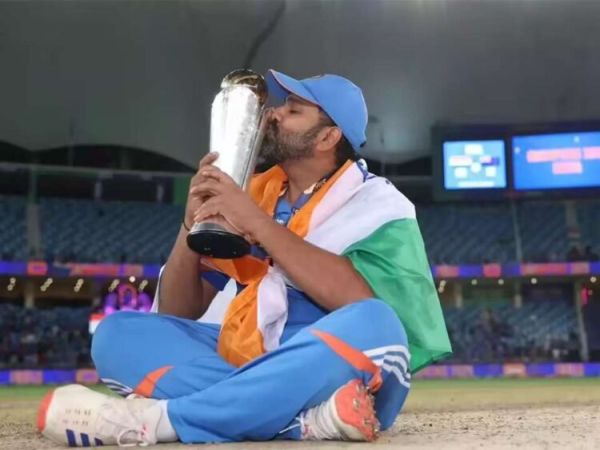
Rohit Sharma endured a difficult ODI series against New Zealand, where he managed just 61 runs across three matches at an average of 20.33. His highest score in the series was 26, which was uncharacteristic for a player of his calibre and experience. This series stood out because it was the first time since his return to international cricket in September that he failed to score a single half-century across an entire ODI series.
Before this downturn, Rohit had enjoyed a productive run against Australia and South Africa, scoring one century and three half-centuries. Such contrast in form has naturally drawn attention, especially considering his consistency in white-ball cricket over the years. The last instance when he played a three-match ODI series without crossing the fifty-run mark was back in 2021, highlighting how rare such a slump has been in his career.
Speaking during the broadcast, Simon Doull questioned whether Rohit still possesses the same level of hunger that has driven him throughout his career. According to Doull, Rohit has often thrived when he had a clear goal to chase, whether it was a T20 World Cup or a 50-over World Cup. With the next ODI World Cup scheduled for 2027 in South Africa, Doull wondered whether the distance in time could affect Rohit’s motivation.
Doull’s comments were not meant as criticism of Rohit’s ability but rather as a reflection on the mental demands of elite sport. Sustaining motivation over long periods, especially after achieving almost everything the game has to offer, can be one of the toughest challenges for veteran players.
Former India head coach Ravi Shastri echoed Doull’s sentiments, emphasizing that hunger and desire are often the defining factors in determining how long a player can continue performing at the highest level. Shastri highlighted that when players have already achieved major milestones, maintaining the same level of intensity becomes a deeply personal challenge.
According to Shastri, skill and experience alone are not enough to succeed consistently. The internal drive to push boundaries, adapt, and improve remains crucial, particularly for senior cricketers navigating the later stages of their careers.
Rohit Sharma will be close to 40 years old when the 2027 ODI World Cup begins. Historically, very few players at that age have excelled on cricket’s biggest stage. Physical recovery, reflexes, and workload management become increasingly important as players grow older. Despite these challenges, Rohit has shown determination in maintaining his fitness and leadership responsibilities.
Age, however, does not automatically dictate decline. Modern training methods, sports science, and workload management have extended careers, and Rohit’s experience could still prove invaluable, particularly in high-pressure tournament scenarios.
Another concern raised by Simon Doull was the lack of consistent ODI match practice for Rohit Sharma in the near future. With the international calendar heavily focused on T20 cricket, including preparations for the 2026 T20 World Cup, opportunities for playing 50-over cricket are limited.
India’s next ODI series is scheduled for July against England, meaning Rohit will have a long gap without competitive one-day cricket. While other players may stay match-ready through domestic tournaments like the Ranji Trophy, Rohit is expected to be seen next in action during the 2026 IPL season. Playing predominantly in one format can make it challenging to maintain rhythm and adaptability in another.
Despite the recent dip in form and the questions raised by experts, Rohit Sharma’s journey is far from over. His experience, leadership qualities, and proven ability to perform on the biggest stages cannot be overlooked. The coming months will be crucial in determining how he manages workload, motivation, and form across formats.
Whether Rohit sets his sights firmly on the 2027 ODI World Cup or chooses a more selective approach to his international career will depend largely on his internal drive. For now, the discussion highlights the fine balance between experience and hunger that defines the careers of cricket’s greatest players.