
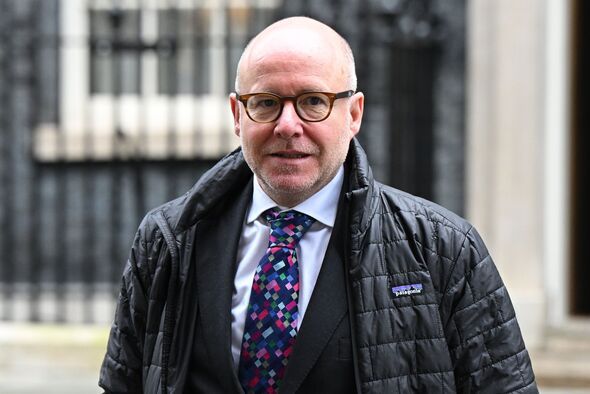
Keir Starmer's top legal brain in government, Lord Hermer, has been slammed by top peer Kate Hoey after refusing to explain why a key Bill will avoid breaking international law. The Attorney General has been accused of "casually brushing aside" warnings that Sir Keir Starmer's flagship tobacco ban is set to cause a furious showdown in Brussels' courts.
Last summer a former Justice Secretary warned the Prime Minister that his nannying ban is set to breach the Brexit Windsor Framework, negotiated by Rishi Sunak, adding that the ban is currently a "legal mess" when it comes to applying in Northern Ireland. Sir Keir re-launched Rishi Sunak's proposed ban after the general election, which will make it illegal to sell tobacco to anyone born on or after January 1 2009 in an effort to fully phase out smoking for good. It will also ban the advertising of vapes, ban certain flavours of vapes, and crack down on disposable vapes.
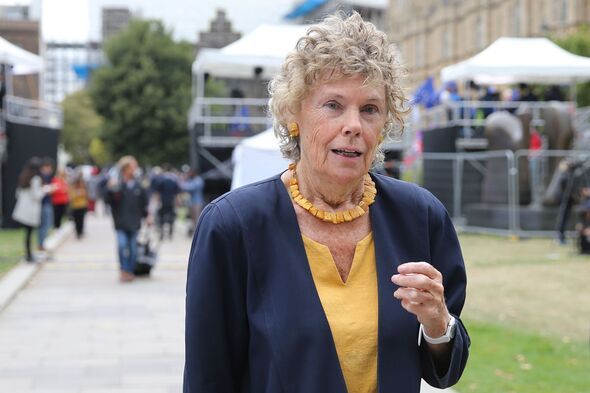
Baroness Hoey, formerly a long-serving Labour Party MP, wrote to Lord Hermer in December demanding answers about how the Government will successfully apply the bill in Northern Ireland despite the government's treaties with the EU seemingly forbidding the move.
She highlighted recent formal objections to the Bill by a number of EU countries, including Greece, Slovakia, Italy, Portugal and the Czech Republic, who have all warned the Commission that the tobacco ban breaches the rules of the EU single market.
Baroness Hoey warned: "Sir Robert Buckland... has advised that the Bill may be open to legal challenge under Article 2(1) of the Windsor Framework. Sir Robert Buckland has also observed that a successful challenge could lead to the relevant provisions of the Tobacco and Vapes Bill being directly disapplied in Northern Ireland, thereby creating a clear divergence in the application of the law across the United Kingdom.
"This would establish division across our four nations, raising questions of equal treatment and undermining the core principles of a unified internal market."
Baroness Hoey has condemned the flippant and dismissive response from Lord Hermer, which came despite clear warnings that the nannying ban could break apart the United Kingdom's essential internal market between Great Britain and Northern Ireland.
Responding to her a week later, the Attorney General wrote: "I appreciate your concerns and am glad that you support the Bill being applicable in the entire United Kingdom. As you know, that is certainly the Government's intention.
"I regret any unhappiness caused by the manner in which your queries have been responded to."
Reacting, Baroness Hoey told the Express she was "deeply disappointed" that widespread concerns about the risks of the Bill are being so flippantly ignored by the Government.
She blasted: "It is deeply disappointing that a serious, detailed letter to the Attorney General has been brushed aside so casually. If there were genuinely no legal difficulty, he could and should have set out clearly why that is the case. The fact that he did not only reinforces the concern that there is an unresolved issue.
The Windsor Framework creates a clear problem for the Tobacco and Vapes Bill: it fragments the UK's internal market and makes uniform enforcement impossible. If Northern Ireland is subject to a different regulatory regime from Great Britain, this legislation simply cannot work as intended. Ignoring that reality does not make it go away. Parliament has a duty to legislate for the whole United Kingdom, not to pass bills that look tidy on paper but fall apart in practice."
The Tobacco and Vapes bill was initially introduced by Rishi Sunak's government, but he failed to pass it before the election despite cross-party support.
Health Secretary Wes Streeting said: "Unless we act to help people stay healthy, the rising tide of ill-health in our society threatens to overwhelm and bankrupt our NHS. Prevention is better than cure.
"This government is taking bold action to create the first smoke free generation, clamp down on kids getting hooked on nicotine through vapes, and protect children and vulnerable people from the harms of secondhand smoke.
"This historic legislation will save thousands of lives and protect the NHS. By building a healthy society, we will also help to build a healthy economy, with fewer people off work sick."