Since the divorce, days of the 40-year-old single mother living in Texas have been tightly structured around work and parenting, according to Psychology Today.
Her ex-husband lives nearby so they can coordinate pickup and drop-off times without disrupting the children’s schooling.
Mealtime is the main difference between the two households. Melanie’s ex is more relaxed, often letting the children eat fast food and watch television, while she prioritizes home-cooked meals with vegetables. When the children stay with their father, she prepares food in advance and brings it over to ensure they eat properly.
One evening, when she came by to drop off the food, her ex-husband invited her to stay. “He said ‘It doesn’t seem fair that you’ve gone to all of this trouble and don’t get to share the food,’” Melanie said.
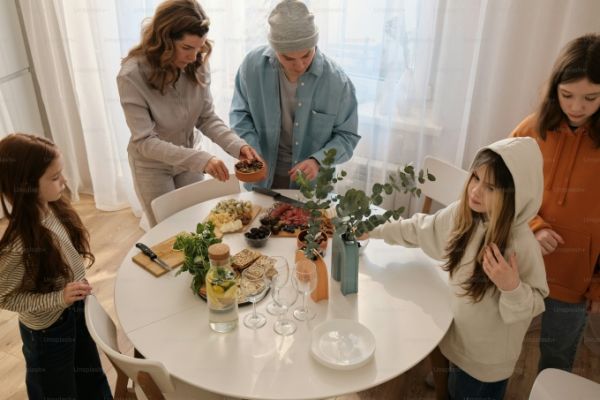
It was the first time the two shared a table after the divorce and dinner passed without arguments. The adults discussed pickup schedules while the children shared stories from school.
They later agreed to have dinner together twice a week. Melanie said the children were noticeably calmer and happier. “I wonder if our lives would have been different if we had regular dinners when we were married,” she said.
Melanie’s experience reflects the view of Anne K. Fishel, a professor at Harvard University who believes in “the value of emotionally supportive, nutritious family dinners.”
Studies, including reports by the American Academy of Pediatrics (AAP), show regular family meals help reduce the risk of depression, eating disorders and risky behaviors among adolescents. However, these benefits are only true when the dinner table is free of conflict.
In reality, many divorced couples find it difficult to sit down together due to awkwardness, fear of old conflicts resurfacing or discomfort over the idea of an ex showing up uninvited.
Psychologists recommend setting informal rules for mealtimes and treating the dinner table as a neutral space. Parents should focus on their shared role in raising children, limiting conversation to school and health, and avoiding past issues or personal relationships. Clear boundaries help maintain a calm atmosphere.
To turn family meals into emotional support for children, especially in divorced families, psychologist F. Diane Barth suggests: turn off electronic devices: dedicate the time fully to conversation and bonding, avoid lecturing: Do not criticize or scold children at the table, be flexible: Families do not have to eat dinners together every day. Occasional lunches or preparing simple food together can still foster connection.
“No one needs more pressure these days so don’t think you have to start having daily family meals in order for your children to grow up healthy.
“You can start thinking about ways to incorporate one thing, such as storytelling, into an occasional mealtime, even one with only part of your family present,” Barth said.