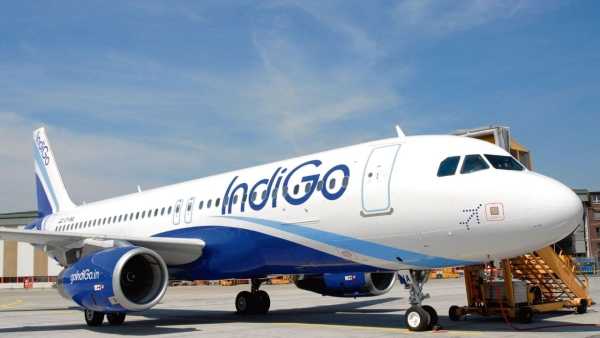
The country's largest airline Indigo has given up more than 700 of its slots at domestic airports. This step has been taken after the strict action of DGCA in which the airline's winter flights were ordered to be cut. Actually, this whole matter is related to the huge chaos that happened in the beginning of December last year. There were huge delays in flights in December due to fog and other reasons. During that time, passengers had to wait for hours at the airport and thousands of flights were cancelled. If we look at the figures, between December 3 and 5, about 2,507 Indigo flights were canceled and 1,852 flights were delayed. This had an impact on more than three lakh passengers across the country.
In view of this chaos, DGCA took a tough stand and reduced IndiGo's winter schedule by 10 percent. This simply meant that the airline would have to stop some of its services. Following this order, Indigo has now submitted the list of 717 slots to the ministry, which it has vacated. 'Slot' is the fixed time given for landing and take-off of aircraft at an airport.
The largest portion of slots vacated by IndiGo is connected to major metros of the country. According to sources, out of total 717 slots, 364 slots are from six big metro airports like Delhi, Mumbai, Chennai, Kolkata, Bengaluru and Hyderabad. In this also, maximum slots are being said to be from Hyderabad and Bengaluru. These slots have been vacant for the period from January to March.
Handling this situation, the Civil Aviation Ministry immediately took action and sought applications from other airlines. The government wants that these slots left by Indigo should be used by other companies so that the passengers do not face any problem. However, the ministry has given clear instructions that no airline will close its existing routes to get these new slots.
Even though the government has invited other airlines, aviation sector experts believe that the companies may not show much interest in it. There are two big reasons behind this. The first is that planning the network and starting new routes is a long process, which is difficult to execute so quickly. It is not practical to start a new route and then close it after just a month or two.
The second big reason is that most of the vacant slots are for 'Red-Eye' flights. These are those flights which operate late at night or early in the morning. Generally, passengers are less likely to travel at these times, so these slots are not considered very attractive in terms of profits for airlines.
This time DGCA seems to be in a very strict mood regarding the arbitrariness of the airlines. Apart from the slot reduction, the regulator had also imposed a huge fine of Rs 22.20 crore on IndiGo on January 17 for operational lapses. A warning was also issued to the airline's CEO Peter Elbers. The matter did not end here, but DGCA has also directed IndiGo to deposit a bank guarantee of Rs 50 crore.