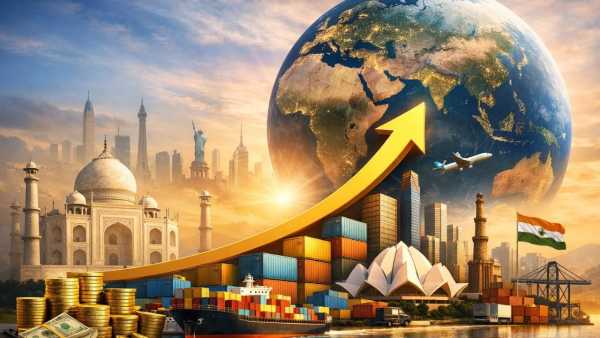
When many big countries of the world are busy erecting walls in mutual trade, India has chosen a different path for itself. While countries like America are talking about increasing tariffs and limiting imports, India has started making Free Trade Agreements or FTAs its strength. This is the reason why today India is being seen not just as an emerging economy but as a decisive player in global trade.
FTA means a trade agreement between two or more countries, in which taxes on each other's products are either reduced or completely eliminated. This makes goods cheaper, trade increases and companies get new markets. India has now gained direct access to the world's biggest markets through this policy.
In the last few years, India has shown progress on the FTA front. Today India has signed free trade agreements with more than 15 countries and big economic groups. These partners are not just countries, but represent the world's largest populations, vast territories and strong economies. Thanks to these agreements, India has got direct access to markets with global GDP of about 35 trillion dollars.
The biggest example of this strategy is the India-European Union FTA signed in January 2026. The European Union is a group of 27 countries and is considered the second largest economy in the world. After this agreement, Indian companies have got direct entry to a market where the purchasing power is strong and the level of technology and industry is also very high. India and the European Union together now control about one-fourth of the world's total GDP.
India's largest trade network in Asia is with ASEAN countries. This group of 10 countries of South-East Asia is very important in terms of both population and market. India-ASEAN FTA is in force since 2010, after which India's auto parts, pharma, agricultural products and engineering goods got a larger market. The young population and rapidly increasing consumption in this region are bringing long-term benefits for India.
India also has strong partnerships with small but very important countries. Countries like Singapore and Mauritius may be small in terms of population, but strategically they are very big for India. Singapore is the financial center of Asia and Mauritius is the gateway to Africa. FTA with these countries opens new avenues for Indian investment and services.
The FTA with Australia is an important step towards resource and energy security for India. Australia, rich in vast land area and mineral wealth, also provides huge opportunities for Indian exports. Similarly, agreements with technologically developed countries like Japan and South Korea have strengthened India's manufacturing and technology sector.
The FTA with UAE has given India direct access to logistics and trade hubs in the Middle East. UAE has become a major trading partner of India today and this agreement is going to take trade to new heights in the coming years.
The recent India-UK FTA further strengthens India's global identity. Sectors like textiles, gems-jewellery and footwear are now getting entry into big markets like Britain without any hindrance. Overall, FTA diplomacy has strengthened India at a time when uncertainty has increased in the world. India has now moved towards becoming not just an import-export country but a rule-setting economy. This is the reason why India today stands as an important player on the global trade table.