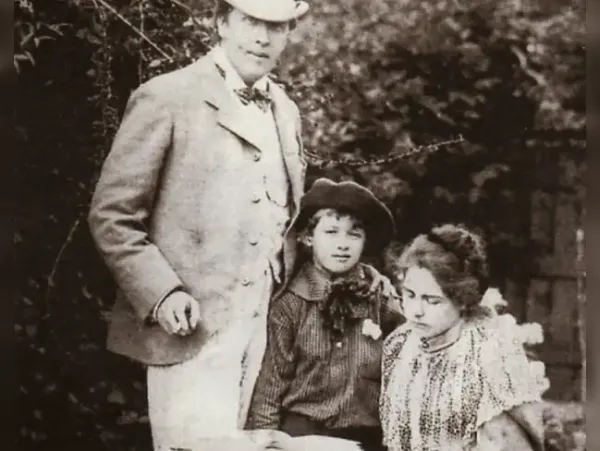
Valentine’s Day 2026 renews conversations around romance, devotion, and partnership. History reminds us that some of love’s most enduring expressions were written not for public display but for private reassurance. Among these are the letters of Oscar Wilde, whose reputation as a wit, aesthete, and literary provocateur often overshadows a quieter chapter of his life, his early, tender devotion to his wife, Constance Lloyd.
Long before scandal and exile came to define Wilde’s legacy, his letters reveal a man capable of affection that was playful, poetic, and deeply sincere. Nowhere is this more evident than in his correspondence surrounding his engagement and early marriage to Constance Lloyd, a woman who matched his intellect with moral conviction and whose influence shaped his domestic and emotional world.
“Her name is Constance,” Wilde wrote, describing her as “quite young, very grave, and mystical, with wonderful eyes, and dark brown coils of hair.” He teased her aesthetic preferences, noting she did not believe James McNeill Whistler was “the only painter that ever really existed,” but concluded with triumphant affection: “however, she knows I am the greatest poet, so in literature she is all right.”
The letter ends with disarming certainty: “We are, of course, desperately in love.”
Reproduced in The Complete Letters of Oscar Wilde, this passage captures a moment of optimism before the complexities of marriage, fame and Victorian morality intervened.
Their relationship nearly stalled when Wilde’s first book of poetry attracted fierce criticism. His work was banned in several countries, and sections of British society condemned its sensual undertones as immoral. These controversies raised concerns for Constance’s family, particularly her grandfather, who feared Wilde would struggle to provide financial stability.
Yet Wilde persisted, embarking on an American lecture tour to restore both his reputation and finances. During this period, he moderated his appearance, cutting his hair and toning down his flamboyant dress, gestures that signalled his readiness for domestic responsibility.
Constance’s progressive beliefs extended beyond dress. She supported women’s suffrage, believed in greater equality and pursued her own literary ambitions. Wilde encouraged her independence, and Constance went on to publish fairy tales and contribute to women’s magazines.
Together, they designed their home according to minimalist aesthetic principles, making it a centre for conversation, art and hospitality. As Mrs Wilde, Constance hosted salons that brought together writers, artists and intellectuals, gradually overcoming the insecurities left by a difficult childhood.
“Dear and Beloved, Here I am, and you at the Antipodes. Oh execrable facts, that keep our lips from kissing, though our souls are one.”
He continues, dismissing the limitations of language itself:
“The messages of the gods to each other travel not by pen and ink… I feel your fingers in my hair, and your cheek brushing mine.”
The letter ends with a confession of emotional dependence: “I feel incomplete without you. Ever and ever yours.”
These lines, written at the height of their marital closeness, stand as one of Wilde’s most openly affectionate declarations, revealing a tenderness that contrasts sharply with the satirical tone of his plays. The above excerpts of Oscar Wilde’s private letters have been mentioned in a report by ‘Greek love through the ages.’
As Wilde’s career flourished, particularly through his immensely successful society comedies, the dynamics of their marriage began to change. Wilde spent increasing amounts of time away from home, and rumours about his relationships with men became harder to ignore.
Though Victorian society celebrated the Wildes as a glamorous couple, cartoons and gossip columns began to undermine this image, portraying Oscar as effeminate and hinting at marital estrangement.
His letters to Constance occupy a crucial place in this archive. They document a love that was sincere, if ultimately unable to withstand the pressures of fame, secrecy and societal constraint.
Long before scandal and exile came to define Wilde’s legacy, his letters reveal a man capable of affection that was playful, poetic, and deeply sincere. Nowhere is this more evident than in his correspondence surrounding his engagement and early marriage to Constance Lloyd, a woman who matched his intellect with moral conviction and whose influence shaped his domestic and emotional world.
Oscar Wilde’s letters: A letter from Sheffield
On January 22, 1884, writing from the Royal Victoria Hotel in Sheffield, where he was delivering lectures, Oscar Wilde penned a letter to his close friend Thomas Waldo Story. In it, Wilde introduced the woman to whom he had become engaged just weeks earlier, offering a portrait that blended humour, admiration and unmistakable pride.“Her name is Constance,” Wilde wrote, describing her as “quite young, very grave, and mystical, with wonderful eyes, and dark brown coils of hair.” He teased her aesthetic preferences, noting she did not believe James McNeill Whistler was “the only painter that ever really existed,” but concluded with triumphant affection: “however, she knows I am the greatest poet, so in literature she is all right.”
The letter ends with disarming certainty: “We are, of course, desperately in love.”
Reproduced in The Complete Letters of Oscar Wilde, this passage captures a moment of optimism before the complexities of marriage, fame and Victorian morality intervened.
Oscar Wilde and Constance Lloyd: A slow and thoughtful courtship
Constance Lloyd met Oscar Wilde through her brother Otho. Unlike the whirlwind romances often associated with literary figures, theirs was a measured courtship that unfolded over several years. Constance was drawn to Wilde’s intelligence and theatrical charm, while Oscar admired her seriousness, independence of thought and moral clarity.Their relationship nearly stalled when Wilde’s first book of poetry attracted fierce criticism. His work was banned in several countries, and sections of British society condemned its sensual undertones as immoral. These controversies raised concerns for Constance’s family, particularly her grandfather, who feared Wilde would struggle to provide financial stability.
Yet Wilde persisted, embarking on an American lecture tour to restore both his reputation and finances. During this period, he moderated his appearance, cutting his hair and toning down his flamboyant dress, gestures that signalled his readiness for domestic responsibility.
Oscar Wilde and Constance Lloyd: Marriage and shared ideals
Oscar Wilde married Constance Lloyd on May 29, 1884. Their early married life reflected a partnership grounded in shared values, particularly in aesthetics and social reform. Constance rejected restrictive Victorian fashion in favour of loose, health-conscious clothing inspired by the aesthetic movement. Her reasoning was practical as much as ideological: corsets damaged women’s health, hoop skirts were dangerous, and beauty need not come at the cost of comfort.Constance’s progressive beliefs extended beyond dress. She supported women’s suffrage, believed in greater equality and pursued her own literary ambitions. Wilde encouraged her independence, and Constance went on to publish fairy tales and contribute to women’s magazines.
Together, they designed their home according to minimalist aesthetic principles, making it a centre for conversation, art and hospitality. As Mrs Wilde, Constance hosted salons that brought together writers, artists and intellectuals, gradually overcoming the insecurities left by a difficult childhood.
Oscar Wilde and Constance Lloyd: “Dear and Beloved”
While Wilde’s public persona sparkled with wit, his private letters to Constance reveal a more vulnerable voice. Writing from Edinburgh in December 1884, during one of their early separations, Wilde expressed longing with lyrical intensity:“Dear and Beloved, Here I am, and you at the Antipodes. Oh execrable facts, that keep our lips from kissing, though our souls are one.”
He continues, dismissing the limitations of language itself:
“The messages of the gods to each other travel not by pen and ink… I feel your fingers in my hair, and your cheek brushing mine.”
The letter ends with a confession of emotional dependence: “I feel incomplete without you. Ever and ever yours.”
These lines, written at the height of their marital closeness, stand as one of Wilde’s most openly affectionate declarations, revealing a tenderness that contrasts sharply with the satirical tone of his plays. The above excerpts of Oscar Wilde’s private letters have been mentioned in a report by ‘Greek love through the ages.’
Oscar Wilde and Constance Lloyd: Family life and quiet fractures
Constance and Oscar had two sons within the first two years of their marriage. The couple hoped for a daughter, but the birth of their younger son, Vyvyan, was complicated and left Constance with lasting health issues. Her correspondence suggests that these complications effectively ended marital intimacy.As Wilde’s career flourished, particularly through his immensely successful society comedies, the dynamics of their marriage began to change. Wilde spent increasing amounts of time away from home, and rumours about his relationships with men became harder to ignore.
Though Victorian society celebrated the Wildes as a glamorous couple, cartoons and gossip columns began to undermine this image, portraying Oscar as effeminate and hinting at marital estrangement.
Oscar Wilde and Constance Lloyd: Letters as witness to love and loss
Oscar Wilde’s correspondence remains one of the richest sources for understanding his emotional life. Edited and published by his grandson Merlin Holland and Rupert Hart-Davis, The Complete Letters of Oscar Wilde presents not only Wilde the wit, but Wilde the lover, husband and conflicted individual.His letters to Constance occupy a crucial place in this archive. They document a love that was sincere, if ultimately unable to withstand the pressures of fame, secrecy and societal constraint.