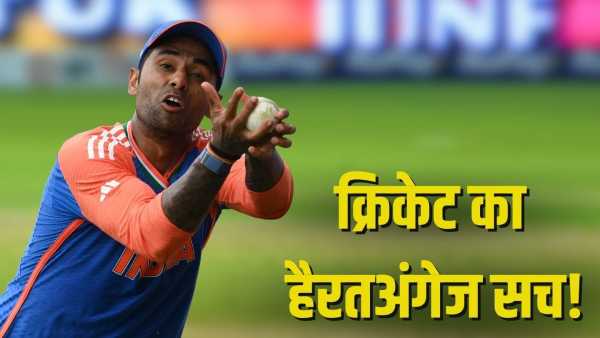
Cricket Rules For Out Caught: The thrill of a cricket match gives a lot of relief to the fans, but its rules sometimes leave the fans confused. This game also includes some rules about which most people are not aware. Some are not even usually seen in matches. Some similar rules have been made for catching also. However, in cricket, when a fielder or wicketkeeper catches the ball, he usually immediately throws the ball in the air and then catches it again. This seems to be everyone's style of celebration, but there is an old and important reason hidden behind it, which is related to the rules of cricket. About which very few people know.
According to the Laws of Cricket, Law 33 – Caught, a catch is considered complete when the fielder has complete control over the ball and also controls its movement. This effort of the fielder is enough for a legal catch. But in olden times, when there were no facilities like cameras and DRS, the umpire had to prove that the catch was taken correctly and the ball did not leave the hand.
Therefore, by tossing the ball in the air, the fielders used to show that they had complete control over the ball and could release it intentionally. Tossing the ball was a kind of signal and told the umpire that the catch was complete and there was no doubt. This habit is so old that even today most players continue it as a celebration, even though now everything is clearly visible from the third umpire and super slow motion. That is, in old times players used to do this to confirm the catch, which has now become a habit of the players.