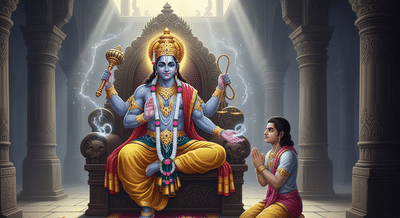
Indian mythology often highlights children as bearers of wisdom and truth. One such story is of Nachiketa, a young boy who approached Yama, the god of death, with courage and thoughtful questions rather than fear. This story is not about battle or power but about seeking knowledge, discipline, and the courage to choose wisdom over desire. Nachiketa’s journey teaches honesty, patience, and the pursuit of truth, offering lessons for both children and adults. His story continues to inspire generations, reminding us that true strength lies in understanding, self-control, and the fearless search for eternal knowledge.
A Promise That Changed Everything

A child’s honest question that altered destiny
Nachiketa saw his father offering weak and unworthy cattle during a sacred ritual. With innocence and courage, he asked, “To whom will you give me?” In anger, his father replied, “To Yama,” the god of death. Although spoken without intent, the promise held spiritual significance and could not be ignored. Nachiketa accepted it calmly and without fear, demonstrating remarkable courage and respect for truth. His actions show that honesty is the foundation of wisdom, even when it leads to difficult paths. This story teaches that integrity and fearlessness are essential qualities for personal growth and spiritual learning.
A Child at the Door of Death

Patience and discipline at the gates of death
Nachiketa traveled alone to Yama’s home, determined to face the god of death. When he arrived, Yama was away, but the boy waited patiently for three days without food or water. He did not complain or show fear, demonstrating remarkable discipline and inner strength. His calm persistence impressed Yama, who realized the boy’s unwavering commitment and respect for sacred laws. This story teaches that true maturity and courage are not determined by age but by character. Nachiketa’s patience, bravery, and focus on truth provide a timeless lesson in self-discipline and the pursuit of wisdom for children and adults alike.
The Secret of the Soul
Wisdom tested by temptation
Impressed by Nachiketa’s determination and wisdom, Yama revealed a profound truth about life and death. He explained that the body is temporary and perishes, but the soul is eternal. It is never born and never destroyed. This teaching is at the heart of the Katha Upanishad, one of the most important texts in Indian philosophy. It emphasizes that death is not the end, but a transition, and encourages humans to focus on spiritual growth and understanding. Nachiketa’s story continues to inspire courage, curiosity, and the pursuit of knowledge in children and adults alike.
Why Nachiketa Still Matters TodayNachiketa embodies courage without arrogance and wisdom without ego. His story teaches children honesty, patience, and bravery, showing that true strength comes from understanding and discipline rather than force. For adults, Nachiketa is a reminder to ask meaningful questions, seek truth, and focus on what truly matters in life. In a world filled with distractions, noise, and temporary pleasures, his calm and determined pursuit of knowledge offers guidance for mental clarity and spiritual growth. This timeless lesson continues to inspire generations, encouraging everyone to choose wisdom, embrace courage, and live with awareness and purpose.
Nachiketa as a Symbol of WisdomNachiketa’s story from Indian mythology teaches that true bravery is not about confronting death but about choosing truth and wisdom over desire and temptation. As a young boy, he stood calmly before Yama, the god of death, asking the most difficult questions and refusing worldly rewards. His courage, patience, and clarity make him a timeless example for children and adults alike. This story emphasizes honesty, discipline, and the pursuit of knowledge, showing that spiritual understanding surpasses fear and material temptation. Nachiketa’s teachings continue to inspire millions and remain an essential part of philosophical learning in India.
Unlock insightful tips and inspiration on personal growth, productivity, and well-being. Stay motivated and updated with the latest at My Life XP
Frequently Asked Questions (FAQs)
Q1: Who was Nachiketa in Indian mythology?
A: Nachiketa was the young son of sage Vajashrava. He is famous for his courage, curiosity, and pursuit of truth when he confronted Yama, the god of death, as described in the Katha Upanishad.
Q2: What lesson does Nachiketa’s story teach?
A: The story teaches that true bravery comes from choosing wisdom and truth over fear, desire, or temptation. It emphasizes patience, honesty, and spiritual understanding.
Q3: Why did Nachiketa refuse wealth and power?
A: He wanted knowledge about the eternal soul and life after death. He understood that material rewards are temporary and cannot provide ultimate truth.
Q4: What is the significance of Yama’s three boons?
A: The three boons symbolized life lessons: resolving family issues, learning sacred rituals, and seeking the highest spiritual knowledge. It shows the importance of prioritizing wisdom over worldly desires.
Q5: How can children benefit from Nachiketa’s story?
A: Children can learn honesty, patience, courage, and the importance of asking questions. It encourages curiosity and moral development.
Q6: How is Nachiketa relevant for adults today?
A: Adults are reminded to focus on what truly matters, seek knowledge over comfort, and act with discipline and courage in life’s challenges.