Emraan Hashmi’s Taskaree director Raghav Jairath discusses the show’s inspiration, research, challenges and collaboration with Neeraj Pandey
Emraan Hashmi’s Taskaree: The Smuggler’s Web premiered on Netflix on January 14. The series shines a light on the lesser-seen world of customs officers and how they use instinct and observation to catch smugglers. After the release, spoke exclusively to director Raghav Jairath. In the interview, he talks about why he chose customs officers as the focus, the detailed research behind the show, challenges of shooting at airports, and his long association with Neeraj Pandey. He also shares key lessons learned while co-directing the series. Excerpts:
Why did you make a series around the customs officers?
I think the first thing would be, why not? You know, it’s something that hasn’t been done, number one. But I think every time we used to come back from an international shoot and cross customs — the green channel, the red channel — you’ll find these officers who are constantly looking at you. They’re suspicious of you all the time, and still they manage to get the right people. So we got very curious about how they operate, how their mind thinks, what they look for in a person, and how they are able to constantly monitor people, profile them, and point out patterns — that this person is carrying something or following a certain behaviour. If you also see how customs officers operate, they work at a very invisible frontline. They’re not chasing criminals in alleys or carrying guns. It’s a mind game — recognising patterns, people, expressions, the way they walk. A very interesting thing a customs officer once told me was about a man who was walking normally, but the moment he saw a narcotics dog carried by CRPF or CISF, he subtly started walking away from it. That gave him away, because he was clearly avoiding the canine with a strong sense of smell. So it’s fascinating how they think. They work under a lot of pressure, rely heavily on instinct and that creates a very interesting zone to tell a story. That grey zone — the green channel where they operate — interested us more than a traditional cops-and-robbers narrative. That’s what really drew us in.
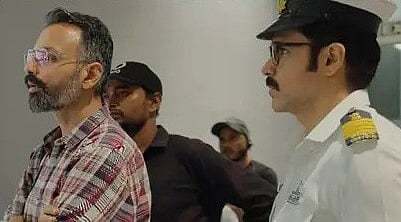
A still from the sets |
How did you get associated with Neeraj Pandey?
I’ve been associated with Neeraj since 2013–2014. It all started after I saw A Wednesday. I was in Delhi at the time, pursuing filmmaking and the film completely blew my mind. I immediately rushed to find contacts, trying to figure out how I could work with a filmmaker who had excited and motivated me enough to awaken the cinematic keeda inside me. Over the years, the association became more organic while working on projects together. Discipline, detailing and research mattered deeply to both of us. That’s how I grew closer to him and understood his worldview. Somewhere, I genuinely believe in what he wants to say as a storyteller, and I follow a similar style of storytelling. There was a strong common understanding between Neeraj sir and me about how a world should be treated on screen. Taskaree grew out of that shared language.
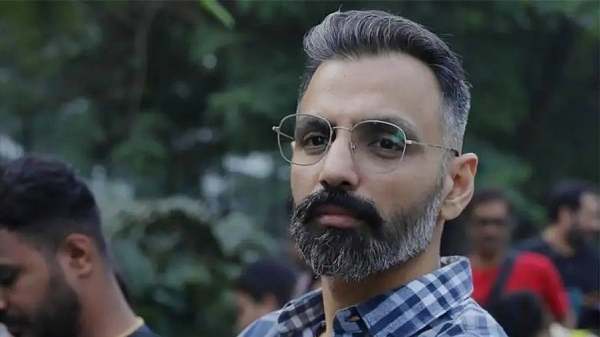
Neeraj Pandey and Raghav Jairath |
Tell us about the making of Taskaree and its research-led storytelling.
Taskaree is a deeply researched project. We spent a lot of time with customs officers and people who have actually done this work, understanding how they read patterns and instincts. It’s not about one-off incidents. Repetition of incidents creates instinctive patterns, and that’s how their intuition starts working. That’s where the character of Arjun Meena was born — understanding how smuggling moves, where pressure points are, and how decisions are made. Our research wasn’t meant to simply recreate reality, but to deep dive into the world — its behaviour, tone and functioning. We didn’t want to make a documentary-style narrative. We wanted cinematic drama told through the eyes of the customs department, and that has always been our POV.
What were the on-ground challenges, real incidents, and some behind-the-scenes anecdotes?
One of the biggest challenges was airports. Since it’s a customs-led show, airports naturally became central — and extremely challenging. But as filmmakers, we love challenges. That’s what pushes us to choose a world like Taskaree. Airports are highly sensitive zones. For a regular shoot, the crew had to reach at least four hours in advance to clear security and equipment checks. Costume teams couldn’t even carry scissors or sharp objects. Art and costume teams had to completely improvise their workflow — even setting up a desk was a challenge. You could carry screws, but not screwdrivers. Everything had to be dismantled and reassembled inside. We also had scenes with 400–500 suitcases on conveyor belts, which was a massive logistical challenge. There was a particularly difficult scene during Arjun Meena’s reveal — where Swati, who has drugs in her stomach, chases two men who escape on a boat. That scene depended entirely on the tide. If the tide wasn’t right at that exact moment, the scene wouldn’t work. On the same day, we were shooting an action sequence, a chase through Worli village, and had to reach the jetty at the precise time for the tide to align. A lot of such moments happened on set, and they pushed us further into making the show better.
A still from the series |
How did you translate true-world smuggling networks into cinematic drama?
The key was restraint. Real smuggling networks are extremely complex and often very unglamorous. The people involved — mules or puppets — usually come from difficult backgrounds and do it for very little money. The spaces they operate in aren’t glamorous either. For cinematic drama, we retained the realism but increased the scale. When you’re showing 500 kilos or even two tonnes of gold, the scale naturally becomes cinematic. Drama comes more from tension than action — pauses, silence, and moral conflict. So it’s a balance. Everything you see is rooted in truth. Every incident has happened to someone, somewhere. We just built scale around it to fit the story.
Lessons from working with Neeraj Pandey
There are countless lessons I’ve learned over the years. Just when you think you’ve learned everything from him, he surprises you again — Taskaree is a prime example. Detailing is extremely important to Neeraj sir. From the X mark on a suitcase, how full it looks, the badges, file logos, name placements — every small thing matters. These details add realism. But realism isn’t just about props or costumes. When actors are in the right environment, it flows into their performance. That’s why performances feel so real. Even Imran felt that instantly while shooting on real locations — he began seeing everyone through a customs officer’s lens. Another major lesson is that silence can be more powerful than dialogue. I’ve seen how saying nothing can leave a stronger impact. And above all, clarity. Neeraj sir doesn’t write anything unless it’s crystal clear in his head. His scripts leave no confusion — every dialogue has motivation, every scene has purpose. Over the years, I’ve grown with these lessons and applied them to Taskaree. Co-directing the series with Neeraj sir allowed me to put everything I’ve learned into practice.