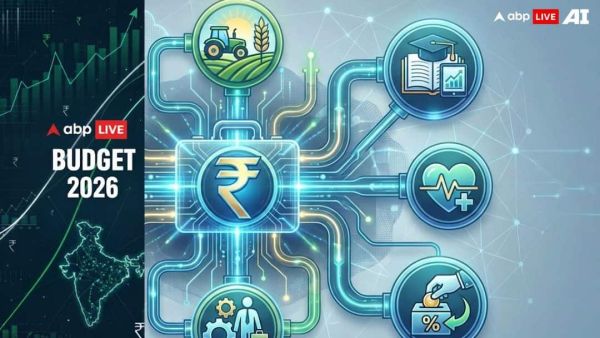
Finance Minister Nirmala Sitharaman set the tone early in her Budget 2026 speech, describing it as the first Budget prepared in Kartavya Bhavan and rooted in what she called three guiding ‘Kartavya’ principles. The emphasis was clear: accelerate growth, empower citizens, and ensure that development reaches every region and community.
In the opening stretch of her address, Sitharaman unveiled a sweeping set of proposals focused on manufacturing, MSMEs, infrastructure expansion and city-led economic growth. Here’s a detailed look at the major announcements made in the first 20 minutes.
The Finance Minister outlined a "Reform Express" built around interventions in six key areas. These include scaling up manufacturing in seven strategic sectors, rejuvenating legacy industries, championing MSMEs, building powerful infrastructure, ensuring long-term security and stability, and developing city economic regions.
The overarching objective, she said, is aligned with the principle of "Sabka Saath, Sabka Vikas", ensuring that every family, community and region has access to resources and opportunities for participation in growth.
A major thrust was placed on advanced manufacturing and technology-driven sectors.
The government announced ‘Biopharma Shakti’ with an outlay of Rs 10,000 crore over five years, aimed at strengthening India’s pharmaceutical and biotechnology ecosystem.
The India Semiconductor Mission (ISM 2.0) was also formally launched, reinforcing India’s ambition to become a key player in the global chip supply chain.
Further, the outlay for the Electronic Components Manufacturing Scheme has been increased to Rs 40,000 crore, signalling a deep push into electronics and value-chain integration.
Rare earth materials, crucial for electronics and clean energy technologies, were another focal point. A scheme for rare earth permanent magnets was launched in November 2025. Sitharaman announced support for mineral-rich states, Odisha, Kerala, Andhra Pradesh and Tamil Nadu, to establish dedicated rare earth corridors, strengthening domestic supply security.
The Budget proposed the establishment of three dedicated chemicals parks, aimed at strengthening India’s industrial ecosystem.
Recognising that strong capital goods capability determines productivity and quality across sectors, the Finance Minister also proposed a container manufacturing scheme, designed to build domestic capacity and reduce import dependence.
The labour-intensive textile sector received a comprehensive integrated programme with five components.
The first is the National Fibre Scheme, focused on self-reliance in natural fibres such as silk, wool and jute, alongside man-made and new industrial-age fibres.
Second, the Textile Expansion and Employment Scheme aims to modernise traditional clusters through capital support for machinery upgrades, technology improvements, and common testing and certification centres.
Third, the National Handloom and Handicraft Programme (NHHP) seeks to integrate and strengthen existing schemes while offering targeted support to weavers and artisans.
The fourth initiative, TextEco, and the fifth, Samarth 2.0, are designed to modernise and future-proof the textile value chain. Mega textile parks, to be implemented in challenge mode, will also focus on value addition in technical textiles.
Additionally, the Mahatma Gandhi Gram Swaraj initiative was proposed to strengthen Khadi and rural enterprises.
To ease liquidity pressures on small businesses, Sitharaman proposed stronger support mechanisms, including making TReDS mandatory as a transaction platform for all purchases from MSMEs.
The government will also top up the Self Reliance India Fund with Rs 4,000 crore in FY27, boosting capital access for emerging enterprises.
Support was extended to professional institutions such as ICAI and ICSI, reflecting the emphasis on strengthening governance and compliance ecosystems.
Public capital expenditure continues to be a centrepiece. Having increased to Rs 11.2 lakh crore in BE2025-26, it will rise further to Rs 12.2 lakh crore in FY27 to sustain infrastructure momentum.
To crowd in private investment, the government proposed setting up an Infrastructure Risk Guarantee Fund to provide partial credit guarantees to lenders supporting private developers.
The Budget also announced:
Carbon capture, utilisation and storage also featured in the early announcements, signalling climate-linked industrial planning.
Urban growth strategy formed a critical pillar of the opening announcements. The government will focus on mapping and developing City Economic Regions (CERs), tailored to specific growth strengths.
An allocation of Rs 5,000 crore per CER over five years has been proposed to amplify their economic potential. Temple towns and emerging urban centres in Tier-2 and Tier-3 cities are expected to benefit significantly.
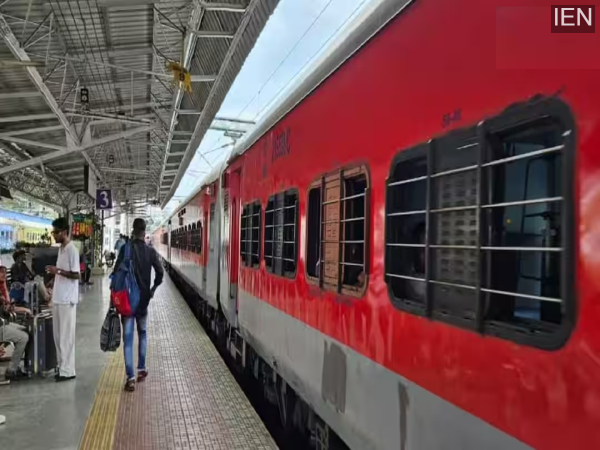
In addition, the government proposed developing seven high-speed rail corridors between cities, further strengthening inter-city connectivity.
The first 20 minutes of Budget 2026 underscored a strong manufacturing, infrastructure and MSME-led growth model. With strategic investments in semiconductors, rare earths, textiles and transport corridors, the government signalled its intent to combine industrial policy with regional development.
As the speech progresses, these early announcements lay the groundwork for what appears to be a growth-oriented Budget anchored in capital formation, self-reliance and broad-based participation.