Tourism is often discussed as a consumer-facing industry. Flights, hotels, landmarks, leisure. In reality, for countries that treat it seriously, tourism functions closer to economic infrastructure: a system that moves people, capital, services, and influence across borders with relatively low friction. In this sense, the recent surge in travel between the UAE and Türkiye is not a lifestyle trend. It is the outcome of deliberate economic alignment.
The reset in UAE–Türkiye relations that began in late 2021 and consolidated through 2022 did not prioritise tourism because it is culturally appealing. It prioritised tourism because it is economically efficient. As Thani bin Ahmed Al Zeyoudi, UAE Minister of State for Foreign Trade, noted during discussions with Turkish business leaders, “The UAE–Türkiye relations are experiencing significant growth in various areas of common interest, founded upon friendship, cooperation, and respect for each other’s interests, aimed at achieving progress and prosperity for their people." Tourism was explicitly positioned alongside trade, logistics, food security, renewable energy, and healthcare as a sector capable of delivering scalable returns.
That positioning has translated into measurable outcomes. According to Said Sani Al Zahiri, UAE Ambassador to Ankara, tourism traffic between the UAE and Türkiye has increased by more than 50 per cent since 2019, alongside deepening trade and energy cooperation. More than 250,000 Turkish tourists also travelled to the UAE during the same period, underscoring the two-way nature of mobility.

Trade flows reinforce this pattern. Citing UAE Ministry of Economy data, Al Zahiri said non-oil trade volume reached $39.13 billion in 2024, a 7.61% annual increase. UAE imports from Türkiye rose 10% to $19.42 billion, while exports to Türkiye climbed 14.4% to $14.77 billion. Looking ahead, he noted that logistics, agricultural technologies, renewable energy, manufacturing, and digital trade now account for more than 60% of bilateral trade, sectors critical to reaching the medium-term $50 billion trade target.
These figures build on an earlier foundation. By 2021, non-oil trade between the two countries had already reached nearly Dh50.4 billion, growing 54% year-on-year basis. The UAE investments in Türkiye exceeded Dh18.3 billion, while Turkish investments in the UAE crossed Dh1.1 billion. Together, these flows generate sustained movement: executives, investors, consultants, families, and service providers. Tourism infrastructure absorbs that movement and monetises it, not as leisure demand, but as part of a broader services economy. The relevant question is not why UAE residents enjoy travelling to Türkiye. It is why Türkiye has positioned itself so effectively as a services export destination for Gulf mobility.
Aviation as the backbone, not a side effect
The most visible layer of tourism infrastructure between the UAE and Türkiye is aviation. Air connectivity between the two countries has expanded into a high-frequency network, with more than 200 weekly flights now in operation. Importantly, this capacity has been sustained beyond peak tourism periods, pointing to structural rather than seasonal demand.
From an economic perspective, aviation in this corridor functions less as a response to tourism demand and more as a demand-shaping mechanism. High-frequency routes reduce transaction costs, compress planning cycles, and lower the threshold for repeat cross-border movement. In infrastructure terms, frequency alters behaviour. Once a corridor reaches sufficient density, travel shifts from being episodic to routine.
This dynamic is reinforced on both ends of the corridor. On the Turkish side, Turkish Airlines operates an extensive network that integrates passenger travel with cargo and long-haul connectivity, allowing tourism flows to coexist with trade and professional mobility. On the UAE side, carriers including Emirates, Etihad Airways, and flydubai contribute capacity across different market segments, from premium long-haul connections to high-frequency short-haul travel.
Taken together, this dual-carrier density produces network effects rather than brand-led outcomes. Aviation capacity supports multiple forms of movement simultaneously, including tourism, business travel, logistics, and institutional exchange, without relying on single-use travel patterns.
For UAE travellers, the result has been a behavioural shift. Türkiye increasingly functions as a highly accessible, short-haul destination that encourages frequent and repeat travels. Weekend travel, multi-entry visits, and blended business and leisure stays become viable once flight frequency passes a critical threshold. This is not a marketing outcome. It is a predictable consequence of infrastructure saturation.
In this corridor, aviation does not follow tourism. It structures it.
Tourism traffic as a measurable economic signal
The result of this structural alignment is visible in traffic data. Tourism between the UAE, the wider GCC, and Türkiye has grown by more than 50 per cent since 2019, with an estimated 1.5 million UAE and GCC citizens visiting Türkiye in 2023. This growth has continued alongside broader trade expansion, with bilateral trade volumes reaching approximately $8.9 billion in 2021 and accelerating further in subsequent years.
Türkiye’s overall tourism performance reinforces this positioning. In 2024, the country hosted approximately 62.3 million visitors and generated $61.1 billion in tourism revenue, its highest figures on record. This places Türkiye among the world’s top four destinations by visitor numbers. Crucially, these gains are not concentrated solely in coastal resorts or peak summer months. They reflect an intentional strategy to distribute tourism demand across regions and seasons.
For Gulf travellers, this matters because it expands choice while stabilising prices and capacity. For Türkiye, it reduces overdependence on single source markets and seasonal volatility.
Destination diversification as risk management
One of Türkiye’s most standout strategies is its regional tourism diversification. Rather than allowing Istanbul and a handful of coastal zones to absorb the bulk of demand, Türkiye has invested in positioning inland cities as distinct tourism assets.
Central Anatolia is a clear example. Cities such as Konya operate not as mass market destinations but as high intent tourism nodes. Konya’s association with Mevlana Jalaleddin Rumi and the Mevlevi tradition anchors it within faith tourism, cultural heritage, and intellectual travel. The annual Şeb-i Arus commemorations are not designed for volume tourism. They attract visitors who stay longer, spend differently, and engage more deeply.
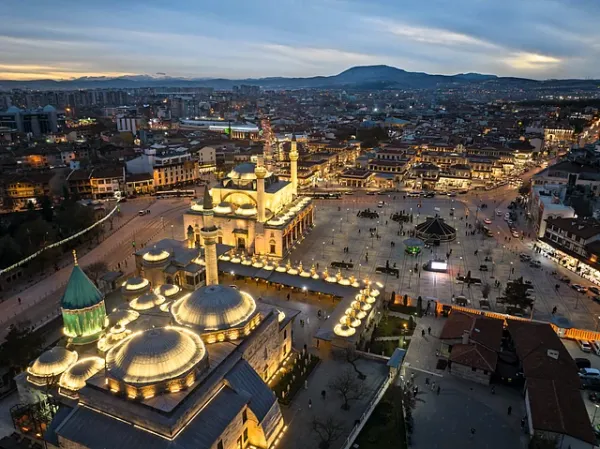
This matters economically. Faith and cultural tourism typically generate lower environmental strain per visitor while supporting local economies through extended stays, cultural institutions, and specialised services. By design, this segment complements rather than competes with resort tourism.
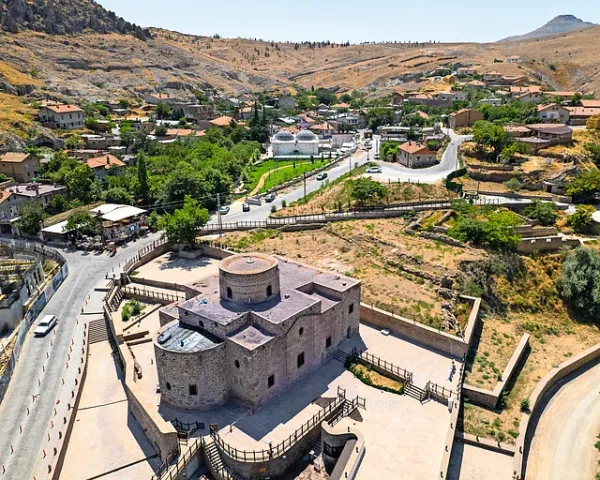
Nearby, Çatalhöyük, a Unesco World Heritage Site, reinforces this model. As one of the world’s earliest known urban settlements, Çatalhöyük attracts academic tourism, educational travel, and culturally motivated visitors. These travellers are less price sensitive and more likely to engage with museums, guides, and local services. From an infrastructure perspective, this is tourism that behaves more like knowledge exchange than leisure consumption.
Ankara and the economics of capital cities
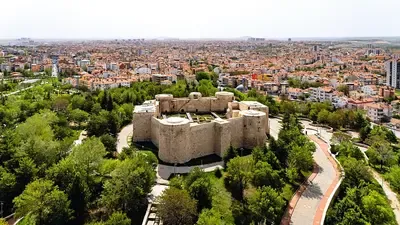
While leisure travellers tend to prioritise resort hubs over Ankara, capital cities play a distinct role in tourism infrastructure. Ankara functions as Türkiye’s political, institutional, and administrative hub. For UAE travellers involved in diplomacy, education, healthcare, defence, or policy linked business, Ankara is not optional. It is functional.
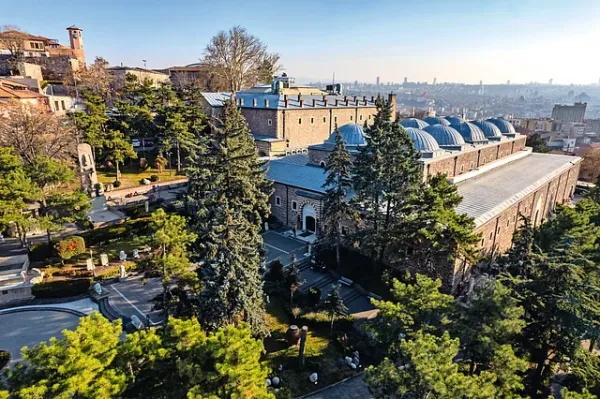
Capital city tourism does not rely on iconic skylines or leisure branding. It relies on museums, conference facilities, embassies, and state institutions. Sites such as Anıtkabir operate as civic landmarks, reinforcing national narratives while attracting consistent visitor flows tied to official travel, education, and institutional exchange.
From an economic standpoint, Ankara anchors year round, non seasonal tourism demand, smoothing national performance metrics and supporting services that do not fluctuate with holiday cycles.
Sustainability as regulatory infrastructure
Türkiye’s approach to sustainability offers another example of tourism being treated as infrastructure rather than branding. Through its Environmental and Cultural Sustainability Programme, developed in cooperation with the Global Sustainable Tourism Council, Türkiye has embedded sustainability criteria into its tourism system.
This programme is not voluntary in spirit. It functions as a phased compliance framework, with accommodation facilities required to meet escalating standards across sustainable management, socio economic impact, cultural preservation, and environmental responsibility. More than 2,180 facilities have already been certified, giving Türkiye the highest number of GSTC aligned accommodations globally.
For Gulf travellers, particularly those from the UAE where ESG frameworks are increasingly institutionalised, this matters. Certification reduces information asymmetry. It allows travellers and corporate buyers to assess destinations through recognised benchmarks rather than marketing claims. In infrastructure terms, sustainability becomes risk mitigation, protecting tourism assets against regulatory tightening, climate impact, and reputational exposure.
Why Türkiye resonates with Gulf mobility
Türkiye’s sustained appeal to UAE and Gulf travellers is often attributed to cultural familiarity, halal friendly services, and family oriented offerings. These factors are real, but incomplete. The deeper explanation lies in alignment.
Türkiye has aligned its tourism strategy with:
· Gulf travel behaviour, including short haul, repeat visits, and family travel
· Gulf investment cycles across real estate, hospitality, and logistics
· Gulf policy priorities centred on sustainability, diversification, and services growth
Visa exemptions, extensive flight networks, and cultural proximity lower barriers to entry. But it is Türkiye’s ability to absorb, distribute, and monetise Gulf mobility at scale that sets it apart.
As Al Zeyoudi noted, the focus is on “encouraging the flow of mutual investments as well as expanding and diversifying existing economic partnerships.” Tourism is not an end product of that vision. It is a delivery mechanism.
Tourism as a stabiliser in volatile times
In an era of geopolitical uncertainty, supply chain disruption, and fluctuating capital markets, tourism offers something rare: predictable, decentralised revenue. For Türkiye, tourism has become a stabilising force, balancing currency pressure and supporting employment across regions.
For the UAE, outbound tourism to destinations like Türkiye reflects more than leisure choice. It reflects confidence in connectivity, regulatory stability, and service quality. Travel follows trust. The evolution of UAE–Türkiye tourism should therefore be read less as a travel trend and more as an indicator of economic maturity between the two countries. As tourism increasingly behaves like infrastructure, supporting trade, investment, cultural exchange, and policy alignment, it becomes harder to dismiss it as discretionary. As mobility, capital, and services continue to converge between the UAE and Türkiye, tourism is likely to remain one of the most efficient channels through which this relationship expresses itself. Not because it is aspirational, but because it is operational.
CURRENT SIGNALS (2023–24)
Mobility Density (2023–2024)
· 200+ weekly direct flights between the UAE and Türkiye
· High-frequency capacity sustained beyond peak tourism months
· Short-haul travel enabling repeat, multi-entry movement
· Demand Scale (2023)
· 1.5 million UAE and GCC visitors to Türkiye
· 50%+ growth in tourism traffic compared with pre-2020 levels
· Economic Output (2024)
· 62.3 million total international visitors to Türkiye
· $61.1 billion in tourism revenue, the country’s highest on record
· Türkiye ranked among the world’s top four destinations by visitor volume
· Regulatory & Sustainability Depth (2024)
· 2,180+ GSTC-aligned accommodation facilities, the highest globally
· National, staged sustainability compliance framework in force
· Tourism governed through regulation rather than voluntary certification