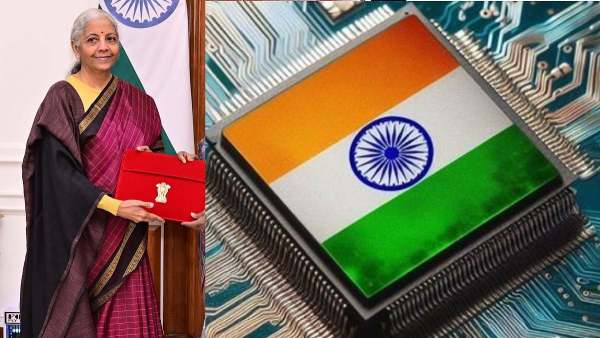
Finance Minister Nirmala Sitharaman announced the Indian Semiconductor Mission (ISM) 2.0 in Budget 2026 to expand India’s chip ecosystem. The mission will focus on semiconductor equipment, materials, full-stack Indian IP and supply chain resilience. The Budget also earmarked Rs. 40,000 crore for the Electronics Components and Manufacturing Scheme to sustain investment momentum.
Finance Minister Nirmala Sitharaman has announced the Indian Semiconductor Mission (ISM) 2.0 in her latest Union Budget 2026. The new ISM 2.0 builds on the predecessor that expanded India's semiconductor capabilities. Sitharaman has also announced an investment of Rs. 40,000 crores to the Electronics Components and Manufacturing Scheme, to help build on its momentum. Furthermore, she also announced a scheme to build chemical parks in four states dedicated to mining and processing of rare earth magnets.
Indian Semiconductor Mission 2.0
Sitharaman, during her Budget speech, said, "We will launch Indian Semiconductor Mission (ISM) 2.0 to expand on ISM 1.0. We will look to produce equipment and materials, design full stack Indian IP, and fortify supple chains. We will also focus on industry led research and training centres to develop technology and skilled workforce."
TechARC analyst Faisal Kawoosa lauds the new scheme, "Announcement of ISM 2.0 to focus on India IP in semiconductors is a futuristic and bold vision. Very much required to have India’s own IP in semiconductors to be a meaningful player in high end electronics value chain."
Rs. 40,000 crore dedicated to Electronics Components and Manufacturing Scheme
The Finance Minister also highlighted that the Electronics Components and Manufacturing Scheme, launched in 2025, already has investment commitments at double the targets. To keep this momentum alive, the government proposes the outlay to Rs. 40,000 crores to the scheme.
"Doubling electronics manufacturing outlay to Rs. 40k crore is a very strategic move especially in the backdrop of recently announced free trade agreement with EU. India could become a leading supplier of electronics to European countries," Kawoosa reacted.
Counterpoint analyst Tarun Pathak is also very optimistic about the outlay. He elaborated, "This enhanced allocation ensures that funding constraints do not limit component manufacturers and underscores the government’s seriousness in developing a robust electronics component ecosystem in India. This will help to increase the true local value addition in India."
New Chemical Parks to be built in four states for mining of rare earth permanent magnets
"A scheme for rare earth permanent magnets was launched in November 2025. We now propose to support the mineral rich states of Odisha, Kerala, Andhra Pradesh, and Tamil Nadu to establish dedicated rare earth corridors, to promote mining, processing, research, and manufacturing. To enhance domestic chemical production and reduce import dependencies. We will launch a scheme to support states in establishing three dedicated chemical parks through a cluster based plug and play model," she further elaborated. This will help India to depend less on China for rare earth magnets - component heavily used in smartphone and electronics component manufacturing.
Pathak lauds the government for its new rare earth corridors, "This strategic move not only leverages proven monazite resources and existing manufacturing hubs but also counters China’s near-monopoly in rare earth processing. If executed well with clearances, technology upgrades, and private investment it can transform India from a raw exporter into a self-reliant leader in green tech, defense, and high-tech industries."