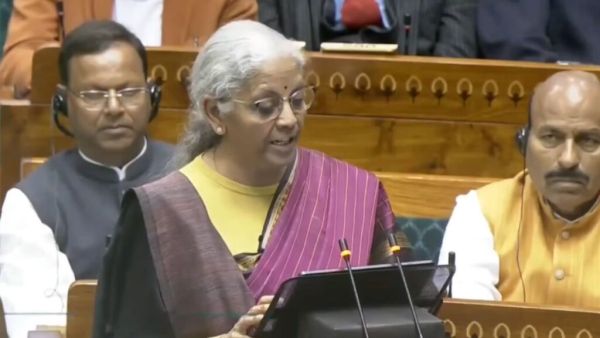
New Delhi : In her ninth budget presented by Finance Minister Nirmala Sitharaman in Parliament, an important policy change has been made keeping in mind both the environment and the common man’s wallet. Now biogas prepared from the stubble left in the fields and the garbage generated from cities will not only be a means of reducing pollution, but it will also play a big role in reducing the cost of fuel for the drivers.
Tax burden will be reduced on bio CNG
Let us tell you that the government has made it clear through the budget that the tax burden on biogas based CNG (Bio-CNG Mix) will be reduced, which will not only pave the way for clean air, but will also make the operation of CNG vehicles cheaper. This step seems to be directly providing relief to the middle class and people associated with the transport sector.
One of the most important announcements of this budget is the change in the way ‘Central Excise Duty’ is calculated. The Finance Minister has clarified that when the excise duty on biogas mixed CNG will be calculated, the full price of biogas will not be included in it. This means that there will be no tax on the biogas portion.
Earlier biogas was also under tax scope
In fact, in the earlier system, the price of biogas was also kept within the scope of tax calculations, due to which the final product became expensive. With the implementation of this new system, the prices of CNG with biogas will fall, which will increase its acceptance in the market and will encourage oil companies to mix it in larger quantities.
Increasing role of biogas in automobile sector
Biogas is produced by processing agricultural waste, crop residues and municipal solid waste. When it is mixed with regular CNG, it becomes a ‘green fuel’ with low carbon emissions. In a country like India, where stubble burning is a serious environmental problem, biogas production is emerging as a sustainable solution.
Automobile companies, sensing this change, are rapidly launching such vehicles in the market which can perform better on this alternative fuel. The government believes that this policy will not only reduce carbon emissions, but will also give a big advantage to India in achieving the goal of ‘clean energy’.
If we look at the previous rules, in the year 2023, the government had given some partial relief to the biogas sector. At that time, only the GST paid on biogas was allowed to be deducted from excise duty, but there was no provision for exemption on the entire value of biogas. Due to this, the situation of ‘tax on tax’ continued and consumers were not able to get its full benefits.
Earlier 9% excise duty was imposed on biogas.
At present, central excise duty is levied on regular CNG at the rate of about 14 percent, which is around Rs 14 to 15 per kg. Under the old rules, there was a tax burden of about 9 percent on the biogas component, which has now been completely removed.
Widespread impact of this decision on the economy
By making the price of biogas tax free under the new policy, there is a possibility of a direct reduction in the price of CNG per kg by a few rupees. This relief will not be limited to papers only, but it will directly benefit millions of truck, car and three-wheeler owners who are dependent on CNG.
Especially for commercial vehicle operators, who are troubled by rising diesel prices, biogas blended CNG will emerge as an affordable and sustainable option. Ultimately, this step will reduce India’s dependence on crude oil and gas imported from abroad, which will save the country’s foreign exchange and will also provide a scientific solution to the problem of domestic waste management.