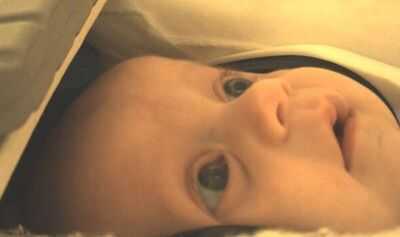
Parents have often wondered what their baby is thinking and at what age they start to make sense of the world - now, scientists may have the answer. Researchers at Trinity College Dublin combined brain imaging with artificial intelligence models to analyse cognition patterns.
They found that babies as young as two months old were able to categorise images such as a cat, a bird, a rubber duck, a shopping cart or a tree. This means they have similar brain patterns when looking at different images of cats, distinct from those recorded when they look at images of other animals or objects. Study leader Dr Cliona O'Doherty said: "This research highlights the richness of brain function in the first year of life.
"Although at two months, infants' communication is limited by a lack of language and fine motor control, their minds were already not only responding to how things look, but figuring out to which category they belonged.
"This shows that the foundations of visual cognition are already in place from very early on and much earlier than expected."
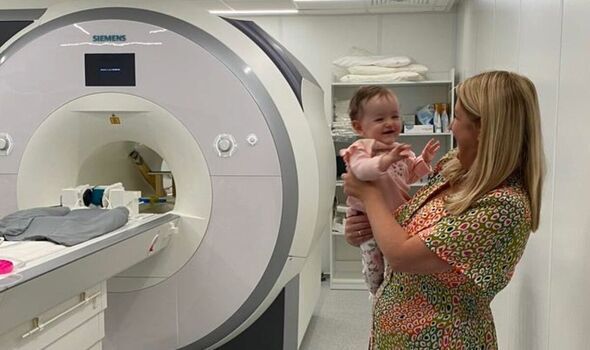
The team recruited 130 two-month-old infants, who lay on a comfortable beanbag wearing sound-cancelling headphones.
They were then shown bright, colourful images for 15 to 20 minutes while functional MRI scans were used to measure their brain activity.
AI models were then used to compare activity patterns related to visual recognition between the models and the babies' brains.
Professor Rhodri Cusack, an expert in cognitive neuroscience at Trinity, said the data collected "opens up a whole new way to measure what babies are thinking at a very early age".
He added: "It also highlights the potential for neuroimaging and computational models to be used as a diagnostic tool in very young infants."
Studying babies' brains could also help inspire "a new generation of AI models that learn more efficiently, so reducing their economic and environmental costs".
Study co-author Dr Anna Truzzi, who now works at Queen's University Belfast, added: "Until recently, we could not reliably measure how specific areas of the infant brain interpreted visual information.
"The first year is a period of rapid and intricate brain development. This study provides new foundational knowledge which will help guide early-years education, inform clinical support for neurodevelopmental conditions and inspire more biologically-grounded approaches in artificial intelligence."