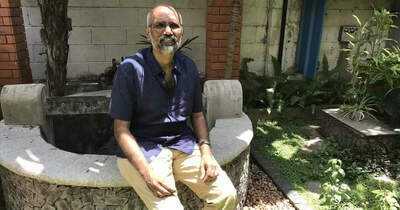
This weekend, acclaimed editor Sreekar Prasad has two films set for release, yet tranquility envelops his Chennai home on a humid morning. Mani Ratnam's Tamil film Chekka Chivantha Vaanam is scheduled for September 27, followed by Vishal Bhardwaj's Hindi film Pataakha on September 28. While a team of staff works diligently upstairs, Prasad relaxes in a chair, ready to share insights about his editing techniques, the evolution of storytelling throughout his career, and the significance of music in Indian cinema.
Sreekar Prasad, a second-generation editor, hails from a family deeply rooted in the film industry. His father, Akkineni Sanjeevi, was an editor and director of Telugu films from the 1960s to the 1990s. Sanjeevi is also the sibling of the legendary filmmaker LV Prasad. Unlike many, Prasad honed his editing skills through hands-on experience rather than formal education.
At 55, Prasad has collaborated with both Ratnam and Bhardwaj previously. He took over as Ratnam's primary editor starting with Alaipayuthey in 2000. His partnership with Bhardwaj began with Kaminey in 2009, followed by 7 Khoon Maaf (2011) and Matru Ki Bijlee Ka Mandola (2013). With eight National Film Awards to his name, Prasad has built strong relationships with various directors across different languages, including the Sivan family, Rajasenan, and AR Murugadoss.
Prasad's extensive experience across genres has made him one of the most sought-after editors in the industry. His upcoming projects include AR Murugadoss's Sarkar, Vikas Bahl's Super 30, the Prabhas-led Saaho, and the biopic Sye Raa Narasmiha Reddy. In an interview, he shared his thoughts on the unique aspects of Chekka Chivantha Vaanam, which revolves around a family's power dynamics and the ensuing conflict among brothers.
Prasad emphasized the importance of maintaining a slick narrative in the film, noting that he crafted the first trailer to highlight its commercial appeal and star-studded cast. He reflected on his initial collaboration with Mani Ratnam, which began with Alaipayuthey, where they experimented with narrative structure, incorporating flashbacks to enhance storytelling.
Regarding Pataakha, Prasad described it as a relatable tale of two sisters, infused with humor and rooted in Indian culture. He expressed excitement about the film's potential and the rapid development of its script, aiming to capture the film's energetic essence in the editing process.
Prasad shared insights on his editing philosophy, stating that he prefers to be involved from the script stage to ensure he is excited about the project. He noted that his early work included Oriya films, where he developed lasting relationships with filmmakers. He believes that the editor's role is often overlooked, yet it is crucial for maintaining the film's rhythm and flow.
Having worked on both arthouse and commercial films, Prasad strives to blend the two styles, allowing for emotional depth in commercial projects. He highlighted the importance of timing in dialogue delivery and the need for pauses to enhance realism in scenes. His experience with first-time directors has also allowed him to explore new ideas and maintain excitement in his work.
Prasad discussed the unique challenges faced by Indian film editors, particularly in star-driven productions where maintaining the hero's image is paramount. He emphasized the need for trust and collaboration with directors to ensure the story remains engaging. He also expressed his views on the evolving role of songs in Indian cinema, advocating for their integration into the narrative rather than as standalone elements.
While Prasad has considered directing, he has yet to find the right story to tell. He continues to juggle multiple projects with a dedicated team, adapting to technological advancements that facilitate collaboration across distances. He hopes for a shift in Indian cinema towards more innovative storytelling and a reevaluation of the role of music in films.