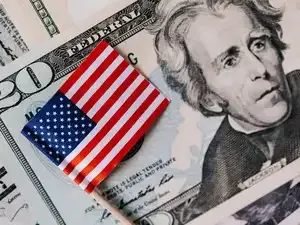
US Dollar crash global recession risk: Concerns over a weakening US dollar are growing, with BofA Securities warning that a sharp and sustained decline could have serious consequences for the global economy outside the United States.
Also read: What is Anthropic’s new legal AI tool and why investors are dumping software stocks
Also read: Word of the day: Promenade
Also read: Michael Burry sounds alarm as Bitcoin price (BTC USD) slides - why he sees dangerous ripple effects ahead
Because a sharp and sustained fall could damage economic growth outside the United States.
How would a weaker dollar affect global economies?
It could slow growth and create deflationary pressures in other countries.
BofA Warns Sharp US Dollar Fall Could Hit Global Economy
According to the analysis highlighted in the report, a significantly weaker dollar would likely weigh on growth across non-US economies. Slower growth abroad could generate deflationary pressures, prompting central banks in other countries to respond with monetary policy easing, as per a report. Those policy moves, the report noted, would ultimately act as a constraint on how far the dollar could fall, creating a natural limit to further depreciation, as per an ANI report.Also read: What is Anthropic’s new legal AI tool and why investors are dumping software stocks
Weaker Dollar Seen as Recessionary Shock Outside the US
BofA cautioned that a large real drop in the dollar against other major currencies would function as a recessionary shock for the global economy ex-US. While a few economies with strong momentum might be able to withstand the impact, most developed economies would face meaningful strain.Also read: Word of the day: Promenade
US Dollar Slide Poses Risk to Global Financial Stability
The report also emphasized that an abrupt or disorderly decline in the dollar would not serve anyone’s interests. Both the US and the rest of the world rely on stable currency movements, and a sudden loss of confidence in the dollar could disrupt global trade, investment activity, and financial markets.Dollar Weakens Despite Stable US Interest Rates
Another key observation in the analysis was the recent shift in the relationship between the dollar and US interest rates. The dollar has weakened even as US rates have remained broadly stable in the 4.00–4.50% range, while stock markets have continued to hit new highs despite bouts of volatility. This divergence suggests the dollar may be losing some of its traditional role as a safe haven and hedging tool amid US-specific policy risks.Also read: Michael Burry sounds alarm as Bitcoin price (BTC USD) slides - why he sees dangerous ripple effects ahead
BofA Pushes Back on Fears of a Dollar Collapse
Despite these concerns, the report pushed back against claims of an imminent dollar collapse. BofA said such narratives are overstated, pointing to the US economy’s strong growth and productivity advantages compared with other advanced economies, as per the ANI report. Those fundamentals have supported the dollar for years and enabled the US to finance large fiscal and current account deficits.FAQs
Why is BofA concerned about a weaker US dollar?Because a sharp and sustained fall could damage economic growth outside the United States.
How would a weaker dollar affect global economies?
It could slow growth and create deflationary pressures in other countries.