Besides the usual fatigue, Josh Richardson and his then-partner Steph’s pregnancy had been smooth, and they expected labour to go just as smoothly when their first daughter Esme arrived in March last year. But minutes before her birth, the couple from Beverley, East Yorkshire, were told something was gravely wrong.
“Steph had been in labour since Friday, and Esme was born at one o’clock on Monday morning,” says Josh. “They broke her waters because it had been so long, and that’s when they found really thick meconium.”
What happened next unfolded in a blur. “Suddenly, the room was full of doctors. Someone handed me scrubs and said we were going into surgery," he says.
Esme had suffered meconium aspiration, a serious medical condition that occurs when a newborn inhales a mixture of stool and amniotic fluid into their lungs before or during delivery. Josh, 35, watched in shock as Esme was delivered via emergency C-section. She was rushed to the back of the room as she clearly struggled to breathe.
He overheard a doctor mention cardiac arrest. Esme was not breathing as her lungs were so full of meconium that they could not function and her tiny heart was working overtime to keep her alive. While Steph, 36, was being attended to post-labour, Josh, head of commercial at a food manufacturing company, approached his daughter.
“She looked very ill and completely grey. She had a breathing mask on, and I almost didn’t want to touch her because she looked so poorly. She was moving erratically, clearly struggling,” he says. “You want to hear a baby cry after birth, but she didn’t make a sound. Her lungs were just full. It was really bad.”
Esme was introduced to her mum briefly before being whisked to intensive care. Steph and Josh were taken into a side room to wait. As doctors and nurses fought for Esme’s life, the couple braced.
• Gordon Ramsay's 'embarrassing moment' he has 'never forgotten'
• 'I was the biggest mum in the playground and had to have a belt extender for theme park'
“A doctor came in and said, ‘You need to prepare for the worst. If we don’t see improvement soon, she won’t make it’. It was heartbreaking. Her blood oxygen levels were dangerously low. We’d had no sleep for days. We just couldn’t take it in.
“I just couldn’t accept that we might lose her. I kept thinking, ‘she doesn’t deserve this’. She was so small, and she was already going through so much," he says.
Then came a glimmer of hope. A doctor mentioned an extracorporeal membrane oxygenation (ECMO) machine, an advanced life support system used only in extreme cases of respiratory and cardiac failure. There were only a few in the UK, and the nearest was 100 miles away.
Doctors moved heaven and earth to transfer Esme under blue lights to Leicester Royal Infirmary, where the specialist machine could be used, with the worried parents following on behind her. Doctors connected Esme to the ECMO, which oxygenated her blood outside her body, bypassing her lungs entirely.
“The second they put her on the machine, everything changed,” Josh says. “Her oxygen levels started to rise. Her colour changed from grey to pink. It was like a miracle.”

The treatment was a success, but the next hurdle came when doctors had to remove the cannulas, a delicate operation with risks of stroke or brain damage.
“The procedure to take out the cannulas only took 60-90 minutes, but overall, I was waiting in the hospital’s prayer room for news for around three hours.
“The longer I waited, the more I panicked. I was about to storm the ward when someone came in and said everything was fine. I can’t describe the relief. The whole team were incredible.”
Within three weeks, Esme was discharged, and the family returned home to begin recovering from the trauma. While ECMO can have long-term side effects, including hearing loss, lung damage, and learning difficulties, Esme has so far thrived.
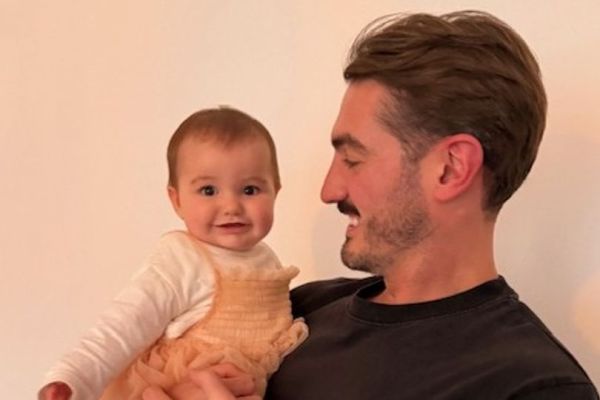
"Besides two small scars on her neck where the cannulas were inserted, she has been unaffected. She’s babbling, crawling, standing on her own, and nearly walking at just 10 months. She’s absolutely amazing.”
Although Steph and Josh have since separated, they’re navigating co-parenting well. Now, Josh is running a 100-mile ultra marathon to raise money and awareness for Heart Link, the charity that funds ECMO machines and supports families in crisis.
“Heart Link funds vital support for families, life-saving equipment like ECMO, accommodation near the hospital, bedding, utensils, toys, nappies, and more for children on the ward.
“In April, I’m taking on the Chester 100-mile Ultra Marathon to celebrate Esme’s first birthday and raise money for Heart Link, the charity that quite literally gave her a second chance at life.”
To sponsor Josh, visit: www.justgiving.com/page/joshua-roe-1