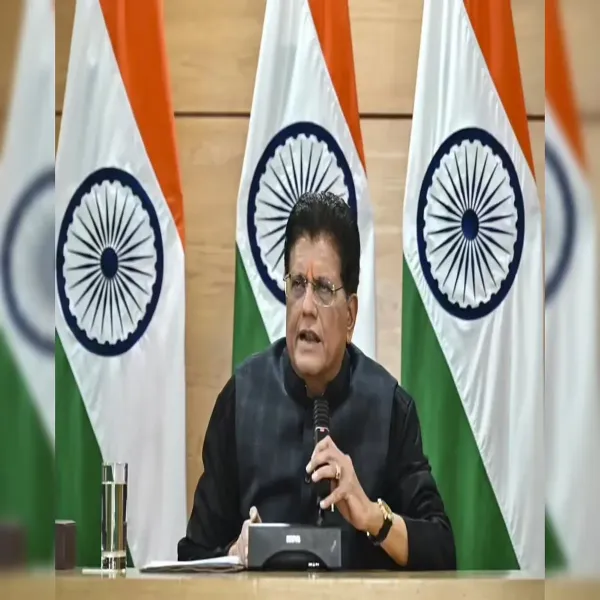
TradeDeal – The government has moved to reassure farmers as it advances a new bilateral trade framework with the United States, emphasizing that key agricultural sectors will remain shielded from import pressures. Union Commerce and Industry Minister Piyush Goyal said on Saturday that sensitive categories such as dairy, fruits, vegetables, spices and several grains have been placed under protection in the evolving India-US trade agreement.
In a public statement, the minister described the framework as a step that balances global trade expansion with domestic priorities. He said the agreement is structured to prevent unrestricted imports of essential farm produce, thereby safeguarding the livelihood of millions dependent on agriculture.
According to the government, the protective measures are designed to maintain stability in rural markets while opening selective export opportunities for Indian producers. Officials argue that preferential access to the large US market could create new avenues for Indian agricultural exports without exposing vulnerable segments at home.
The list of protected vegetables includes frozen and preserved products such as potatoes, peas, cucumbers, gherkins and beans. Other items like temporarily preserved vegetables, including certain varieties of mushrooms and mixed canned vegetables, will not be permitted for import under the current framework.
Dairy remains one of the most closely guarded sectors. Products covered under the protection include liquid and powdered milk, various types of cheese such as mozzarella and blue-veined varieties, butter, ghee, yoghurt, whey derivatives and buttermilk. The government’s position reflects long-standing concerns among dairy farmers about competition from heavily subsidized foreign producers.
Several staple grains have also been secured under the trade arrangement. These include wheat, rice, maize, millet, barley, oats, sorghum, ragi and amaranth, along with flour made from these cereals. Officials said shielding these staples is essential to protect food security and rural incomes.
In addition, a wide range of spices has been kept outside the scope of liberalized imports. Black pepper, dried green chillies, cinnamon, coriander, cumin, ginger, turmeric, fenugreek, mustard, rye and asafoetida are among the items that will continue to receive protection. India is one of the world’s leading spice producers, and policymakers have indicated that maintaining competitiveness in this sector is a priority.
While India has secured safeguards in agriculture, the United States is expected to benefit from reduced or eliminated tariffs on a range of industrial and food products. In a statement released by the White House, it was noted that India would ease duties on US industrial goods and several agricultural commodities. These include products such as dried distillers’ grains used for animal feed, tree nuts, soybean oil, fresh and processed fruits, as well as wine and spirits.
The agreement reflects ongoing efforts by both countries to deepen economic ties through phased tariff adjustments and sector-specific commitments.
Beyond agriculture, the framework outlines substantial trade ambitions. India has indicated its intention to procure goods worth approximately USD 500 billion from the United States over the next five years. These purchases are expected to span energy supplies, aircraft and related components, precious metals, technology equipment and coking coal.
Both sides have also agreed to expand cooperation in advanced technology sectors. This includes increased trade in technology products such as graphics processing units used in data centres, along with broader collaboration in emerging digital fields.
Officials from both countries stated that the current framework will be implemented swiftly, with work progressing toward an interim agreement. The ultimate objective is to conclude a comprehensive Bilateral Trade Agreement under an agreed roadmap.
The government maintains that the approach seeks to combine economic expansion with domestic stability. By protecting sensitive agricultural sectors while pursuing wider market integration, policymakers say they aim to strengthen India’s position in global trade without compromising farmer interests.