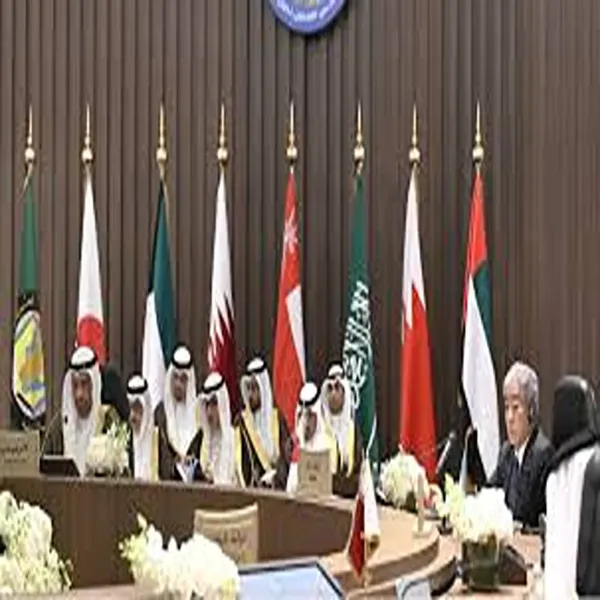
Trade – At a time when protectionist policies and tariff disputes are slowing global trade, the Gulf Cooperation Council (GCC) has emerged as one of India’s most critical economic partners. The six-nation bloc has now become India’s largest collective trading group, surpassing the European Union, ASEAN, and even major bilateral partners such as the United States and China.
Trade between India and the GCC reached nearly $179 billion in the 2024–25 financial year, reflecting the growing interdependence between the two sides. This expansion has been supported by trade facilitation agreements, including Comprehensive Economic Partnership Agreements with the United Arab Emirates and Oman. Key Indian exports to the region include gems and jewellery, base metals, electrical equipment, electronics, and chemical products.
India is now moving closer to signing a full-fledged free trade agreement with the GCC, which comprises Saudi Arabia, the UAE, Qatar, Kuwait, Oman, and Bahrain. The proposed pact aims to widen market access for Indian goods and services across the entire Gulf region.
India implemented its trade agreement with the UAE in May 2022, which significantly reduced duties on a wide range of products. A similar agreement with Oman was formalised in Muscat in December 2025. The upcoming GCC-wide agreement is expected to extend similar benefits to the remaining member states by easing tariff and non-tariff barriers and creating a more predictable trade environment.
Beyond trade, the Gulf region plays a central role in India’s energy security and is home to nearly 10 million Indian expatriates, further strengthening economic and social ties.
India and the GCC have formally agreed on the terms of reference required to launch negotiations for the free trade agreement. The document outlines the scope, structure, and framework for discussions. Commerce and Industry Minister Piyush Goyal oversaw the signing ceremony, stating that the agreement is expected to significantly enhance trade flows and investment opportunities between both sides.
He noted that commercial ties between India and the Gulf date back thousands of years, and a modern agreement would provide long-term policy stability while supporting smoother movement of goods, services, and capital.
The proposed trade framework is also expected to support mutual food and energy security. While India is among the world’s leading food grain producers, GCC countries are major exporters of oil and natural gas. According to the minister, the agreement could help align these complementary strengths while opening new avenues for Indian professionals and businesses in the region.
Sectors such as petrochemicals and information and communication technology are expected to benefit from improved access to GCC markets once the agreement is in place.
Negotiations between India and the GCC are resuming after a long gap. Earlier rounds of talks were held in 2006 and 2008, but discussions were later suspended when the GCC paused trade negotiations with external partners. The current initiative signals renewed momentum in regional economic cooperation.
Economist and United Nations advisor Jeffrey Sachs has identified Western Asia as one of India’s most promising growth markets. Speaking to NDTV, he highlighted the economic potential of the Gulf region, alongside Southeast Asia, China, and Africa, and advised India to avoid over-reliance on the US market.
India continues to import large volumes of crude oil and natural gas from Gulf nations, particularly Saudi Arabia and Qatar, while exporting jewellery, machinery, metals, iron and steel, and chemicals. India’s exports to the GCC rose to around $57 billion in 2024–25, while imports increased to $121.7 billion, resulting in a higher trade deficit.
The UAE remained India’s third-largest trading partner, followed by Saudi Arabia. Trade with Qatar, Oman, Kuwait, and Bahrain also expanded, driven largely by energy imports and steady growth in Indian exports of food products, chemicals, and manufactured goods.