From "misused jihad" to a "physically handicapped" military, Asif’s latest admissions paint a bleak picture of a security establishment losing its grip on Balochistan
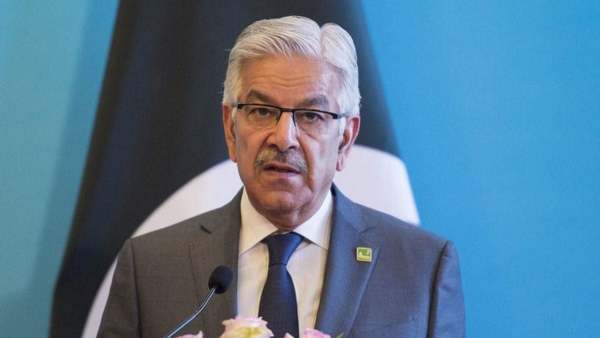
Unlike the military leadership of Field Marshal Asim Munir, Pakistan’s Defence Minister Khawaja Asif is increasingly presenting himself as a realist, openly acknowledging the profound crises crippling the state. In recent parliamentary sessions, Asif has moved away from traditional rhetoric to paint a bleak picture of a nation struggling with internal insurgencies and a history of failed foreign alignments. His admissions signal a significant shift in how Islamabad views its own stability and its standing on the global stage.
Toilet paper metaphor
Asif delivered a scathing critique of Pakistan’s historical relationship with Washington, asserting that the United States exploited Islamabad for strategic gains before discarding the country in a manner he described as "worse than toilet paper." He argued that the decision to align with American interests after 1999 was a grave miscalculation that inflicted irreversible damage. By serving as a pawn in the US-led war on terror, Asif contends that Pakistan inherited a legacy of violence and economic ruin while its supposed ally simply moved on.
Reassessing the narrative of Jihad
In a rare departure from the state’s long-standing ideological framework, the defence minister challenged the official narrative surrounding the Afghan conflicts. He admitted that the call to "jihad" during the anti-Soviet war of the 1980s was a misuse of religion designed to serve American geopolitical interests rather than spiritual duty. Asif noted that even the national education system was weaponised to legitimise these proxy wars leaving behind deep-seated ideological scars and social instability that the country has yet to overcome.
Admitting military impotence in Balochistan
The crisis in Balochistan has forced further candid admissions from Asif, who described the Pakistan security establishment as "physically handicapped" in the face of the Baloch Liberation Army (BLA). He pointed out that the vast, rugged geography of the province makes patrolling nearly impossible with current resources. This admission comes amid reports of coordinated rebel attacks across a dozen cities and viral footage suggesting that Pakistani soldiers have, in some instances, abandoned their posts in haste.
Adding to the grim assessment, Asif revealed a startling disparity in military capabilities, claiming that Baloch rebels are often better equipped than the Pakistani military itself. He highlighted that insurgents possess advanced rifles and thermal weapon sights worth thousands of dollars—technology he claims the state forces lack.
While he attempted to link this insurgency to external actors and criminal syndicates, the underlying reality remains a province marginalised by poverty and exploitation, now defended by a military that openly admits it is struggling to hold its ground.