In the age of artificial intelligence, surprising developments are becoming increasingly common. Recently, a viral video left millions stunned after the truth behind it was revealed. A shayari video that garnered over 30 million views on Instagram was later exposed as AI-generated. The revelation not only shocked viewers but also reignited debates around trust, digital identity, and copyright issues linked to AI content.
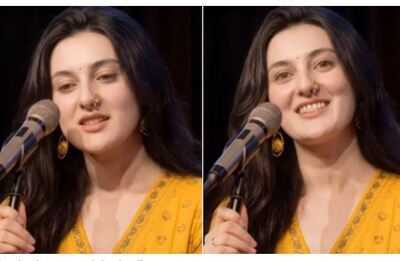
The video was shared from an Instagram profile named “Tanvi Joshi.” It featured a woman dressed in a yellow kurta reciting an Urdu couplet on stage:
“Khandani raees rakhte hain mizaaj naram apna… tumhara lehja bata raha hai ki tumhari daulat nayi-nayi hai.”
Within just 24 hours, the clip crossed 3 crore (30 million) views. Social media users flooded the comments section praising the poetry, discussing its meaning, and admiring the woman’s confident delivery.
However, it was later revealed that the woman in the video was not a real person but an AI-generated model. Observers pointed out that the face looked unusually flawless, and the voice seemed to vary slightly across different videos posted on the same profile. In other words, millions had unknowingly engaged with a virtual persona.
An even more startling detail soon emerged. The voice used in the viral AI video reportedly belonged to Marziya Shanu Pathan, a corporator from the Thane Municipal Corporation. She had earlier posted a video of herself reciting the same shayari at an event, which received around 900,000 views.
When the AI-generated clip went viral, Pathan commented, “Hey, that’s my voice.” It was then discovered that her original audio had allegedly been used in the AI-created video without proper attribution.
The incident has sparked serious concerns about voice cloning, consent, and the misuse of AI technology in creating hyper-realistic but misleading content.