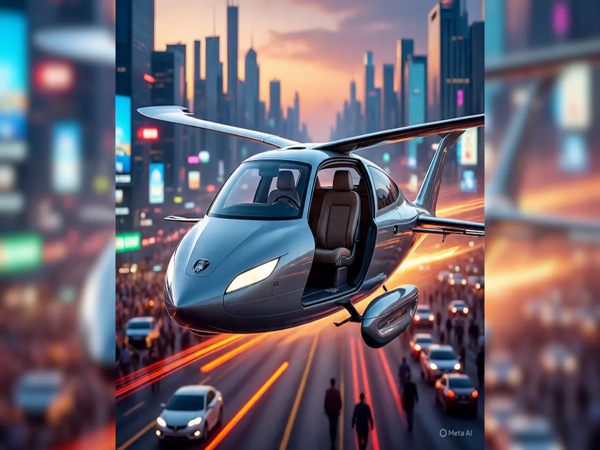
Air Taxi in Delhi-NCR: Increasing traffic on Delhi's roads is one of the biggest problems today. During office hours, traffic jams can make even a few kilometers take hours to travel. To alleviate this problem, the Confederation of Indian Industry (CII) has proposed the construction of an air taxi corridor connecting Delhi, Haryana, and Uttar Pradesh. If implemented, this plan would allow people to travel by air instead of by road.
A journey that would take hours would be covered in minutes.
According to the proposal, this air route, starting from DLF Phase 3 and Cyber Hub in Gurugram, would go via Delhi Airport, Connaught Place, Noida Sector 18, and then to Noida International Airport. The entire corridor would be approximately 65 to 75 kilometers long. While it takes 1 to 2 hours to reach Gurugram by car from Central Delhi, an air taxi would cover this distance in less than 12 minutes. Similarly, the journey from Connaught Place to Noida International Airport could be completed in 18 to 20 minutes.
What is an Air Taxi?
An air taxi is a small, lightweight, electric aircraft that can take off and land vertically. This means it doesn't require a runway. It flies vertically and descends vertically. It can seat between 2 and 6 passengers at a time. It's battery-powered, so it doesn't emit any smoke or pollution and is also noise-reducing.
Dedicated landing points, called vertiports, will be created in the city. These vertiports can be built on the rooftops of large buildings, such as hospitals, malls, hotels, or office buildings. This eliminates the need to purchase separate land.
How much will an air taxi fare be?
Initial estimates suggest a one-way fare between Delhi and Gurugram could be around 2,000 to 3,000 rupees. However, as technology becomes more affordable over time, the fare may decrease.
These problems may arise.
However, this plan faces several challenges. Delhi has strict security regulations, and many areas are no-fly zones. Furthermore, weather, especially fog, can impact flights. Nevertheless, if this model proves successful, this service could become a major convenience for the general public in the future.
Disclaimer: This content has been sourced and edited from NDTV India. While we have made modifications for clarity and presentation, the original content belongs to its respective authors and website. We do not claim ownership of the content.