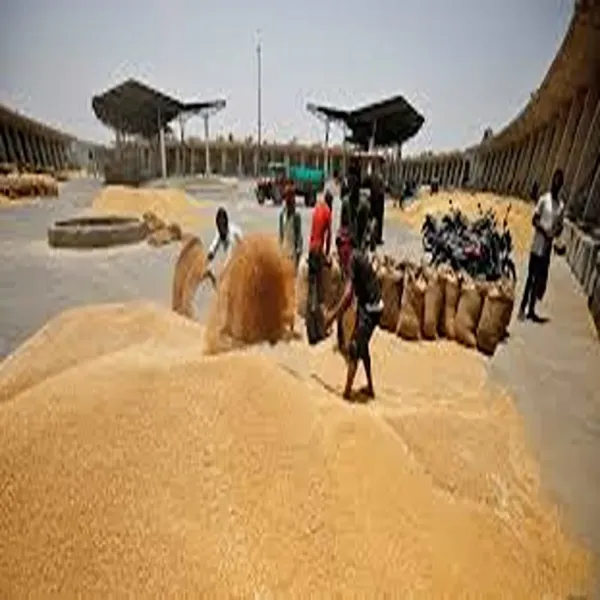
WheatExports – After nearly four years of restrictions, the Union government has decided to permit overseas sales of 25 lakh metric tonnes of wheat, along with 5 lakh metric tonnes of processed wheat products, citing strong domestic availability and the need to maintain price stability.
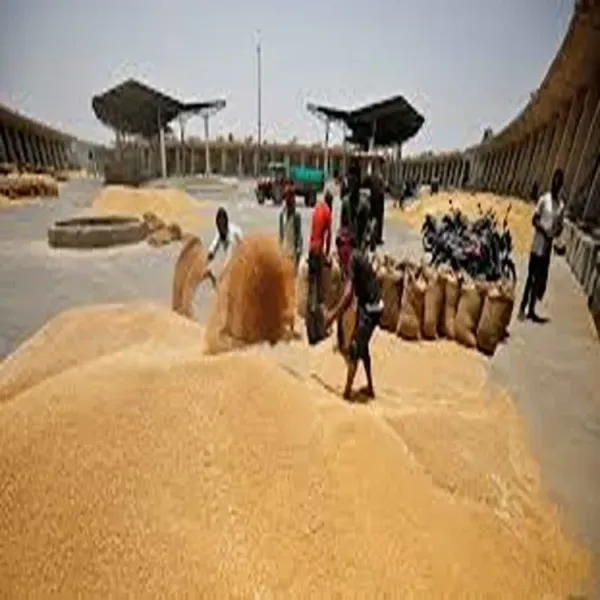
The move comes at a time when wheat supplies across the country are considered comfortable, following higher acreage during the ongoing Rabi season. Officials say the decision was taken after reviewing production estimates, stock positions and prevailing market conditions.
Fresh data show that wheat sowing for the 2026 Rabi crop has expanded to 334.17 million hectares, compared with 328.04 million hectares last year. The increase in acreage is being seen as a sign of farmers’ confidence in the crop, supported by the minimum support price and steady procurement by government agencies.
Agriculture experts believe that the expanded sowing area could translate into another substantial harvest. With procurement operations in place and stable demand, farmers have continued to allocate more land to wheat cultivation. The rise in output prospects has also led to expectations of a healthy supply in the coming months.
At present, wheat is available both in government warehouses and in the open market. According to industry observers, surplus stocks have begun to weigh on prices in some regions, raising concerns about a potential decline that could affect farm incomes.
Private traders are currently holding around 75 lakh metric tonnes of wheat for the 2025–26 marketing year, which is 32 lakh metric tonnes higher than the previous year. This sharp increase in private stockholding reflects abundant supply in the system.
Government officials have indicated that allowing controlled exports could help balance the market by easing excess supply without putting pressure on domestic availability.
The Food Corporation of India is projected to hold around 182 lakh metric tonnes of wheat as of April 1. Officials maintain that these reserves are more than sufficient to meet public distribution requirements and buffer norms.
The Ministry of Consumer Affairs, Food and Public Distribution said that a detailed review of stock levels and price trends was conducted before the decision was finalised. It noted that production and stock figures point to a comfortable supply situation nationwide.
By permitting a limited quantity for export, the government aims to prevent any sharp fall in domestic prices while ensuring that food security commitments remain unaffected.
India had imposed a ban on wheat exports in May 2022, following concerns over food security and rising domestic prices amid global supply disruptions. At the time, the restriction was intended to safeguard local availability and control inflationary pressures.
With stock levels now significantly improved and fresh harvest prospects appearing strong, policymakers have opted for a calibrated reopening of export channels.
In a related development, the government has also cleared an additional 5 lakh metric tonnes of sugar for export during the current 2025–26 sugar season. Earlier, mills had been allowed to ship 15 lakh metric tonnes overseas.
Officials said the decision was taken after assessing sugar production and domestic consumption patterns. The additional quota is expected to support sugar mills and ensure smooth inventory management without affecting local supply.
Overall, the recent approvals signal a shift toward measured trade liberalisation, backed by comfortable stock positions and steady agricultural output. Authorities have emphasised that they will continue to monitor market conditions closely and take further steps if required to protect both consumers and farmers.