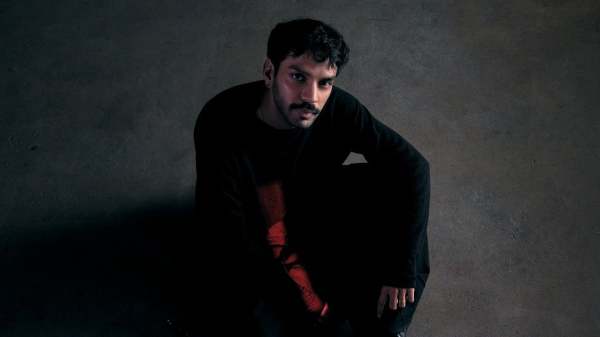
Speaking to FPJ Composer-producer Prateek Rajagopal revealed he picked up the guitar at 13 but didn’t initially see music as a career. After earning a business degree and working corporate jobs, he shifted gears in 2015. He said touring, performing live and understanding the industry made him realise music was his true calling.
Mumbai: Film composer-producer Prateek Rajagopal, who is based in Los Angeles, has been part of franchises such as The Mandalorian. He recently made his Bollywood debut with Bejoy Nambiar's Tu Yaa Main, starring Shanaya Kapoor and Adarsh Gourav, which is currently running in theatres.
At what age did you realize that music was your calling?
It’s a tough question, I was 13 when I picked up the guitar for the first time and I didn't really think it would be something I would do full time, but I just kept doing it. I did a business degree after that I worked at a bank and then I worked at a marketing startup and then finally in 2015, I was like, I need to stop doing all this and just focus on music. So, yeah, it's when I was 13, my love for music really began, but I think I realized it was my calling only once I started actually touring and playing live and really sinking my teeth into the business, the industry and all of that.
You were raised between Oman and India. What role did growing up in two different cultural environments play in your musical journey, if you could share?
Yeah, I think Oman is such a peaceful country. It's so chill that I think my personality needed more, and so I gravitated to the complete opposite, like metal music. Because I feel like sometimes, when you think about Norway, Finland, they're very peaceful countries. They have some of the most extreme music, if that makes sense, it's weird. And then, obviously, I loved a lot of local Omani music. At home, my dad would play a lot of old Hindi songs and so, plus MTV would play, you know, every other day. So it was kind of this mix in Oman. And then I think in India, your environment really shapes you, right? so People really gravitate towards a lot of eclectic musical choices being in India. So, you know, because you're in this unique part of the world where you're exposed to music from all over, you know, whether it's Indian music itself is so diverse. And then on top of that, I was listening to music from Australia, from the UK, from the Middle East, from India, everywhere. Wherever you move to the States, you realize this has its own isolated industry. So long way to answering the question is I think the environment really dictated that for me. Being in Oman was so peaceful that I kind of wanted the opposite and so that's where my metal music love came from and in India, it was just the environment of so much hustle and bustle, so much of color, so much of everything, you know, noise. And so naturally, my horizons broadened a lot in India.
Your debut in Indian cinema as a film composer is with Tu Yaa Main. And until now, your experience has been in Bollywood. How different was it working in Bollywood?
So it's been, it's been actually really good. I've had a really good experience. And, you know, that's really testament to the team at Tu Yaa Main. So, Color Yellow, the producers, Harini, and then, of course, most importantly, Bejoy Nambiar. It's just been such a joy working with people who are very open-minded to new ideas, to experimenting, to even hiring someone like me, who they're like, wait, we don't want the typical, background score composer. We want somebody who can bring a different kind of an edge and thinking to the movie. And so it was actually a really pleasant experience, even though it was just a two-and-a-half-month deadline. I was kind of happy to do everything. It was a lot of work, but it was very fulfilling, for sure.
Background scoring is a very crucial element in any kind of story telling, be it a film or web series. Why do you think film composers have not received enough recognition in India?
I think that's because India is very song-dominated whereas the rest of the world, I think, the concept of songs is more like needle drops. Whereas the songs in Indian films, like songs, you build traditionally, you would build the background score out of the DNA of the songs. So it's like the complete opposite of the West. And I think because of that, it's way easier to identify a song versus a score and sometimes that is the point of, background music is to just elevate the visuals a little bit, elevate the story a little bit. But it's extremely important, like you said, and so I think, now people are becoming more aware. And I would, I'd say after, truly, I think after Hans Zimmer and Chris Nolan's, their collaboration blew up, you know, with the whole, like all of Chris Nolan's movies, is when people started to realize, oh, Hans Zimmer is becoming like this household name. Nobody knows a lot of the score because, you know, they can name maybe three or four scores of his. But it still became this thing where, oh, this can be, this is a very prestigious skill and art form. And yeah, that's what I think, it's because of the song versus score conversation. And it's slowly shifting now in India as well. So I think people who are doing score now get to, which is what my goal is as well, it's to kind of bring in this perspective and just lean into how you really could use your score to take a good movie to a great movie.
Today, the success of a song is often measured by the number of views. So how do you measure the success of a background score?
Sometimes there's such fantastic scores which go under the radar because the movie might not do very well. So I think the success of a score really depends on, I would say, two factors. Number one is obviously the success of the movie itself. And number two is, this might sound weird, but it's actually, the volume and the level of the background score. Sometimes, volume is one thing which is easiest to perceive. And if you think of the Academy Award for Best Score from the last 20 years, every one of those movies, the score was an essential part of the movie. Like you could hear it pretty loud. And so I think it's those two things, like the success should be the director or filmmaker should use it and make it pretty evident that it's serving its function of background score, but it's also, to some extent, audible. It can't just be in the background too much either. The other thing is, of course, the success of the movie will naturally take the success of the whole team, including the score composer and the score.
Also Watch:
So when you start a new project, is there any particular creative process you follow that you can share?
Yes, I love experimenting before the project. Ideally during the script phase, so I really like composing when I just get to read the script. And that way I come up with ideas that I wouldn't naturally come up with if I just look at the visuals. Because when I look at visuals, I know the color, the camera angles, the adjectives that the people are feeling in the movie or whatever it might be. And that naturally sends you as an artist into a trope and my whole goal is to constantly break out of tropes and to constantly push and try and experiment.
So for Tu Yaa Main, I had three people, Anthony Baldino, who I've worked with before as a part of Ludwig Göransson's camp. He did a little bit of sound, musical sound design for me. And I kind of give him direction and “I'm like, hey, can you do this, just make it kind of strange and abstract”. And I'll give him some direction. And then I had Jose and Isaac, a violin, viola and cello player. And they basically, so Jose plays violin and viola and Isaac plays cello. And I told them to create a bunch of interesting loops for me. And I just took that, took all of this material, I processed it. I tried to give it its own sonic voice and create a sound bank of my own. So I like to do that. And I love writing themes even before I see anything. And that's what happened with this movie where Bijoy asked for a bunch of ideas and themes and I wrote a lot of ideas and he kept filtering it down. And all of that made it into a movie. So, that's where you, it's like reading from a script you channel. Sort of like you get ideas like reading a book, or writing an album. It's when you see lyrics, you're like, oh, okay, cool, I'm going to build a sonic world around this concept. And then you come up with more interesting ideas. So that's what I like to do a lot.
Which is that one work of yours that you are most proud of?
One of my really dear friends. And you know, I work for this, there's a VR company called Kost. And they're doing a bunch of really groundbreaking work. And the director, Cameron (Cameron Kostopoulos), he and I go way back from USC. And he really pushes me to experiment in this very interesting way. And so a lot of my work with him, I would say, is some of my favourite work and my last release with him was called In the Current of Being (2025). It was a pretty indiegy project. But we did get into the Cannes Film Festival, we got into South by Southwest. And I tend to do a lot of my most experimental work with him. Having said that with Tu Yaa Main coming out, and also I have an untitled Telugu movie coming out. Both of those, especially the Telugu movie, I would say, is a very cool experimental score. And oftentimes that tends to be my best work, for sure. So, yeah, a lot of my absolute records, love all of that, too. All of my professional music that I've written.
If you had to share one message for the budding film composers, what would it be?
I would say, be obsessed with music in this way, where you really are learning all the time. And the more you learn, the more you're curious, the more you find your own voice. And I think that eventually leads to longevity. In the business, in yourself, you feel confident and comfortable in your own skin. As an artist, when you really lean into this curiosity to learn, whether it's a different genre, push yourself in different directions and get out of your comfort zone a lot. I think that's what I would say. Being curious, being open, and being open to learning, basically.