A former air safety investigator has revealed the safest place to sit on a plane.
Most of us choose our plane seats based on comfort, legroom, or how quickly we can get off at the other end. But Gregory Feith, who previously worked as an investigator for the US National Transportation Safety Board, has shared a few key insights that could change how you pick your seat next time you fly.
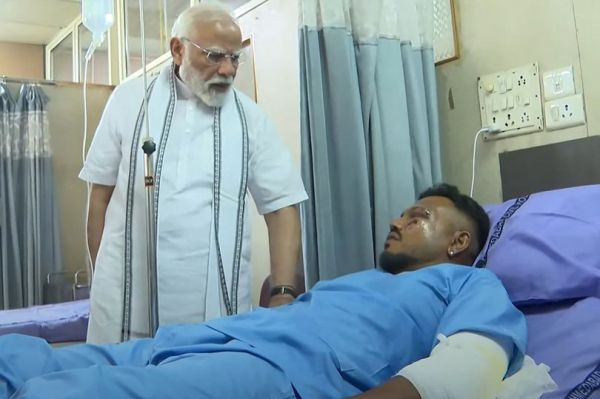
The mythology of seat 11A began to grow last year, after Ramesh Viswash Kumar survived the Air India disaster. The London-bound Boeing 787 Dreamliner crashed moments after takeoff, killing everyone else onboard. Ramesh, however, walked away from the carnage virtually unscathed.
He had been seated in seat 11A, leading many to declare it the most secure.
• Ibiza and Majorca could end up restricting tourist numbers under radical plans
• I visited UK city with 1000-year-old market but I wouldn't rush back
However, aviation experts have been quick to note that determining the safest seat is not so simple. Aircraft configurations vary significantly, and survival typically depends on a complex combination of factors. "Each accident is different, and it is impossible to predict survivability based on seat location," Mitchell Fox, a director at the Flight Safety Foundation, a US-based nonprofit, said.
According to Gregory, sitting next to an exit door may increase a person’s chances of survival in a crash. However, experts say that the specific seat number, such as 11A, is not necessarily the safest, as aircraft can have numerous layouts, meaning 11A may well be a long way from an exit door.
“The best place to sit is where you can access an exit, over the wings or in proximity to either the forward exit or the rear exit,” Gregory said during an interview on WIRED’s YouTube channel.
Gregory is a strong advocate of a single straightforward technique. “Count the seats between the exit in front of you and the exits behind you,” he advises.
The reason, Gregory explained, is that in a serious incident, you might not be able to rely on calm lighting, clear aisles, or even standing upright. “Airplane crashes, unfortunately, don’t occur where the airplane is upright,” he said. “It could be upside down. It could be at night. It could be on fire. You may not be able to stand up. You may have to crawl. Knowing your position in relation to the closest exit is your best bet.”
While it may be easier said than done for some, it is worth keeping your fear in perspective. Commercial flying is extremely safe. MIT analysis found the risk of a fatality from commercial air travel was about 1 per 13.7 million passenger boardings globally in 2018 to 2022.
That makes the odds of a fatal outcome on a single flight tiny, roughly 0.000007% per boarding, whereas the odds of being struck by lightning are estimated to be around 1 in 15,300. In other words, you are more likely to be struck by lightning than be involved in a fatal plane crash.
A spokesperson for travel expert Ski Vertigo added: “Plane crashes are very rare, but it is still worth staying aware of your surroundings, especially when you travel. That applies at the airport, on the aircraft, and when you arrive at your destination. Taking a moment to look around, knowing where the exits are, and having a simple plan for unexpected situations can be genuinely reassuring and helpful in the event of an emergency.”