Parts of the UK are facing another bout of cold, wintry weather this week as more snow is forecast. A yellow weather warning for snow has been issued by the Met Office affecting parts of London and South East England, South West England, West Midlands and Wales on Wednesday and Thursday, with the worst the weather expected overnight. The warning is in force from 4pm on Wednesday until 6am on Thursday, with around 2cm of snow possible on lower levels, particuarly in the early hours of Thursday morning, and up to 15cm possible in areas above 250 metres. Strong winds will accompany the snowfall which could exacerbate the impact in places.
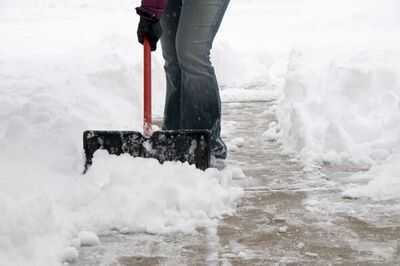
The Met Office is warning households to brace for travel delays on roads, railways and by air, possible power cuts and mobile phone outages, and a risk that some rural communities may become cut off. With around 2cm of snow forecast to fall in some areas, households heading out to clear the white stuff off their driveways are being warned that they must do this properly, or they could be at risk of being sued.
Ironically, clearing snow from your driveway poorly can put you at more legal risk than not clearing it at all, according to a top solicitor.
While there is no law stopping you from clearing snow from your driveway, you must make sure you don't make the pathway more dangerous than it was before.
The Department for Transport advice says: "You can clear snow and ice from pavements yourself. It's unlikely that you'll be sued or held responsible if someone is injured on a path or pavement if you've cleared it carefully."
Despite this, solicitors have warned that although the chances of being sued are slim, if you don't clear your driveway well and someone is injured then you could potentially be liable.
Hugh Rowland of Gotelee Solicitors LLP spoke about the issue during a BBC Radio interview and urged people to make sure they clear their driveways well to avoid any legal risks.
He said: "People are not under a duty to clear public paths outside their home or shop, and the truth is that if they do chose to clear a public path, and they don't do it well, and someone hurts themselves, then they could potentially be liable if the injured person chooses to sue them.
"When it comes to private land that you occupy, you are under a duty to take reasonable steps to ensure that your visitors are safe. So do you clear the snow or do you leave it for fear that you might make a worse icy hazard?
"If you do clear it, then you have got to make sure that you do it well and that you maintain it. Because, if you make it more dangerous than it was before then you will be creating a hazard and you may be liable if someone hurts themselves as a result.
"Overall, people should not be discouraged from clearing snow and assisting others. However, they should ensure they do it correctly to avoid increasing the risk of injury to others and liability for themselves."
When clearing snow and ice from your driveway, it is advised that you do this early in the day as it will be easier to move snow that is fresh and loose.
Don't use water to clear it as this may refreeze and turn to black ice which could be very hazardous and likely to cause someone to fall.
You should use salt to clear it instead as this will help melt the snow and ice and stop it from refreezing overnight. If you don't have enough salt you can use ash and sand instead as this will provide a good grip underfoot.
Make sure to be extra careful when clearing steps and steep pathways, and use more salt on these areas to prevent snow and ice from refreezing and causing a dangerous slip hazard.
Solicitors at Hamilton Douglas Legal said that partial or poorly timed snow clearance can sometimes make conditions worse and advised household to treat driveways with grit or salt after snow has been cleared.
A spokesperson explained: "If snow is cleared but not treated with grit or salt, it can refreeze into smooth ice. In those cases, the risk may actually be higher than if the snow had been left compacted. Best practice includes: