New Delhi: India and Canada on Monday agreed to deepen collaboration to address issues relating to violent extremism, terrorism, organised crime, including the illegal flow of narcotics and fentanyl precursors, cybercrime, extortion, financial fraud, trafficking and related criminal networks with an eye on countering Sikh extremism.
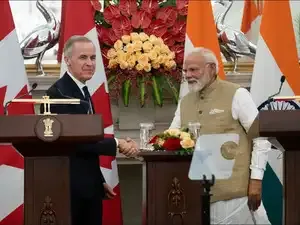
This was agreed at a Summit here between PM Narendra Modi and Canadian PM Mark Carney who was on a four-day India visit to reset ties that hit a low during the premiership of Justin Trudeau for his refusal to act against Sikh terrorism.
The leaders supported the establishment of security and law-enforcement liaison mechanisms to streamline bilateral communication and enable timely information-sharing and committed to strengthening cooperation on cybersecurity and immigration enforcement, consistent with domestic laws and international obligations, according to a joint statement issued after the talks.
In his remarks to the media at a joint press meet, Modi underlined that terrorism, extremism, and radicalisation are common and serious challenges not only for both the countries but for the entire humanity. He said close cooperation between both the countries against these is vital for global peace and stability.
The two leaders also welcomed the progress made under the regular bilateral security dialogue convened at the National Security Advisors' level and the agreement to a shared workplan to guide enhanced cooperation on national security and law enforcement priorities. They also called for the early convening of the next meeting of the Joint Working Group on Counterterrorism.
Modi and Carney recognised the value of expanding practical military cooperation and welcomed opportunities to deepen defence relations through cooperative activities, joint training opportunities, and professional military exchanges. Leaders welcomed a new maritime security partnership in areas such as defence material cooperation, supply chain resilience, and training and exercises.
Both countries have agreed to institutionalising an India-Canada Defence Dialogue which will exchange views on respective defence policies, regional and global security developments, and strategic outlooks to identify opportunities for greater defence collaboration.
In this context, Canada's appointment of a defence attache to India and India's concurrent accreditation of its defence attache in Washington DC to Canada as important steps toward strengthening institutional linkages was welcomed.
This was agreed at a Summit here between PM Narendra Modi and Canadian PM Mark Carney who was on a four-day India visit to reset ties that hit a low during the premiership of Justin Trudeau for his refusal to act against Sikh terrorism.
The leaders supported the establishment of security and law-enforcement liaison mechanisms to streamline bilateral communication and enable timely information-sharing and committed to strengthening cooperation on cybersecurity and immigration enforcement, consistent with domestic laws and international obligations, according to a joint statement issued after the talks.
In his remarks to the media at a joint press meet, Modi underlined that terrorism, extremism, and radicalisation are common and serious challenges not only for both the countries but for the entire humanity. He said close cooperation between both the countries against these is vital for global peace and stability.
The two leaders also welcomed the progress made under the regular bilateral security dialogue convened at the National Security Advisors' level and the agreement to a shared workplan to guide enhanced cooperation on national security and law enforcement priorities. They also called for the early convening of the next meeting of the Joint Working Group on Counterterrorism.
Modi and Carney recognised the value of expanding practical military cooperation and welcomed opportunities to deepen defence relations through cooperative activities, joint training opportunities, and professional military exchanges. Leaders welcomed a new maritime security partnership in areas such as defence material cooperation, supply chain resilience, and training and exercises.
Both countries have agreed to institutionalising an India-Canada Defence Dialogue which will exchange views on respective defence policies, regional and global security developments, and strategic outlooks to identify opportunities for greater defence collaboration.
In this context, Canada's appointment of a defence attache to India and India's concurrent accreditation of its defence attache in Washington DC to Canada as important steps toward strengthening institutional linkages was welcomed.