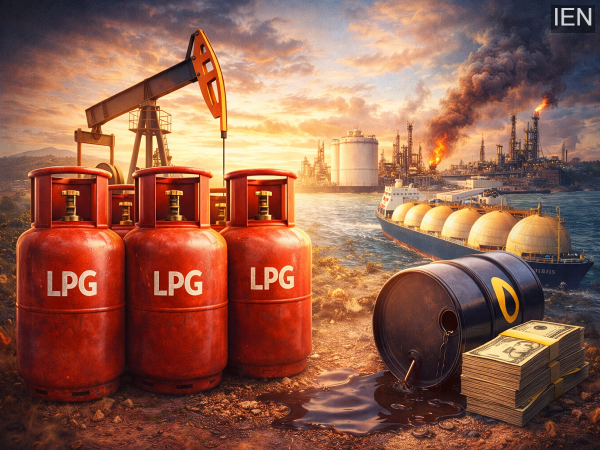
Amid rising geopolitical tensions in West Asia and concerns over global energy supply, the Indian government has increased domestic LPG production by 10% to ensure uninterrupted supply across the country. Officials say the move is aimed at strengthening fuel availability and preventing shortages in the domestic market.
According to government sources, around 6 million LPG cylinders are currently being distributed daily, which remains consistent with normal supply levels. Authorities also confirmed that no LPG distributor in the country is facing a stock shortage, reassuring consumers that supplies remain stable despite global uncertainties.
The supply chain had earlier been impacted due to disruptions linked to the Strait of Hormuz, a key global energy shipping route. However, officials said that the supply situation is now gradually stabilizing.
To efficiently manage LPG distribution, the government has set up a special committee involving Oil Marketing Companies (OMCs). The committee will engage with restaurants and other commercial consumers to assess demand and prioritize supply based on necessity.
The panel will mainly focus on supply management across commercial sectors, ensuring that critical industries continue to receive adequate fuel while balancing overall availability.
Officials stated that the committee will review demand across different sectors and determine supply priorities accordingly, especially during periods of global energy disruptions.
Government sources indicated that LPG and LNG shipments from overseas are gradually increasing again. Earlier, the global supply chain had faced disruptions due to a shortage of Very Large Crude Carriers (VLCCs).
At one stage, nearly 40 VLCC ships were unavailable, affecting the transportation of energy cargo. However, around half of these vessels have now resumed operations, helping stabilize fuel imports to India.
This improvement in shipping logistics is expected to further ease pressure on domestic energy supplies.
In response to the ongoing geopolitical situation, the government has also issued a notification prioritizing domestic natural gas allocation for LPG production units.
Earlier, priority allocation of domestic gas was mainly given to sectors producing CNG and PNG (piped natural gas). Under the new system, LPG manufacturing units have also been included among the priority sectors.
This policy ensures that plants producing cooking gas receive sufficient natural gas supply before distribution to other industrial sectors.
Liquefied Petroleum Gas (LPG) is mainly produced during natural gas processing and as a by-product of crude oil refining.
The process involves separating and purifying gases such as propane and butane. These gases are then compressed into liquid form, which makes it easier to store and transport them in steel cylinders.
These cylinders are widely used for cooking in households, restaurants and commercial establishments across the country.
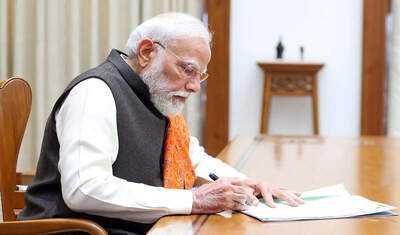
In response to the evolving geopolitical situation, Prime Minister Narendra Modi held a review meeting with Petroleum Minister Hardeep Singh Puri and External Affairs Minister S. Jaishankar.
The meeting focused on evaluating LPG supply conditions and potential disruptions caused by tensions involving Iran and other regional powers.
To ensure stability in the domestic fuel market, the government has also invoked provisions under the Essential Commodities Act (EC Act). The move aims to prevent supply shortages and maintain price stability for essential fuels.
India’s major state-owned oil marketing companies — Indian Oil Corporation (IOC), Bharat Petroleum Corporation (BPCL), and Hindustan Petroleum Corporation (HPCL) — issued a joint statement confirming that steps have been taken to increase LPG production and maintain adequate stocks.
The companies said that, given the current geopolitical situation, LPG supply will be prioritized for domestic households as well as essential commercial sectors such as hospitals and educational institutions.
A committee comprising three executive directors from OMCs has also been formed to monitor demand from other commercial sectors and allocate supply accordingly.
Government officials have also stated that India’s crude oil supply remains stable and is gradually improving. The country currently holds sufficient reserves, and authorities have clarified that India will not restrict exports of refined petroleum products.
Officials further noted that imports from alternative sources have increased significantly. About 70% of India’s crude imports are now coming from routes other than the Strait of Hormuz, compared with around 55% just ten days ago.
Despite global crude prices crossing $100 per barrel, Indian refineries are continuing to operate at full capacity.
India is one of the world’s largest consumers of LPG. The country’s annual consumption stands at around 31.3 million tonnes.
Nearly 87% of LPG demand comes from household cooking use.
The remaining portion is used by commercial establishments such as hotels and restaurants.
To meet this demand, India still relies heavily on imports, with around 62% of LPG requirements fulfilled through foreign supplies.
Earlier, 85–90% of India’s LPG imports passed through the Strait of Hormuz, primarily from countries such as Saudi Arabia. However, ongoing geopolitical tensions have forced India to diversify its supply routes and sources.
The recent measures taken by the government — including increasing production, prioritizing LPG supply, and diversifying import routes — highlight India’s efforts to maintain energy security during global disruptions.
As tensions in West Asia continue to influence energy markets, authorities say they are closely monitoring supply conditions to ensure that households and essential sectors do not face fuel shortages.