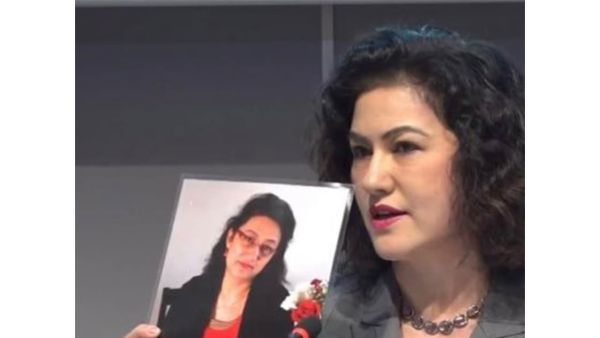
World Uyghur Congress (WUC) Executive Committee chairwoman Rushan Abbas has accused the Chinese Communist Party (CCP) of orchestrating a global campaign to silence Uyghur voices, using diplomatic channels to discredit activists abroad. In a strongly worded post, Abbas wrote on X, "Every time I speak in a new country, the Chinese embassy releases statements attempting to discredit my advocacy and label me and my sister as terrorists." She further added, "That is not diplomacy. That is transnational repression in real time."

Highlighting her personal ordeal, Abbas drew attention to the detention of her sister, Dr. Gulshan Abbas, a retired doctor from Urumqi. In another earlier post, she said, "My sister was never political, She is just a mother and grandmother who loves her family." According to Abbas, her sister was detained days after she delivered a speech at the Hudson Institute in September 2018, where she spoke about alleged human rights abuses against Uyghurs. "Five days later my sister disappeared," Abbas stated, adding that a secret trial in 2019 led to a 20-year sentence on what she described as fabricated charges.
She also raised concerns about her sister's health, posting, "She has serious medical needs... I wake up with that every single day." The accusations add to growing criticism of China's policies in Xinjiang, where activists allege systemic repression. Abbas concluded her message with a firm call: "I will never stop. Free Gulshan Abbas."
The persecution of Uyghurs in China is primarily linked to policies in the Xinjiang region under the Chinese Communist Party. Since around 2017, reports from rights groups and governments have alleged mass detention of Uyghurs in "re-education" camps, along with surveillance, forced labour, and restrictions on religion and culture. Beijing claims these measures combat extremism, but critics describe them as systemic repression targeting the Muslim minority population in the region.
(Except for the headline, this story has not been edited by Asianet Newsable English staff and is published from a syndicated feed.)