Despite many scientific theories and religious doctrines, the truth of what happens after we die remains a mystery.
We can't claim with any certainty whether an afterlife exists or if our existence simply ceases when our time comes to an end.
However, we do have control over what happens to our physical bodies post-mortem - and one crematorium is striving to debunk misconceptions surrounding the tangible aspects of death.
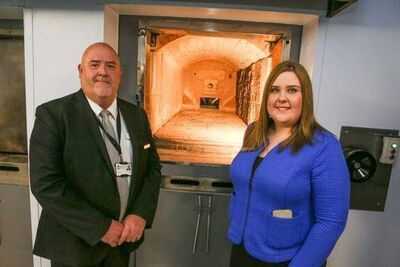
Bramcote Crematorium in Nottingham hosted a sort of 'open day' to engage with the public about the cremation process and alleviate any apprehensions or worries.
Louise Singer, manager at the council-operated bereavement services, spoke to Nottinghamshire Live, saying: "There are so many myths about what happens at a crematorium.
"People think we resell the coffins or mix the ashes so today is to show we are transparent and we care. We just want to reassure them through the process."
What happen following a cremation service?
People might presume that as soon as the coffin disappears behind a curtain, it immediately enters a furnace and incinerates.
That's not the reality.
In fact, by law, crematoriums are granted up to 72 hours to cremate the body - though Bramcote aims to accomplish this within 24 hours.
The initial step for staff is to ensure nothing has been inadvertently left inside the coffin.
Secondly, and perhaps most crucially, they verify that the deceased does not possess a pacemaker.
If a pacemaker were to explode inside the furnace, it could lift the crematory machines - which weigh over 20 tonnes - seven inches off the ground.
Where are the bodies burned and how long for?
The deceased are then wheeled into one of the two machines. A gas-fuelled flame raises the internal temperature to between 800 and 1,000 degrees celsius.
The heat is so intense that a machine switched off on Friday evening will still register 300 degrees on Monday morning.
If an individual body part is being cremated (because it was required for a post-mortem or donated for science) it is burned separately, not alongside other people's organs.
The body is cremated for approximately 90 minutes, with staff monitoring through a viewing hole to determine when it's complete - when no visible flames remain.
Throughout this procedure, waste particles are extracted and filtered to prevent mercury from teeth fillings entering the atmosphere.
The crematorium, which cremates 3,000 people annually, is also exploring using the heat from this gas to warm the facility.
What do they do with the ashes - and how much do they weigh?
The ashes, which should have a sand-like consistency, are then gathered with a rake and left to cool for an hour.
Andy Hands, the senior operative, explained the final weight varies considerably from person to person, largely depending on their bone density, but that he had heard it was supposedly roughly equivalent to their birth weight.
The remains are then placed in a machine that sifts them to remove any metal objects such as wedding rings or hip replacements, which are dispatched for recycling and the proceeds donated to charity.
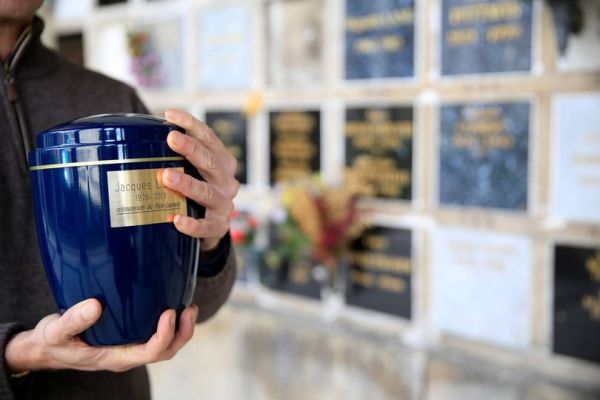
Next of kin then decide whether they wish to scatter the ashes at the crematorium or transport them elsewhere - with some now opting to incorporate their loved ones into tattoos or jewellery.
A form accompanies the body and must be signed at every stage to prevent any confusion.