FIFA Fines Israel, Rejects Palestinian Bid, Keeps Iran World Cup Schedule/ TezzBuzz/ WASHINGTON/ J. Mansour/ Morning Edition/ FIFA fined Israel’s soccer federation over discrimination findings but rejected a key Palestinian request to suspend Israel. The governing body also signaled it expects Iran to play its World Cup matches in the United States as scheduled. The decisions highlight FIFA’s attempt to balance discipline, legal limits, and political pressure during a volatile period.
FIFA has taken a split approach to two politically charged disputes involving Israel and Iran, fining the Israeli soccer federation for discrimination- violations while rejecting a major Palestinian push to suspend Israel from world football. At the same time, the organization made clear it expects Iran to fulfill its 2026 World Cup schedule in the United States rather than relocate matches to Mexico.
The decisions underscore the increasingly difficult position FIFA faces as global politics and armed conflict spill more directly into the world of sport. In this case, the governing body tried to separate disciplinary findings from broader geopolitical disputes, imposing a financial penalty on Israel while declining to intervene on one of the Palestinian federation’s core legal complaints.
FIFA said the Israel Football Association would be fined 150,000 Swiss francs over findings tied to discrimination, racist abuse, offensive behavior, and breaches of fair-play principles. The judgment also cited tolerance of politicized and militaristic messaging in football settings, especially involving supporters of Beitar Jerusalem, along with what FIFA described as the systemic exclusion of Palestinians from football infrastructure in Israeli settlements.
That is a significant rebuke, even if it falls well short of the sanctions sought by Palestinian officials. FIFA also ordered that part of the fine be directed toward an anti-discrimination action plan, with reforms, monitoring, protocols, and educational efforts to be implemented and approved by the governing body.
But FIFA stopped there. It declined to act on the Palestinian federation’s long-running complaint that Israel should face suspension for allowing clubs from West Bank settlements to play in its domestic league. Palestinian officials have pressed that argument for years, saying it violates FIFA statutes by placing clubs from occupied territory within Israel’s competition structure.
FIFA said it would take no action on that front because the final legal status of the West Bank remains unresolved and highly complex under public international law. In other words, the organization signaled that it does not see itself as the body that can settle that dispute, even if it is willing to discipline football-specific conduct tied to discrimination and exclusion.
That distinction is central to FIFA’s position. It appears prepared to punish behavior within the game, but not to resolve sovereignty, occupation, or international legal questions that sit outside its institutional authority. For critics, that will likely look like an inconsistent compromise. For FIFA, it is likely an attempt to avoid becoming an arbiter of territorial conflict while still responding to misconduct it believes falls squarely within its rules.
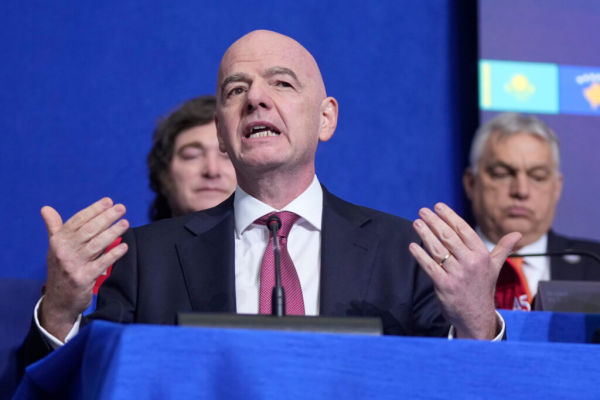
The Iran question presents a different but equally sensitive challenge. Iranian officials have argued that, given the war involving the United States and Israel, it is not feasible for their national team to play scheduled World Cup group-stage matches on U.S. soil. FIFA President Gianni Infantino pushed back on that idea, saying the tournament is expected to proceed according to the schedule already set.
That means FIFA is not moving toward shifting Iran’s U.S.-based matches to Mexico, despite pressure from Tehran. The position is notable because modern World Cup logistics and politics are tightly locked once the draw and venue plans are in place. Changing one team’s group-stage country allocation for political reasons would be highly unusual and potentially open the door to other exceptional claims.
Infantino framed FIFA’s broader role as limited. He said football cannot solve geopolitical conflicts, but can still serve as a bridge-building force. That language reflects FIFA’s long-standing effort to present itself as neutral and peace-oriented, even when its tournaments and member associations are deeply affected by war, sanctions, and international disputes.
In practical terms, Thursday’s announcement leaves all sides partially dissatisfied. Israel was sanctioned but not suspended. The Palestinian federation won official recognition of serious discrimination concerns but not the decisive action it wanted on settlement clubs. Iran did not get the schedule flexibility it sought. And FIFA once again finds itself trying to police football conduct without fully stepping into the political battles surrounding it.
More on US News