



Speculation will tear us apar
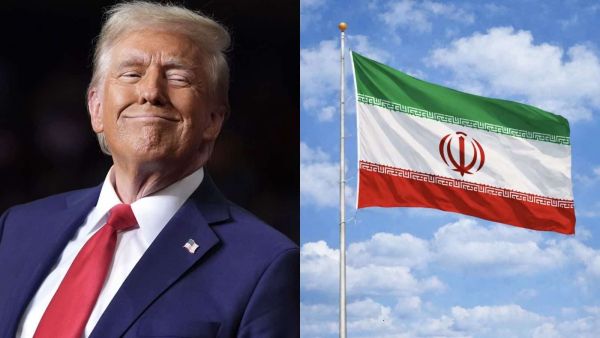
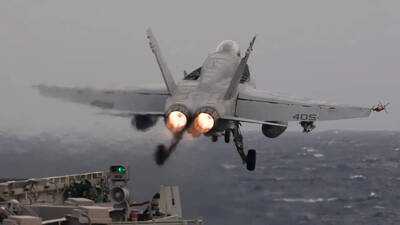
Indian stock markets have been taking one knock after another this month, as geopolitical tensions in West Asia triggered by the US-Israel war against Iran have escalated sharply. Despite Trump's latest 'Let's talk' interregnum, while Israel and Iran continue to trade missiles and drones, Nifty 50 has corrected meaningfully from its recent highs, midcaps have lost momentum, and oil prices have once again moved to centre stage.
For a country that imports nearly 90% of its crude requirement, with almost half of those imports moving through the Strait of Hormuz, any disruption in West Asia immediately becomes India's macro story (read: headache). The question investors are asking is simple: is this another temporary geopolitical shock? Or is it the beginning of something more structural?
The sharp jump in crude prices has implications far beyond fuel costs. Rising crude widens India's import bill, pushes inflation higher, weakens rupee, widens the twin deficits and complicates RBI's policy path. Despite the macro pressure, the market reaction has not been uniform. Historically, geopolitical shocks tend to split markets, rather than drag everything down equally. This time is no different.
Upstream oil producers have held up relatively well, benefiting from rising crude realisations. Defence stocks have also shown some resilience, supported by expectations of sustained global military spending. Shipping segments exposed to tanker freight routes have seen selective strength.
On the other hand, oil marketing companies face margin pressure when pump prices remain indirectly capped. Aviation companies are vulnerable because ATF accounts for 35-40% of operating costs. City gas distributors and fertiliser companies remain exposed to higher LNG procurement costs if disruptions persist.
Meanwhile, the policy dilemma has returned, placing analysts' projections on shaky ground. Higher oil prices typically create a twin challenge for India - inflation rises, even as growth slows. Estimates suggest that a sustained crude spike could add 50-75 bps to inflation, while shaving 20-30 bps off growth expectations.
That puts policymakers in a tight corner. Cutting rates too early risks weakening rupee further and triggering capital outflows, especially after the US Fed signalled a slower pace of easing. Keeping policy tight for too long risks delaying earnings recovery that markets had just started tasting in the December quarter.
That said, India enters this phase from a position of relative strength compared to previous oil shocks. Forex reserves remain comfortable. Strategic reserves and commercial inventories provide short-term buffers. And diversified sourcing, including Russian crude, has already reduced dependence on any single corridor, even as negotiations have recently allowed a handful of Indian tankers through the Hormuz Strait.
These cushions matter, and crucially so, if the war gets resolved over the next few weeks, as 'promised' by Trump, one of the two belligerents. If supply disruptions remain temporary and crude stabilises around the $80-85 mark, the macro impact could remain manageable. India's inventory buffers provide roughly a month of breathing room even if shipping routes face intermittent disruption.
But wars often look most dangerous at the point of maximum uncertainty. Markets tend to price worst-case scenarios first, and revise them later. Earlier this week, Trump posted that the US was in 'productive' negotiations with Iran, which prompted a temporary pause of 5 days in planned strikes on Iran's energy infrastructure, raising hopes of a near-term cooling of tensions. Iran, however, quickly denied that any such talks were underway, underscoring how fragile and headline-driven, the current easing in risk sentiment may be.
Making matters worse, unlike earlier geopolitical episodes, recent attacks have targeted energy infrastructure. Restoration timelines for such assets tend to stretch into months, rather than weeks. That increases the probability that commodity volatility could persist longer than markets initially expected.
Historically, such phases tend to compress valuations faster than they damage long-term earnings trajectories, especially in structurally-strong economies like India. Once uncertainty around oil stabilises, investor attention usually shifts back toward domestic growth drivers, capex momentum and earnings visibility - the 'boring stuff'. In fact, dispersion created by geopolitical shocks often opens selective opportunities across sectors that remain fundamentally intact, but temporarily repriced.
The key variable to watch now is duration. If the conflict remains contained within weeks, the current correction could look like a sentiment-driven adjustment. If energy disruptions persist longer, markets may need to reprice growth expectations more meaningfully.
For long-term investors, phases like these are less about predicting headlines, and more about recognising when uncertainty begins to price itself into valuations. Because once geopolitical clouds clear, markets typically move faster than investors expect.
For a country that imports nearly 90% of its crude requirement, with almost half of those imports moving through the Strait of Hormuz, any disruption in West Asia immediately becomes India's macro story (read: headache). The question investors are asking is simple: is this another temporary geopolitical shock? Or is it the beginning of something more structural?
The sharp jump in crude prices has implications far beyond fuel costs. Rising crude widens India's import bill, pushes inflation higher, weakens rupee, widens the twin deficits and complicates RBI's policy path. Despite the macro pressure, the market reaction has not been uniform. Historically, geopolitical shocks tend to split markets, rather than drag everything down equally. This time is no different.
Upstream oil producers have held up relatively well, benefiting from rising crude realisations. Defence stocks have also shown some resilience, supported by expectations of sustained global military spending. Shipping segments exposed to tanker freight routes have seen selective strength.
On the other hand, oil marketing companies face margin pressure when pump prices remain indirectly capped. Aviation companies are vulnerable because ATF accounts for 35-40% of operating costs. City gas distributors and fertiliser companies remain exposed to higher LNG procurement costs if disruptions persist.
Meanwhile, the policy dilemma has returned, placing analysts' projections on shaky ground. Higher oil prices typically create a twin challenge for India - inflation rises, even as growth slows. Estimates suggest that a sustained crude spike could add 50-75 bps to inflation, while shaving 20-30 bps off growth expectations.
That puts policymakers in a tight corner. Cutting rates too early risks weakening rupee further and triggering capital outflows, especially after the US Fed signalled a slower pace of easing. Keeping policy tight for too long risks delaying earnings recovery that markets had just started tasting in the December quarter.
That said, India enters this phase from a position of relative strength compared to previous oil shocks. Forex reserves remain comfortable. Strategic reserves and commercial inventories provide short-term buffers. And diversified sourcing, including Russian crude, has already reduced dependence on any single corridor, even as negotiations have recently allowed a handful of Indian tankers through the Hormuz Strait.
These cushions matter, and crucially so, if the war gets resolved over the next few weeks, as 'promised' by Trump, one of the two belligerents. If supply disruptions remain temporary and crude stabilises around the $80-85 mark, the macro impact could remain manageable. India's inventory buffers provide roughly a month of breathing room even if shipping routes face intermittent disruption.
But wars often look most dangerous at the point of maximum uncertainty. Markets tend to price worst-case scenarios first, and revise them later. Earlier this week, Trump posted that the US was in 'productive' negotiations with Iran, which prompted a temporary pause of 5 days in planned strikes on Iran's energy infrastructure, raising hopes of a near-term cooling of tensions. Iran, however, quickly denied that any such talks were underway, underscoring how fragile and headline-driven, the current easing in risk sentiment may be.
Making matters worse, unlike earlier geopolitical episodes, recent attacks have targeted energy infrastructure. Restoration timelines for such assets tend to stretch into months, rather than weeks. That increases the probability that commodity volatility could persist longer than markets initially expected.
Historically, such phases tend to compress valuations faster than they damage long-term earnings trajectories, especially in structurally-strong economies like India. Once uncertainty around oil stabilises, investor attention usually shifts back toward domestic growth drivers, capex momentum and earnings visibility - the 'boring stuff'. In fact, dispersion created by geopolitical shocks often opens selective opportunities across sectors that remain fundamentally intact, but temporarily repriced.
The key variable to watch now is duration. If the conflict remains contained within weeks, the current correction could look like a sentiment-driven adjustment. If energy disruptions persist longer, markets may need to reprice growth expectations more meaningfully.
For long-term investors, phases like these are less about predicting headlines, and more about recognising when uncertainty begins to price itself into valuations. Because once geopolitical clouds clear, markets typically move faster than investors expect.
(Disclaimer: The opinions expressed in this column are that of the writer. The facts and opinions expressed here do not reflect the views of www.economictimes.com.)



Ananya Roy