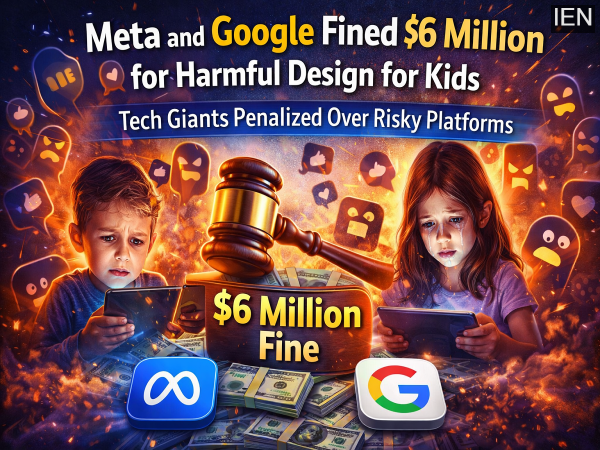
In a significant legal development from the United States, tech giants Meta Platforms and Google have been held accountable for allegedly creating digital platforms that pose risks to children and teenagers. A jury has ruled that both companies failed to adequately warn users about potential harms linked to their platform designs, resulting in a combined penalty of $6 million.
This decision is being seen as a major moment for the global tech industry, particularly in the ongoing debate around child safety in the digital age. It may also influence future regulations and force companies to rethink how their platforms are built and managed.
The lawsuit centers around a 20-year-old woman who claimed that her early exposure to these platforms during childhood contributed to addictive usage patterns. According to her testimony, she began using these apps at a young age and gradually developed dependency-like behavior.
What makes this case stand out is its focus. Rather than targeting specific content, the legal argument concentrated on the structural design of the platforms—how features are engineered to keep users engaged for longer periods.
The jury found that the platforms were intentionally designed in ways that encourage prolonged use, especially among younger audiences. Features such as endless scrolling, algorithm-driven recommendations, and engagement-based notifications were highlighted as contributing factors.
Additionally, the companies were criticized for not providing sufficient warnings about the potential psychological and behavioral risks for minors. This lack of transparency was considered a form of negligence.
The ruling suggests that prioritizing user engagement and profit over safety may have led to harmful consequences for vulnerable users, particularly children and teenagers.
As part of the verdict:
While the total $6 million fine may seem relatively small compared to the scale of these corporations, legal experts view the ruling as symbolically important. It sets a precedent that could open the door to more lawsuits and stricter oversight in the future.
Both Meta Platforms and Google have expressed disagreement with the jury’s decision.
One of the companies has indicated that it is reviewing its legal options, while the other has confirmed plans to challenge the ruling through an appeal. They maintain that their platforms comply with existing laws and safety standards.
This case reflects a broader global trend where governments and regulators are increasing scrutiny of digital platforms, especially concerning child safety.
In recent years, several regions have introduced stricter rules around:
The latest ruling adds to this momentum and signals that companies may soon face more rigorous compliance requirements.
The impact of this verdict could extend far beyond the financial penalty. Tech companies may now be compelled to:
There is also a possibility that similar cases could emerge, further shaping how digital platforms operate worldwide.
The $6 million fine against Meta Platforms and Google highlights growing concerns over how digital platforms impact young users. While the financial penalty may be modest, the legal implications are substantial.
As regulators, courts, and users demand safer digital environments, this case could mark the beginning of stricter accountability for tech companies—especially when it comes to protecting children online.