In India’s premium textile market, few products carry the cultural weight, and confusion, of a Pashmina shawl. For centuries, the Kashmiri shawl has symbolised luxury, heritage, and fine craftsmanship. But in today’s marketplace, that legacy is increasingly difficult to decode. A single search online or a walk through retail shelves reveals dozens of options labelled “Pashmina”, often priced dramatically differently, yet appearing nearly identical to the untrained eye.
This overlap between tradition and mass production has created a gap between perception and reality. Buyers are no longer just choosing a shawl, they are navigating claims, labels, and visual similarities that do not always reflect the truth. The result is a market where authenticity is often assumed, but rarely verified, making informed buying more important than ever.
"The Kashmiri shawl segment is increasingly marked by a credibility gap. Products that look similar are sold under the same label, but at vastly different price points. Marketing language, pure, handcrafted, luxury, is used generously, even when the underlying product does not meet those standards. Imitation has quietly become widespread. Machine-made shawls are passed off as handmade, blended fibres are marketed as pure Pashmina, and embroidery styles are replicated to mimic traditional craftsmanship," says Ritu Gupta, founder of Pashmsutra, a brand working with Kashmiri artisans.
“Today, the biggest issue is not availability but misrepresentation. When everything is labelled Pashmina, the word itself begins to lose meaning,” Ritu Gupta added.
What defines a genuine Pashmina
Authentic Pashmina is rooted in geography, material, and process. It begins with the fine undercoat of Changthangi goats found in the high-altitude regions of Ladakh. This fibre is rare and cannot be industrially replicated without compromising its essence.
The production process remains entirely manual:
“Pashmina is one of the few textiles in the world where the process is as valuable as the product. You cannot shortcut it without losing authenticity,” Ritu Gupta explains.
How to identify a real Pashmina
While the market has become more complex, certain indicators still help buyers make informed decisions.
1. Texture and warmth
A genuine Pashmina feels soft but not slippery. It is lightweight yet provides natural warmth without bulk.
“Real Pashmina has a quiet luxury. It doesn’t shine or feel synthetic, it’s subtle, breathable, and incredibly refined,” Ritu Gupta notes.
2. Natural irregularities
Handwoven shawls often show slight inconsistencies in weave or texture. These are signs of craftsmanship, not flaws.
“In a machine-made product, perfection is uniform. In a handmade shawl, perfection lies in its individuality,” adds Ritu Gupta the founder of Pashmsutra.
3. Breathability
Pure Pashmina allows air circulation, making it comfortable for long wear. Synthetic blends often feel heavier and less breathable.
4. Embroidery precision
Authentic Sozni embroidery is detailed and balanced. The reverse side of the shawl closely mirrors the front, reflecting the artisan’s skill.
“True Sozni work is like a signature, it’s neat, controlled, and almost identical on both sides. That level of precision cannot be mass-produced,” Ritu Gupta explained.
Why certification is becoming critical
With imitation products becoming more sophisticated, physical checks alone are no longer sufficient. Increasingly, authenticity is being defined by traceability.
The Geographical Indication (GI) tag for Kashmiri Pashmina remains a key benchmark. It certifies origin and adherence to traditional processes. Additional certifications from institutions such as CDI Kashmir further strengthen credibility.
“Pashmsutra, a brand working closely with Kashmiri artisans, has built its position around this very premise," Ritu Gupta explained.
Impact on artisans
The spread of fake Pashmina has direct consequences for artisans. Genuine production is time-intensive and skill-driven, making it difficult to compete with cheaper, machine-made alternatives.
“When imitation dominates the market, artisans are the first to suffer. Their work takes weeks, sometimes months, but it gets compared to products made in hours,” Ritu Gupta points out.
Authorities in Jammu and Kashmir have started acting against such practices, including penalties and deregistration for sellers misrepresenting machine-made products as handicrafts. This signals a broader shift towards accountability in the sector.
A more aware buyer is changing the market
There is a noticeable shift in consumer behaviour, particularly among premium buyers. Questions around origin, process, and authenticity are becoming central to purchase decisions.
An authentic Kashmiri Pashmina shawl is more than a luxury item, it is a product of heritage, skill, and time. Its value lies not just in how it looks, but in how it is made and where it comes from.
This overlap between tradition and mass production has created a gap between perception and reality. Buyers are no longer just choosing a shawl, they are navigating claims, labels, and visual similarities that do not always reflect the truth. The result is a market where authenticity is often assumed, but rarely verified, making informed buying more important than ever.
"The Kashmiri shawl segment is increasingly marked by a credibility gap. Products that look similar are sold under the same label, but at vastly different price points. Marketing language, pure, handcrafted, luxury, is used generously, even when the underlying product does not meet those standards. Imitation has quietly become widespread. Machine-made shawls are passed off as handmade, blended fibres are marketed as pure Pashmina, and embroidery styles are replicated to mimic traditional craftsmanship," says Ritu Gupta, founder of Pashmsutra, a brand working with Kashmiri artisans.
“Today, the biggest issue is not availability but misrepresentation. When everything is labelled Pashmina, the word itself begins to lose meaning,” Ritu Gupta added.
What defines a genuine Pashmina
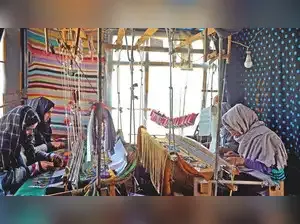
Authentic Pashmina is rooted in geography, material, and process. It begins with the fine undercoat of Changthangi goats found in the high-altitude regions of Ladakh. This fibre is rare and cannot be industrially replicated without compromising its essence.
The production process remains entirely manual:
- Hand-spinning transforms raw fibre into delicate yarn
- Hand-weaving on traditional looms shapes the shawl over days
- Hand-embroidery, such as Sozni, adds intricate detailing
“Pashmina is one of the few textiles in the world where the process is as valuable as the product. You cannot shortcut it without losing authenticity,” Ritu Gupta explains.
How to identify a real Pashmina
While the market has become more complex, certain indicators still help buyers make informed decisions.
1. Texture and warmth
A genuine Pashmina feels soft but not slippery. It is lightweight yet provides natural warmth without bulk.
“Real Pashmina has a quiet luxury. It doesn’t shine or feel synthetic, it’s subtle, breathable, and incredibly refined,” Ritu Gupta notes.
2. Natural irregularities
Handwoven shawls often show slight inconsistencies in weave or texture. These are signs of craftsmanship, not flaws.
“In a machine-made product, perfection is uniform. In a handmade shawl, perfection lies in its individuality,” adds Ritu Gupta the founder of Pashmsutra.
3. Breathability
Pure Pashmina allows air circulation, making it comfortable for long wear. Synthetic blends often feel heavier and less breathable.
4. Embroidery precision
Authentic Sozni embroidery is detailed and balanced. The reverse side of the shawl closely mirrors the front, reflecting the artisan’s skill.
“True Sozni work is like a signature, it’s neat, controlled, and almost identical on both sides. That level of precision cannot be mass-produced,” Ritu Gupta explained.
Why certification is becoming critical
With imitation products becoming more sophisticated, physical checks alone are no longer sufficient. Increasingly, authenticity is being defined by traceability.
The Geographical Indication (GI) tag for Kashmiri Pashmina remains a key benchmark. It certifies origin and adherence to traditional processes. Additional certifications from institutions such as CDI Kashmir further strengthen credibility.
“Pashmsutra, a brand working closely with Kashmiri artisans, has built its position around this very premise," Ritu Gupta explained.
Impact on artisans
The spread of fake Pashmina has direct consequences for artisans. Genuine production is time-intensive and skill-driven, making it difficult to compete with cheaper, machine-made alternatives.
“When imitation dominates the market, artisans are the first to suffer. Their work takes weeks, sometimes months, but it gets compared to products made in hours,” Ritu Gupta points out.
Authorities in Jammu and Kashmir have started acting against such practices, including penalties and deregistration for sellers misrepresenting machine-made products as handicrafts. This signals a broader shift towards accountability in the sector.
A more aware buyer is changing the market
There is a noticeable shift in consumer behaviour, particularly among premium buyers. Questions around origin, process, and authenticity are becoming central to purchase decisions.
An authentic Kashmiri Pashmina shawl is more than a luxury item, it is a product of heritage, skill, and time. Its value lies not just in how it looks, but in how it is made and where it comes from.