By Aman Alam
The Supreme Court on March 16 closed the case against Prof Ali Khan Mahmudabad, the Ashoka University historian and columnist, after the Haryana government declined to grant sanction for his prosecution for his social media post on Operation Sindoor, a decision the court had itself nudged the state towards in an earlier order.
A Division Bench comprising Chief Justice of India (CJI) Suryakant and Justice Joymalya Bagchi had, in its order of January 6, asked the Haryana government to consider refusing sanction as a “one-time magnanimity.” The state obliged, bringing to an end a case that had drawn global attention to questions of free speech and academic freedom in India.

The matter had originated in a social media post made by Prof Mahmudabad in connection with Operation Sindoor of 2025. It snowballed rapidly after he received summons from the Haryana State Women’s Commission on May 12, 2025. The Supreme Court had granted him interim bail on May 21.
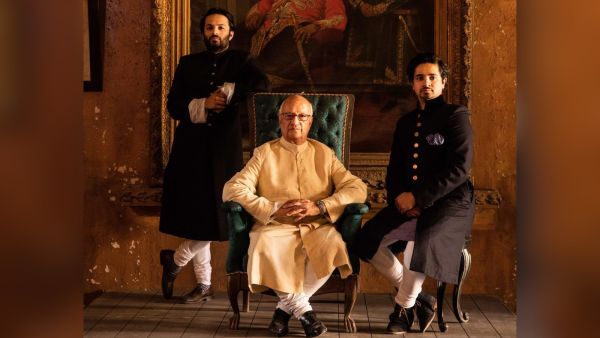
Prof Mahmudabad holds a doctorate and a master’s degree from the University of Cambridge and teaches history and political science at Ashoka University. Also known by his courtesy title “Raja of Mahmudabad,” he is the latest in a long and storied line – a family whose footprint on Indian history stretches back to the medieval period.
During the Nawabi rule in Awadh and later under the British, the Rajas of Mahmudabad were among the largest Taluqdars, or feudal landholders, of the region, controlling over 400 villages and extensive urban properties across Lucknow, Sitapur, Lakhimpur Kheri and Nainital.
The family’s most visible legacy is the Mahmudabad Fort in Sitapur, a 19th century structure built in the Indo-Saracenic style that counts among the largest private residences in the world. It has hosted royalty, diplomats, political leaders and intellectuals from across the globe. Its library holds thousands of rare books and manuscripts in English, Hindi, Urdu, Sanskrit, Persian and Arabic – including handwritten copies of the Quran, the Bhagavad Gita and the Mahabharata, some dating to the 16th century.
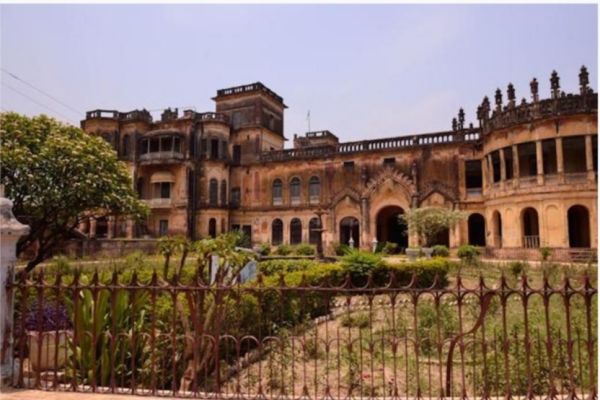
The fort’s kitchens, too, have kept alive culinary traditions that have largely disappeared elsewhere. The original mud fort on the site was set ablaze by the British during the Revolt of 1857 and later rebuilt.
The family’s syncretic character runs deep. Its charitable endowments include temples, one gifted to the Udasin Sect founded by Sri Chand, son of Guru Nanak, replicas of the Muslim shrines of Najaf and Karbala in Iraq and a caravanserai built to shelter travellers.
The family’s political legacy is equally significant. During the Revolt of 1857, Muqim-ud-Daula Raja Nawab Ali Khan commanded several thousand rebel troops before being killed by British forces – the same forces that burned down his 16th century fort. His role has been documented in historical accounts of the period and in the Urdu novel “Aghaz-e-Sahar” by Khan Mahbub Tarzi, translated into English by Prof Mahmudabad himself under the title “The Break of Dawn.”
His son, Amir-ud-Daula Raja Sir Mohammad Amir Hasan Khan, served on the Legislative Council of the Lieutenant Governor of the North Western Provinces. Lucknow’s Amir-ud-Daula Public Library and Amir-ud-Daula Islamia Degree College are named after him.
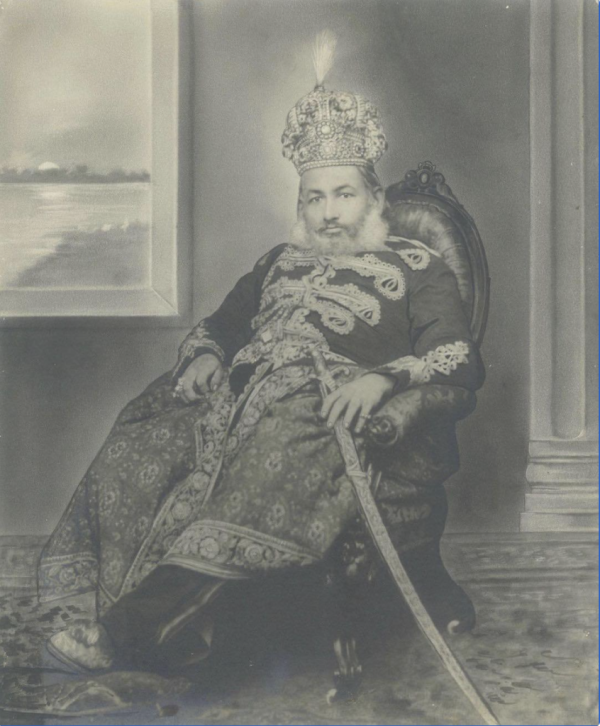
His son, Prof Mahmudabad’s great-grandfather Maharaja Sir Mohammad Ali Mohammad Khan was a pioneer of education who played a central role in establishing both Lucknow University and the Aligarh Muslim University, serving as the latter’s first Vice-Chancellor from 1920 to 1923. A residential hostel, Mahmudabad House, in Aligarh Muslim University’s Sir Shah Sulaiman Hall is named after him. He also served as the Home Member of the Governor of UP’s Executive Council.
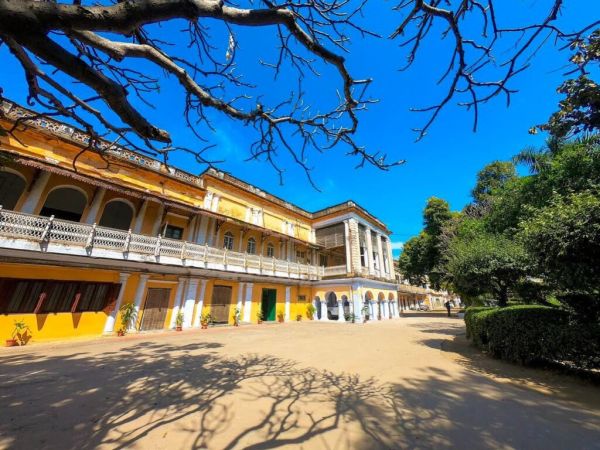
A close friend of Motilal Nehru, he was instrumental in the signing of the Lucknow Pact of 1916 and served on the Imperial Legislative Council, the Council of State and the United Provinces Legislative Council. Lucknow’s Butler Palace, named after former UP Governor Sir Spencer Harcourt Butler, was built by him.
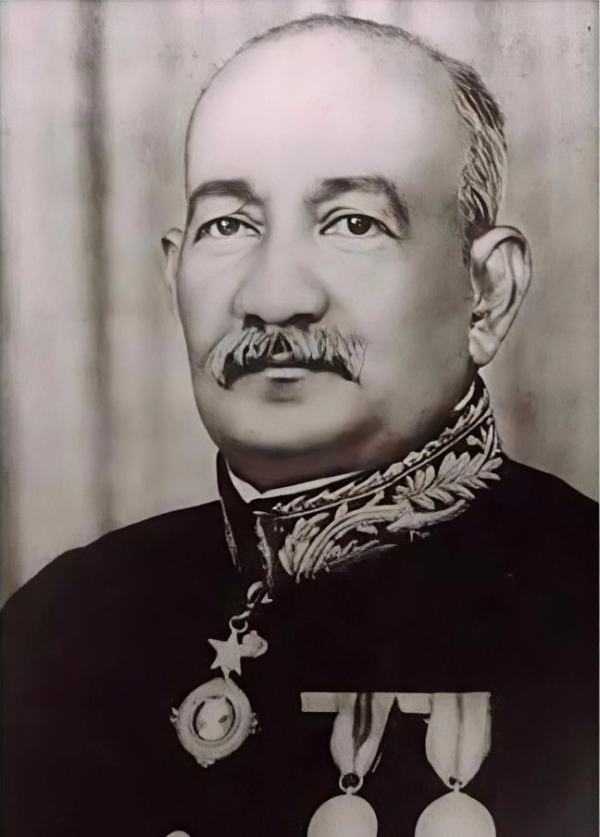
Prof Mahmudabad’s father, Raja Mohammad Amir Mohammad Khan, was also a Cambridge graduate and an occasional professor of astrophysics at Imperial College London and the Institute of Astronomy at Cambridge. He was elected twice to the UP Legislative Assembly on a Congress ticket, in 1985 and 1989.
When he passed away in October 2023, thousands joined his funeral procession across religious lines, and schools, markets and commercial establishments across the area shut down in mourning.
Prof Mahmudabad’s Lucknow home, Mahmudabad House – part of the historic Qaiserbagh Palace complex – continues to serve as a gathering place for intellectual and cultural exchange, much as the family’s spaces have for centuries.
The closure of his case, then, is more than a personal reprieve. Coming at a time of heightened scrutiny over free expression in India, it is being seen as a reaffirmation, however fragile, of the right to speak, question and dissent.
(Aman Alam is a student Barrister at the University of London and an Advocate in the
Supreme Court. He has been a former Law Clerk-cum-Research Associate to a Supreme Court judge. He is also a Fellow of the Royal Asiatic Society of Great Britain and Ireland)