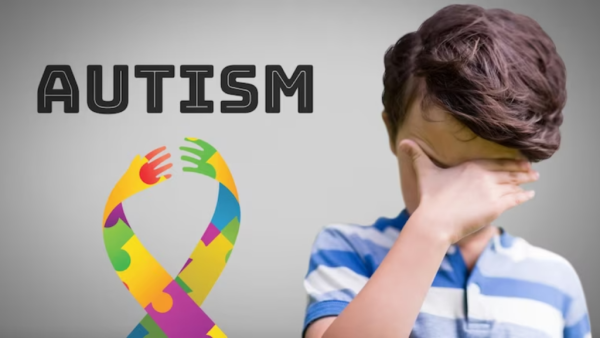
The prevalence of autism lower in girls compared to boys: Autism spectrum disorder (ASD) has long shown a marked gender difference, with boys being diagnosed three to four times more often than girls. At first glance the distinction seems simple, but upon deeper consideration it reveals a more complex picture, which depends on biology, hormones, and how the condition is identified. Consultant Neurologist at Saifi Hospital Dr. Furqan Khan has given guidance on this subject.
An important explanation behind this is genetic factors. Scientists have hypothesized a “female protective effect,” which means that girls may need more genetic changes to develop autism. Children with only one X chromosome may be more vulnerable to changes that affect brain development. While girls have two X chromosomes, a natural defense mechanism may be in place to reduce the effect of genetic risks.
Hormones also seem to play a role. Research on brain development during pregnancy suggests that high exposure to testosterone can affect the development of neural circuits in the brain to social interaction. The “extreme male brain” theory proposed by Simon Baron-Cohen links these hormonal influences to some of the features seen in autism, such as a greater tendency towards systems and patterns than social interaction. Although this approach is still a matter of debate, it adds an important biological dimension to the debate.
But biology alone does not explain the whole picture. Growing evidence suggests that girls with autism are often neglected. Conventional diagnostic criteria have been developed primarily based on the symptoms of autism in children, with social difficulties, repetitive behaviors, or language delays being more pronounced. In contrast, girls are often better able to mimic social behavior, maintain eye contact, or blend in with others. This process is called “camouflaging”.
This masking can often affect their health. Many girls are diagnosed in adolescence or late adulthood, after years of misdiagnosis or misdiagnosis as anxiety or depression. Their interests may also seem socially normal—such as a deep interest in books, animals, or fictional characters that make their autistic symptoms difficult to recognize.
Early symptoms may therefore vary. Boys may show obvious signs of lack of social interaction or repetitive behavior, while girls may appear outwardly socially active but actually have difficulty communicating deeply and understanding relationships. Recognition of these differences is very important for early diagnosis.
Finally, the high prevalence of autism in children is the result of a complex interaction of biological susceptibility and diagnostic bias. As awareness grows, doctors are now more accurately identifying autism in girls, which is slowly closing the gap.