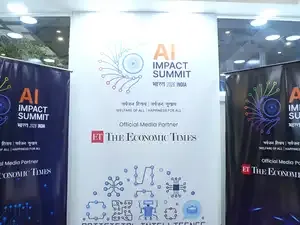
Nearly a month after Bharat Mandapam’s halls reverberated with aspirational blueprints and grounded insights, drawing over 600,000 in-person attendees, the India AI Impact Summit 2026 stands as India’s clarion call to harness artificial intelligence (AI) not just for innovation, but for universal welfare: a narrative that continues to ripple through global tech corridors.
Powerhouse figures graced the stage, including OpenAI CEO Sam Altman, Anthropic CEO Dario Amodei, Infosys Co-founder and Chairman Nandan Nilekani, Union Minister for Electronics and Information Technology Ashwini Vaishnaw, Tata Sons Chairman N. Chandrasekaran, Reliance Industries Chairman Mukesh Ambani, Google CEO Sundar Pichai, Microsoft President Brad Smith, and Meta Chief AI Scientist Yann LeCun, elevating the business and regulatory gravitas alongside global AI CEOs.
Hosted from 16 to 20 February primarily at New Delhi’s Bharat Mandapam, alongside additional venues, the event embodied the timeless mantra ‘Sarvajana Hitaya, Sarvajana Sukhaya’ (welfare for all, happiness for all), its atmosphere electric with urgency, curiosity, and pride. It is perhaps rare to see families immersing themselves in an AI walkthrough or simply exploring what is meant by “AI”, the word that has captured the imagination of the zeitgeist in recent times like no other. And this is where the India AI Impact Summit 2026 made it as intimate and as accessible to everyone, as formidable as it was with the global AI heavyweights.
Unprecedented reach
The event convened more than 900,000 virtual viewers spanning over 500 sessions led by more than 3,250 speakers, with delegations from over 100 countries, 20 international organisations, and over 300 exhibitors spread over 70,000 square metres of immersive pavilions.
India claimed a Guinness World Record with 250,946 validated pledges to an AI responsibility campaign in 24 hours on 16-17 February, complete with digital badges and ethical learning pathways affirming commitments to privacy, accountability, and transparency.
On 17 February, Union Minister for Electronics and Information Technology Ashwini Vaishnaw’s announcement to advance India’s AI compute pool from 38,000 GPUs to 58,000 within weeks at Rs 65 an hour, under the Rs 10,300-crore IndiaAI Mission, drew applause, cementing infrastructure as the bedrock of equitable access.
Pledging for an economic powerhouse: Building, scaling, and regulating
Business and regulatory dialogues formed a high-stakes arc on AI as an economic engine, from indigenous development to GDP multipliers. The From AI User to Creator session brought together Nvidia Senior Vice President Vishal Dhupar, Sarvam AI Co-founder and CEO Pratyush Kumar, and Minister of State for Electronics and Information Technology Jitin Prasada to propel India up the value chain via home-grown models and subsidised compute.
Reliance Industries Chairman Mukesh Ambani committed Rs 10 lakh crore over the next seven years starting this year to democratise AI just as Jio did with data, while Adani Group echoed sovereign ambitions with green energy integration, with aggregate pledges nearing $200 billion by 2028 in infrastructure and deep tech.
KPMG panels mapped data-to-ROI pipelines, IP safeguards, and VC flows, with AI for Economic Growth syncing regulators for compliant scaling: fintech risk models, startup GPU access at Rs 65 per hour, and exportable “Intelligence Architect” stacks.
The session titled Beyond the Cloud: Sovereign AI Moment advocated on-premise deployments for enterprises, balancing cloud economics with data sovereignty, featuring Nvidia Director Bernard Nguyen and Fluid AI Co-founder Abhinav Aggarwal alongside NABARD Chairman Balasubramanian V and HPCL Director Ritwik Rath. These forums outlined the bold vistas of corporate ambition, framing AI as India’s next trillion-dollar frontier under the Viksit Bharat programme.
On the Summit’s sidelines, Ascentt CEO Nilesh Vyas offered a practitioner’s view on enterprise scaling, telling EconomicTimes.com: “We have built more than 150 such solutions. We have deployed them in production, and at present, they are all delivering business value. Cumulative business value that these models have been delivering so far is about a billion dollars.” He cautioned against distraction, though, urging that when it comes to AI, there are a lot of “shiny trinkets" that a lot of people get attracted to. “A new model is coming out, new capabilities coming out, and everybody wants to try a lot of new things. But when it comes to enterprise, when you are taking these solutions and trying to bring the actual value for the enterprise, you have to focus on the business mission, and that’s our approach,” he explained.
Vyas shared the blueprint: “You start with the business mission, you identify the next 12 to 18 months of strategic direction, and then you identify the opportunities... spend a lot of time with the actual business stakeholders to understand where the current challenges are. Once you have identified that, you combine that with your secure data foundation, process redesign, and you have to make sure that you keep the humans in the loop and, most importantly, identify the KPIs ahead of time.”
He described manufacturing as his “most favourite application of AI”. “You know, there’s a massive opportunity that manufacturing companies have in front of them to leapfrog using AI in terms of innovation,” he stressed, aligning with Viksit Bharat's trillion-dollar frontier.
Interwoven thematic narratives
Anchored in three foundational Sutras—people (healthcare, education, inclusion), planet (sustainability, resilience), and progress (innovation, sovereignty)—the Summit wove Indian philosophy into AI diplomacy, as Prime Minister Narendra Modi’s 19 February inauguration set a tone of inspired action. Across seven thematic Chakras, such as Safe and Trusted AI and Agriculture, discussions blended live demonstrations, heated debates, and cross-border synergies, evoking a rite of passage where hyper-modern tech was assessed through inclusive horizons.
Sessions followed diverse yet shared resonant arcs, amplifying synergies across India’s national AI ambitions with its stakes in the global AI ecosystem, as experts charted a pathway from aspiration to execution.
Forging AI-ready human capital
Skilling emerged as a cornerstone, with the session on AI and the Future of Skilling, on 16 February, convening National Chairman of AVGC-XR Forum Ashish Kulkarni of Indian Institute of Creative Technologies, National Skill Development Corporation’s Dr Manish Kumar, KPMG Partner Narayanan Ramaswamy, MIT Professor MS Vijay Kumar, and EkStep Foundation CEO Shankar Maruwada to forge policy pathways, industry-academia collaborations, and frameworks for institutional readiness.
The Future of Employability in the Age of AI session built on this, as Chief Economic Adviser to the Government of India Dr V Anantha Nageswaran, Info Edge Founder Sanjeev Bhikchandani, Asian News International Editor-in-Chief Smita Prakash, EdgeVerve Systems President Sateesh Seetharamiah, and Sampark Foundation Founder Vineet Nayar dissected disruptions across manufacturing, healthcare, HR, sales, and supply chains, advocating targeted reskilling.
This theme culminated in the session GenAI Talent Imperative: Building the Global Future Workforce, uniting Nasscom FutureSkills SSC CEO Dr Abhilasha Gaur, Microsoft Corporate Vice President Indrani Choudhury, IIT Delhi Professor Jyoti Kumar, Wipro Group Chief People Officer Sanjeev Jain, All India Council for Technical Education Professor Shyam Rath, and MeitY Additional Secretary Pramod P.J. to align scalable education with emerging GenAI demands. These dialogues delved into a central concern, that of making India’s workforce AI-ready.
Ethics, inclusion, and cultural nuance
Diversity and inclusion and bridging the gender tech gap took centre stage through Reimagining Gender in Technology, where UNFPA Regional Director Andrea Wojnar, UNFPA Goodwill Ambassador Soha Ali Khan, Ambassador of Norway to India May-Elin Stener, Snapchat Director of Public Policy Uthara Ganesh, Digital Empowerment Foundation Co-Founder Arpita Kanjilal, and Asian Development Bank Principal Digital Specialist Carolyn Florey outlined evidence-led safeguards for safer digital spaces via multi-stakeholder pacts.
Meanwhile, the Safe Trusted AI at Scale session expanded this vision into ethical imperatives, with Software Technology Parks of India Director Arvind Kumar, d-MATRIX CEO Sid Sheth, India AI Mission Deputy Director General Mohammed Safirulla, and Ministry of Jal Shakti Additional Director Ashok Meena, deliberating on governance architectures for enterprise resilience.
The session on Culturally Grounded AI session deepened this, as Microsoft Research Principal Researcher Mohit Jain, Karya Co-Founder Amita Yadav, World Bank Group Senior Private Sector Specialist Philipp Zimmer, University of Pennsylvania Assistant Professor Sharath Chandra Guntuku, and University of Pennsylvania Researcher Sunny Rai embedded social norms into models, ensuring resonance from Indian villages to global cities.
The conversation on Data, People, and Pre-Empting Mass Exclusion touched upon the risk of exclusion and access gaps, with Digital Empowerment Foundation Co-Founder Arpita Kanjilal, Google India APAC Trust and Safety Lead Ram Papatla, UNESCO Chair on Women, Ethics and AI Dr Bhavani Rao, and Telangana Industries Principal Secretary Jayesh Ranjan rallying for strengthening public services against unintended biases. Together, they framed a humane ethos: AI as humanity’s mirror, not its master.
Sectoral transformations and resilience
The panel on AI for Smart and Resilient Agriculture brought together INRAE Researcher Dr Carole Caranta, INRAE Researcher Dr Thierry Caquet, FAO Head of Animal Health Dr Vincent Martin, Inria Foundation CEO Henri Verdier, and BAIF Research Development Foundation Chief Scientist Dr Bharat Kakade to talk about climate-adaptive tools attuned to farmers’ realities.
On the critical paradigm of justice, the Harnessing AI to Transform India’s Judicial Ecosystem session gathered Supreme Court Justice Retired Dinesh Maheshwari, National Law University Delhi Vice-Chancellor Professor G S Bajpai, National Law University Delhi Associate Professor Dr Aparajita Bhatt, and Shardul Amarchand Mangaldas Senior Partner Shardul Shroff to speak on the themes of predictive analytics, case automation, and virtual courts to reduce the burden of backlogs.
Shifting the mood to an important aspect of everyday life in India, the AI for Road Safety session featured IIT Madras Professor Venkatesh Balasubramanian, Centre of Excellence for Road Safety Director Pankaj Mehra, Centre of Excellence for Road Safety Chief Mentor Colonel Sanjiv Kumar Sharma, and Ministry of Road Transport and Highways Joint Secretary Pankaj Aggarwal who spoke on hyperlocal risk models to increase road vigilance and safe lives, an imperative for the Viksit Bharat 2047 vision.
Meanwhile, the Planet-Scale Intelligence for Economic Growth session offered a futuristic take on sustainable scaling, with Reliance Jio Head of Agri Business Gaurav Aggarwal, SatSure Co-Founder Prateep Basu, and Ministry of New and Renewable Energy Additional Secretary Suman Chandra Rawat, deliberating on leveraging AgriStack for Global South lessons in resilient systems. These grounded exchanges paved the path for tangible results, with AI serving as India’s everyday force multiplier.
Sovereignty, diplomacy, and innovation
Innovation deep dives propelled the narrative forward, building methodically from value-chain ambition to global leadership and frontier breakthroughs. The From AI User to Creator session encapsulated this arc, featuring Nvidia Senior Vice President Vishal Dhupar, Nvidia Managing Director Santhosh Viswanathan, Sarvam AI Co-founder and CEO Pratyush Kumar, Intel Vice President Santhosh Viswanathan, Minister of State for Electronics and Information Technology Jitin Prasada, and CoRover.ai CEO Ankush Sabharwal, who dissected the strategic leap from AI adoption to indigenous model-building powered by subsidised sovereign compute.
This momentum peaked at the 19 February fireside between Infosys Co-founder and Chairman Nandan Nilekani and Anthropic Chief Executive Officer Dario Amodei, moderated by Trilegal Partner Rahul Matthan, positioned India as AI’s global testbed: leveraging UPI-Aadhaar-scale infrastructure for tangible impacts in farming, healthcare, and local languages, while stressing mutual dependence with the clarion call of “India needs AI, AI needs India”. The session explored the imperatives of safety safeguards against backlash, and responsible diffusion to drive catch-up growth without exacerbating divides. It resonated with OpenAI Chief Executive Officer Sam Altman’s keynote to spotlight ethical scaling for billions.
Elevating to geopolitical strategy, AI Diplomacy: Asia Leads – Governing Artificial Intelligence in a Fragmented World convened UC Berkeley Professor Stuart Russell, Indonesia Minister of Communication and Digital Affairs H.E. Nezar Patria, Tohoku University Professor Dr Yuko Harayama, and IMDA Singapore Chief AI Officer Wan Sie Lee for pragmatic governance frameworks, shifting from rigid treaties to operational crisis mechanisms amid rising fragmentation.
On the Summit’s sidelines, Nelpx GmbH CEO Mandeep Singh echoed this leap in an EconomicTimes.com interview with Sonam Chawla, asserting India to be in AI’s “wave two,” where “companies are no longer thinking about, okay, can I use AI? They want the experiments, and they want the operations. So this is what the mindset is currently shifting on, and even now in India, we can see that they are no longer like, okay, you know, they are the consumer, they want to make. So... in India, they want to build AI.”
He cut through the hype: “90% of companies come, and they want the AI solution, it’s nothing. It’s not an AI solution, it’s something else that they want, and what they think always, it’s just a software layer, which isn’t".
To counter this noise, Nelpx positions itself as neutral advisor building full ecosystems: “We will do all the checks for you, we will see what kind of solution you need and we build the ecosystem for them because currently they don’t need something like, okay, just a software, they need a complete ecosystem, they want the data, they want the protection, they want data centers and so we provide them that... we are, in that case, a neutral advisor for them”.
Hailing India’s evolution from ingenuity to infrastructure, Singh noted “India... [was the] country of Jugaad. And right now, we can see they are making Jugaad as AI... people want to use it. They want to be the builder,” urging cross-border blends to power Viksit Bharat's trillion-dollar frontier.
Pushing technical frontiers, Beyond Language Models: The Next AI Race for Science, Biology, Energy & Sovereignty previewed physics-AI paradigms with Yotta CEO Amit Mishra, Shodh AI Founder Arastu Sharma, and IISc Zenteiq Researcher Sashikumaar Ganesan, complete with live demos translating models into manufacturable biology and energy solutions. Complementing these, defence sessions led by Indian Army Lieutenant General Harsh Chhibber explored human-machine teaming in data-centric warfare, while health-AI workshops with Myna Mahila Foundation Founder Dr Taniya Kaul bridged research to on-ground deployment, rounding a panoramic vision of sector-agnostic sovereignty.
The message was clear: India’s sovereign AI trajectory—from user to creator, testbed to cross-border diplomacy—positions it uniquely within the Global South. The future will be shaped by how its capabilities unfold, with expanded GPU stacks, indigenous models, and ethical guardrails charting a forward path to Viksit Bharat 2047 and beyond.
Powerhouse figures graced the stage, including OpenAI CEO Sam Altman, Anthropic CEO Dario Amodei, Infosys Co-founder and Chairman Nandan Nilekani, Union Minister for Electronics and Information Technology Ashwini Vaishnaw, Tata Sons Chairman N. Chandrasekaran, Reliance Industries Chairman Mukesh Ambani, Google CEO Sundar Pichai, Microsoft President Brad Smith, and Meta Chief AI Scientist Yann LeCun, elevating the business and regulatory gravitas alongside global AI CEOs.
Hosted from 16 to 20 February primarily at New Delhi’s Bharat Mandapam, alongside additional venues, the event embodied the timeless mantra ‘Sarvajana Hitaya, Sarvajana Sukhaya’ (welfare for all, happiness for all), its atmosphere electric with urgency, curiosity, and pride. It is perhaps rare to see families immersing themselves in an AI walkthrough or simply exploring what is meant by “AI”, the word that has captured the imagination of the zeitgeist in recent times like no other. And this is where the India AI Impact Summit 2026 made it as intimate and as accessible to everyone, as formidable as it was with the global AI heavyweights.
Unprecedented reach
The event convened more than 900,000 virtual viewers spanning over 500 sessions led by more than 3,250 speakers, with delegations from over 100 countries, 20 international organisations, and over 300 exhibitors spread over 70,000 square metres of immersive pavilions.
India claimed a Guinness World Record with 250,946 validated pledges to an AI responsibility campaign in 24 hours on 16-17 February, complete with digital badges and ethical learning pathways affirming commitments to privacy, accountability, and transparency.
On 17 February, Union Minister for Electronics and Information Technology Ashwini Vaishnaw’s announcement to advance India’s AI compute pool from 38,000 GPUs to 58,000 within weeks at Rs 65 an hour, under the Rs 10,300-crore IndiaAI Mission, drew applause, cementing infrastructure as the bedrock of equitable access.
Pledging for an economic powerhouse: Building, scaling, and regulating
Business and regulatory dialogues formed a high-stakes arc on AI as an economic engine, from indigenous development to GDP multipliers. The From AI User to Creator session brought together Nvidia Senior Vice President Vishal Dhupar, Sarvam AI Co-founder and CEO Pratyush Kumar, and Minister of State for Electronics and Information Technology Jitin Prasada to propel India up the value chain via home-grown models and subsidised compute.
Reliance Industries Chairman Mukesh Ambani committed Rs 10 lakh crore over the next seven years starting this year to democratise AI just as Jio did with data, while Adani Group echoed sovereign ambitions with green energy integration, with aggregate pledges nearing $200 billion by 2028 in infrastructure and deep tech.
KPMG panels mapped data-to-ROI pipelines, IP safeguards, and VC flows, with AI for Economic Growth syncing regulators for compliant scaling: fintech risk models, startup GPU access at Rs 65 per hour, and exportable “Intelligence Architect” stacks.
The session titled Beyond the Cloud: Sovereign AI Moment advocated on-premise deployments for enterprises, balancing cloud economics with data sovereignty, featuring Nvidia Director Bernard Nguyen and Fluid AI Co-founder Abhinav Aggarwal alongside NABARD Chairman Balasubramanian V and HPCL Director Ritwik Rath. These forums outlined the bold vistas of corporate ambition, framing AI as India’s next trillion-dollar frontier under the Viksit Bharat programme.
On the Summit’s sidelines, Ascentt CEO Nilesh Vyas offered a practitioner’s view on enterprise scaling, telling EconomicTimes.com: “We have built more than 150 such solutions. We have deployed them in production, and at present, they are all delivering business value. Cumulative business value that these models have been delivering so far is about a billion dollars.” He cautioned against distraction, though, urging that when it comes to AI, there are a lot of “shiny trinkets" that a lot of people get attracted to. “A new model is coming out, new capabilities coming out, and everybody wants to try a lot of new things. But when it comes to enterprise, when you are taking these solutions and trying to bring the actual value for the enterprise, you have to focus on the business mission, and that’s our approach,” he explained.
Vyas shared the blueprint: “You start with the business mission, you identify the next 12 to 18 months of strategic direction, and then you identify the opportunities... spend a lot of time with the actual business stakeholders to understand where the current challenges are. Once you have identified that, you combine that with your secure data foundation, process redesign, and you have to make sure that you keep the humans in the loop and, most importantly, identify the KPIs ahead of time.”
He described manufacturing as his “most favourite application of AI”. “You know, there’s a massive opportunity that manufacturing companies have in front of them to leapfrog using AI in terms of innovation,” he stressed, aligning with Viksit Bharat's trillion-dollar frontier.
Interwoven thematic narratives
Anchored in three foundational Sutras—people (healthcare, education, inclusion), planet (sustainability, resilience), and progress (innovation, sovereignty)—the Summit wove Indian philosophy into AI diplomacy, as Prime Minister Narendra Modi’s 19 February inauguration set a tone of inspired action. Across seven thematic Chakras, such as Safe and Trusted AI and Agriculture, discussions blended live demonstrations, heated debates, and cross-border synergies, evoking a rite of passage where hyper-modern tech was assessed through inclusive horizons.
Sessions followed diverse yet shared resonant arcs, amplifying synergies across India’s national AI ambitions with its stakes in the global AI ecosystem, as experts charted a pathway from aspiration to execution.
Forging AI-ready human capital
Skilling emerged as a cornerstone, with the session on AI and the Future of Skilling, on 16 February, convening National Chairman of AVGC-XR Forum Ashish Kulkarni of Indian Institute of Creative Technologies, National Skill Development Corporation’s Dr Manish Kumar, KPMG Partner Narayanan Ramaswamy, MIT Professor MS Vijay Kumar, and EkStep Foundation CEO Shankar Maruwada to forge policy pathways, industry-academia collaborations, and frameworks for institutional readiness.
The Future of Employability in the Age of AI session built on this, as Chief Economic Adviser to the Government of India Dr V Anantha Nageswaran, Info Edge Founder Sanjeev Bhikchandani, Asian News International Editor-in-Chief Smita Prakash, EdgeVerve Systems President Sateesh Seetharamiah, and Sampark Foundation Founder Vineet Nayar dissected disruptions across manufacturing, healthcare, HR, sales, and supply chains, advocating targeted reskilling.
This theme culminated in the session GenAI Talent Imperative: Building the Global Future Workforce, uniting Nasscom FutureSkills SSC CEO Dr Abhilasha Gaur, Microsoft Corporate Vice President Indrani Choudhury, IIT Delhi Professor Jyoti Kumar, Wipro Group Chief People Officer Sanjeev Jain, All India Council for Technical Education Professor Shyam Rath, and MeitY Additional Secretary Pramod P.J. to align scalable education with emerging GenAI demands. These dialogues delved into a central concern, that of making India’s workforce AI-ready.
Ethics, inclusion, and cultural nuance
Diversity and inclusion and bridging the gender tech gap took centre stage through Reimagining Gender in Technology, where UNFPA Regional Director Andrea Wojnar, UNFPA Goodwill Ambassador Soha Ali Khan, Ambassador of Norway to India May-Elin Stener, Snapchat Director of Public Policy Uthara Ganesh, Digital Empowerment Foundation Co-Founder Arpita Kanjilal, and Asian Development Bank Principal Digital Specialist Carolyn Florey outlined evidence-led safeguards for safer digital spaces via multi-stakeholder pacts.
Meanwhile, the Safe Trusted AI at Scale session expanded this vision into ethical imperatives, with Software Technology Parks of India Director Arvind Kumar, d-MATRIX CEO Sid Sheth, India AI Mission Deputy Director General Mohammed Safirulla, and Ministry of Jal Shakti Additional Director Ashok Meena, deliberating on governance architectures for enterprise resilience.
The session on Culturally Grounded AI session deepened this, as Microsoft Research Principal Researcher Mohit Jain, Karya Co-Founder Amita Yadav, World Bank Group Senior Private Sector Specialist Philipp Zimmer, University of Pennsylvania Assistant Professor Sharath Chandra Guntuku, and University of Pennsylvania Researcher Sunny Rai embedded social norms into models, ensuring resonance from Indian villages to global cities.
The conversation on Data, People, and Pre-Empting Mass Exclusion touched upon the risk of exclusion and access gaps, with Digital Empowerment Foundation Co-Founder Arpita Kanjilal, Google India APAC Trust and Safety Lead Ram Papatla, UNESCO Chair on Women, Ethics and AI Dr Bhavani Rao, and Telangana Industries Principal Secretary Jayesh Ranjan rallying for strengthening public services against unintended biases. Together, they framed a humane ethos: AI as humanity’s mirror, not its master.
Sectoral transformations and resilience
The panel on AI for Smart and Resilient Agriculture brought together INRAE Researcher Dr Carole Caranta, INRAE Researcher Dr Thierry Caquet, FAO Head of Animal Health Dr Vincent Martin, Inria Foundation CEO Henri Verdier, and BAIF Research Development Foundation Chief Scientist Dr Bharat Kakade to talk about climate-adaptive tools attuned to farmers’ realities.
On the critical paradigm of justice, the Harnessing AI to Transform India’s Judicial Ecosystem session gathered Supreme Court Justice Retired Dinesh Maheshwari, National Law University Delhi Vice-Chancellor Professor G S Bajpai, National Law University Delhi Associate Professor Dr Aparajita Bhatt, and Shardul Amarchand Mangaldas Senior Partner Shardul Shroff to speak on the themes of predictive analytics, case automation, and virtual courts to reduce the burden of backlogs.
Shifting the mood to an important aspect of everyday life in India, the AI for Road Safety session featured IIT Madras Professor Venkatesh Balasubramanian, Centre of Excellence for Road Safety Director Pankaj Mehra, Centre of Excellence for Road Safety Chief Mentor Colonel Sanjiv Kumar Sharma, and Ministry of Road Transport and Highways Joint Secretary Pankaj Aggarwal who spoke on hyperlocal risk models to increase road vigilance and safe lives, an imperative for the Viksit Bharat 2047 vision.
Meanwhile, the Planet-Scale Intelligence for Economic Growth session offered a futuristic take on sustainable scaling, with Reliance Jio Head of Agri Business Gaurav Aggarwal, SatSure Co-Founder Prateep Basu, and Ministry of New and Renewable Energy Additional Secretary Suman Chandra Rawat, deliberating on leveraging AgriStack for Global South lessons in resilient systems. These grounded exchanges paved the path for tangible results, with AI serving as India’s everyday force multiplier.
Sovereignty, diplomacy, and innovation
Innovation deep dives propelled the narrative forward, building methodically from value-chain ambition to global leadership and frontier breakthroughs. The From AI User to Creator session encapsulated this arc, featuring Nvidia Senior Vice President Vishal Dhupar, Nvidia Managing Director Santhosh Viswanathan, Sarvam AI Co-founder and CEO Pratyush Kumar, Intel Vice President Santhosh Viswanathan, Minister of State for Electronics and Information Technology Jitin Prasada, and CoRover.ai CEO Ankush Sabharwal, who dissected the strategic leap from AI adoption to indigenous model-building powered by subsidised sovereign compute.
This momentum peaked at the 19 February fireside between Infosys Co-founder and Chairman Nandan Nilekani and Anthropic Chief Executive Officer Dario Amodei, moderated by Trilegal Partner Rahul Matthan, positioned India as AI’s global testbed: leveraging UPI-Aadhaar-scale infrastructure for tangible impacts in farming, healthcare, and local languages, while stressing mutual dependence with the clarion call of “India needs AI, AI needs India”. The session explored the imperatives of safety safeguards against backlash, and responsible diffusion to drive catch-up growth without exacerbating divides. It resonated with OpenAI Chief Executive Officer Sam Altman’s keynote to spotlight ethical scaling for billions.
Elevating to geopolitical strategy, AI Diplomacy: Asia Leads – Governing Artificial Intelligence in a Fragmented World convened UC Berkeley Professor Stuart Russell, Indonesia Minister of Communication and Digital Affairs H.E. Nezar Patria, Tohoku University Professor Dr Yuko Harayama, and IMDA Singapore Chief AI Officer Wan Sie Lee for pragmatic governance frameworks, shifting from rigid treaties to operational crisis mechanisms amid rising fragmentation.
On the Summit’s sidelines, Nelpx GmbH CEO Mandeep Singh echoed this leap in an EconomicTimes.com interview with Sonam Chawla, asserting India to be in AI’s “wave two,” where “companies are no longer thinking about, okay, can I use AI? They want the experiments, and they want the operations. So this is what the mindset is currently shifting on, and even now in India, we can see that they are no longer like, okay, you know, they are the consumer, they want to make. So... in India, they want to build AI.”
He cut through the hype: “90% of companies come, and they want the AI solution, it’s nothing. It’s not an AI solution, it’s something else that they want, and what they think always, it’s just a software layer, which isn’t".
To counter this noise, Nelpx positions itself as neutral advisor building full ecosystems: “We will do all the checks for you, we will see what kind of solution you need and we build the ecosystem for them because currently they don’t need something like, okay, just a software, they need a complete ecosystem, they want the data, they want the protection, they want data centers and so we provide them that... we are, in that case, a neutral advisor for them”.
Hailing India’s evolution from ingenuity to infrastructure, Singh noted “India... [was the] country of Jugaad. And right now, we can see they are making Jugaad as AI... people want to use it. They want to be the builder,” urging cross-border blends to power Viksit Bharat's trillion-dollar frontier.
Pushing technical frontiers, Beyond Language Models: The Next AI Race for Science, Biology, Energy & Sovereignty previewed physics-AI paradigms with Yotta CEO Amit Mishra, Shodh AI Founder Arastu Sharma, and IISc Zenteiq Researcher Sashikumaar Ganesan, complete with live demos translating models into manufacturable biology and energy solutions. Complementing these, defence sessions led by Indian Army Lieutenant General Harsh Chhibber explored human-machine teaming in data-centric warfare, while health-AI workshops with Myna Mahila Foundation Founder Dr Taniya Kaul bridged research to on-ground deployment, rounding a panoramic vision of sector-agnostic sovereignty.
The message was clear: India’s sovereign AI trajectory—from user to creator, testbed to cross-border diplomacy—positions it uniquely within the Global South. The future will be shaped by how its capabilities unfold, with expanded GPU stacks, indigenous models, and ethical guardrails charting a forward path to Viksit Bharat 2047 and beyond.
(This article is generated and published by ET Spotlight team. You can get in touch with them on etspotlight@timesinternet.in)