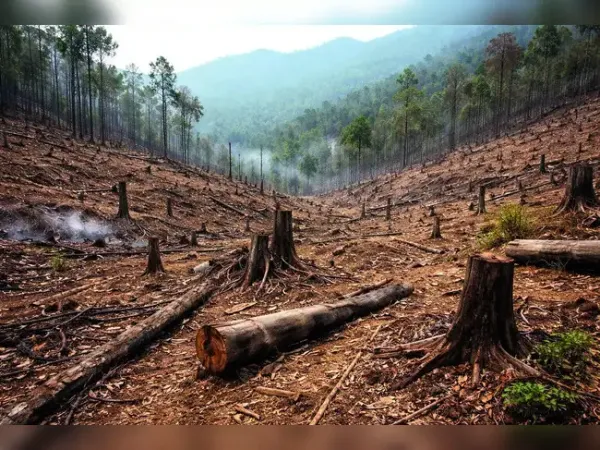
The systematic ravaging of the Aravallis' ecological wealth by Aravalli-belt states - whether for mining, forest resources, or 'development' - is a story as old as the hills. Yet a more insidious layer of institutional decay has recently surfaced: a high-stakes jurisdictional turf war between two senior IFS officers in Haryana, a state that possesses an almost single-minded focus on flattening the Aravallis. The catalyst is the illegal felling of over 1,000 khair trees within the protected Kalesar Wildlife Sanctuary. Make no mistake: the fight between the two officers is not a valiant struggle to protect the canopy. Instead, it is a cynical, post-facto dispute over who has the 'legal authority' to investigate the theft long after the timber has been hauled away.
This systemic rot is not an isolated Haryana phenomenon - it is a regional epidemic. A 2022 CarbonCopy investigation revealed illegal extraction of Khair from Suhelwa Wildlife Sanctuary in UP. The motive is commercial: the tree's heartwood produces kattha, the lifeblood of India's multi-billion dollar pan masala industry. Demand is so insatiable that Suhelwa has been hollowed out, transformed into a 'ghost forest' where organised syndicates operate with the quiet complicity of compromised departments. This lucrative 'kattha boom' has now migrated into the fragile Himalayan foothills.
At the end of the day, these cases pull back the curtain on an ugly truth: bureaucratic ringfencing and jurisdictional buck-passing are not mere accidents of governance. They are deliberate mechanisms designed to shield high-ranking officials from accountability, allowing them to pay lip service to the conservation of our precious forests while presiding over their steady liquidation in broad daylight.
This systemic rot is not an isolated Haryana phenomenon - it is a regional epidemic. A 2022 CarbonCopy investigation revealed illegal extraction of Khair from Suhelwa Wildlife Sanctuary in UP. The motive is commercial: the tree's heartwood produces kattha, the lifeblood of India's multi-billion dollar pan masala industry. Demand is so insatiable that Suhelwa has been hollowed out, transformed into a 'ghost forest' where organised syndicates operate with the quiet complicity of compromised departments. This lucrative 'kattha boom' has now migrated into the fragile Himalayan foothills.
At the end of the day, these cases pull back the curtain on an ugly truth: bureaucratic ringfencing and jurisdictional buck-passing are not mere accidents of governance. They are deliberate mechanisms designed to shield high-ranking officials from accountability, allowing them to pay lip service to the conservation of our precious forests while presiding over their steady liquidation in broad daylight.