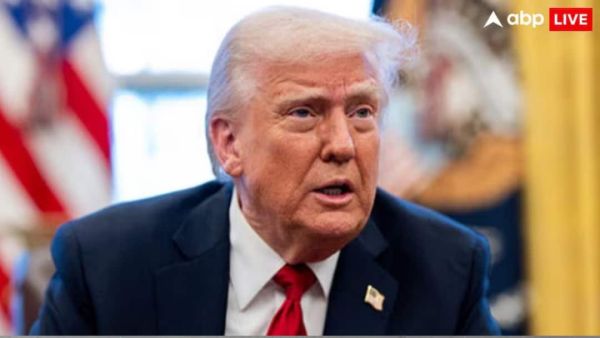
US President Donald Trump has indicated he is prepared to wind down Washington’s military campaign against Iran even if the strategically vital Strait of Hormuz remains largely closed, according to administration officials, as reported by the Wall Street Journal.
Trump's stance signals a potential shift in priorities as the conflict enters a critical phase. The move could leave Iran with continued control over the key maritime chokepoint in the near term, while pushing any effort to fully reopen it to a later stage, possibly led by US allies.
In recent days, Trump and his senior aides concluded that a direct mission to reopen the strait would likely stretch the conflict beyond the administration’s preferred four- to six-week timeline. Instead, officials said the focus has turned to achieving core military objectives, weakening Iran’s naval capabilities and degrading its missile arsenal, before scaling back active hostilities.
The strategy, they added, hinges on combining military pressure with diplomacy, urging Tehran to restore the free flow of trade through the waterway. Should those efforts fall short, the US is expected to encourage European and Gulf partners to take the lead in reopening the passage.
While military options remain on the table, officials stressed they are not an immediate priority.
Trump’s public remarks on the Strait of Hormuz have varied in recent weeks, reflecting a broader pattern of shifting messaging around the conflict. At times, he has threatened strikes on civilian energy infrastructure if shipping is not restored. On other occasions, he has downplayed the strait’s direct importance to the United States, suggesting its closure poses a greater challenge for other economies.
The prolonged disruption in the strait, a crucial artery for global energy supplies, is already sending shockwaves through international markets. Several countries, including key US allies, are grappling with reduced energy flows, driving up fuel prices and straining supply chains.
Industries dependent on critical materials, from fertilisers used in agriculture to helium required in semiconductor production, are facing mounting shortages as shipments remain disrupted.
White House Press Secretary Karoline Leavitt said on Monday that efforts were ongoing to restore normal operations in the strait, though she stopped short of listing it among Washington’s primary military objectives, which include targeting Iran’s navy, missile systems, defence industry and nuclear capabilities.
Secretary of State Marco Rubio, who also serves as Trump’s national security adviser, said the current phase of military operations is expected to conclude within weeks.
“Then we’ll be confronted with this issue of the Straits of Hormuz,” Rubio said in an interview with Al Jazeera. “It will be up to Iran to decide, or a coalition of nations from around the world and the region, with the participation of the United States, will ensure that it’s open, one way or the other.”